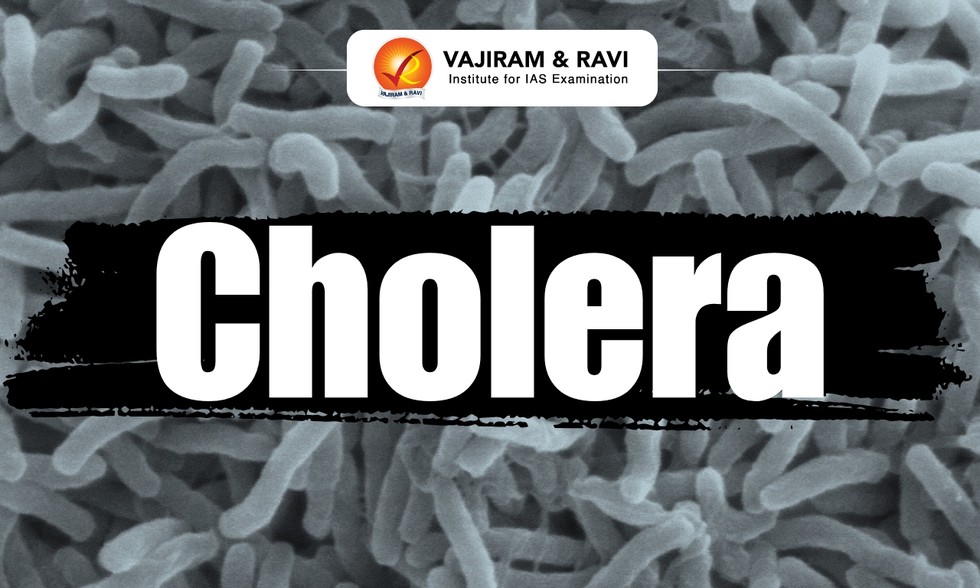
While cholera has nearly disappeared from wealthy countries, it remains one of the world’s deadliest waterborne diseases in places where clean water and basic healthcare are unreliable.
About Cholera:
Cholera is a disease that is caused by the bacteria Vibrio cholerae.
Cholera can cause serious diarrhea and dehydration. Without treatment, the disease can be fatal within hours, even in people who are healthy.
Transmission:
People can get cholera by drinking water or eating food contaminated with cholera bacteria.
The disease is most common in places with poor sanitation, crowding, war, and famine. Cholera outbreaks are more common in warm climates.
Cholera bacteria also can live in brackish (slightly salty) and coastal waters. Eating raw shellfish like shrimp and crab can be a source of cholera.
Cholera is not likely to spread from person to person or from casual contact with someone with cholera.
It is often predictable and preventable. It can ultimately be eliminated where access to clean water and sanitation facilities, as well as good hygiene practices, are ensured and sustained for the whole population.
Treatment:
Treatment for cholera includes drinking plenty of fluids or getting intravenous fluids to prevent dehydration.
Healthcare providers also sometimes prescribe antibiotics like doxycycline, erythromycin, or azithromycin to help you feel better.
Providers also treat kids between the ages of 6 months and 5 years with zinc supplements.
Antidiarrheal medicines aren’t recommended for cholera and could make symptoms worse.
Dear Student,
You have still not entered your mailing address. Please enter the address where all the study materials will be sent to you. (If applicable).