Early development across vertebrates and insects critically relies on robustly reorganizing the cytoplasm of fertilized eggs into individualized cells
About Cytoplasm:
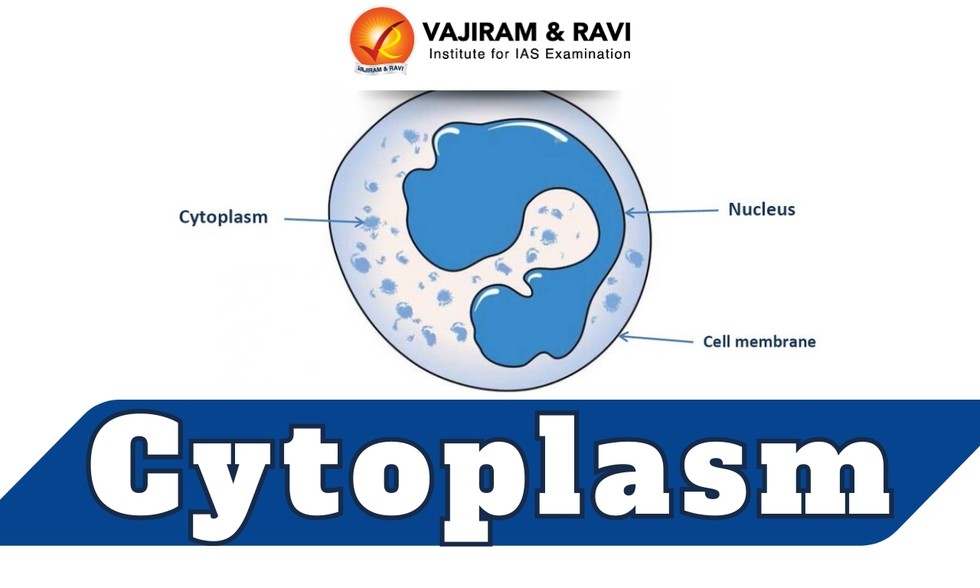
Cytoplasm is a thick solution that fills each cell and is enclosed by the cell membrane.
It is mainly composed of water, salts and proteins.
In eukaryotic cells (i.e., cells having a nucleus), the cytoplasm includes all of the material inside the cell but outside the nucleus, which contains its own watery substance called nucleoplasm.
All of the organelles in eukaryotic cells are located in the cytoplasm. The cytoplasm helps to keep them in place.
Among such organelles are the mitochondria, which are the sites of energy production through ATP (adenosine triphosphate) synthesis;
the endoplasmic reticulum, the site of lipid and protein synthesis;
the Golgi apparatus, the site where proteins are modified, packaged, and sorted in preparation for transport to their cellular destinations;
lysosomes and peroxisomes, sacs of digestive enzymes that carry out the intracellular digestion of macromolecules such as lipids and proteins;
The portion of the cytoplasm surrounding organelles is called cytosol, which is the liquid part of the cytoplasm.
Cytoplasm is also the site of most metabolic activities in the cell, and it allows materials to pass easily throughout the cell.
Although cytoplasm may appear to have no form or structure, it is actually highly organized.
A framework of protein scaffolds called the cytoskeleton provides the cytoplasm and the cell with their structure.
Though prokaryotic cells do not have organelles (they do have ribosomes), they still have cytoplasm.
Dear Student,
You have still not entered your mailing address. Please enter the address where all the study materials will be sent to you. (If applicable).