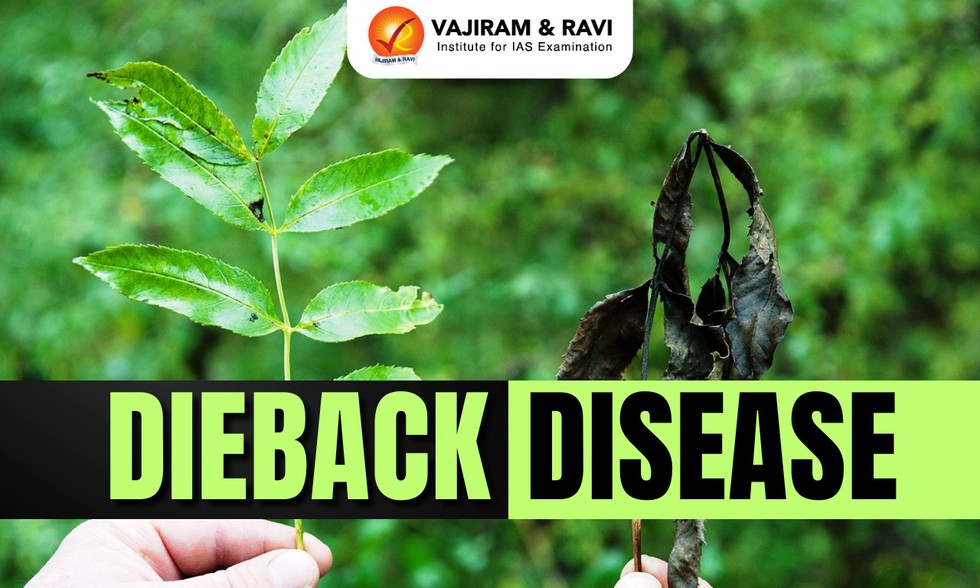
The withering of thousands of neem trees over some years had prompted the Mulugu-based Forest College & Research Institute (FCRI), to launch a comprehensive scientific probe into the devastating "dieback disease."
About Dieback Disease:
It is a fungal disease which kills a wide variety of plants.
It is responsible for causing wilting and browning of leaves from the tip of the branch, stem canker, and fruit rot.
It was first reported in the country during the 1990s in Uttarakhand.
The dieback fungus belongs to the genus Phytophthora
Mode of spread:
The fungus is spread through the movement of soil and mud, especially by vehicles and footwear.
It also moves in free water and via root-to root contact between plants.
The fungus lives in susceptible plant tissue and soil, and migrates and reproduces in warm, moist conditions.
Infected roots cannot provide the water and nutrients needed to maintain life, and the plants die from dehydration.
It causes almost 100% loss of fruit production in severely infected trees.
Where the disease occurs, the native vegetation can become devastated, and the delicate fabric of ecosystems seriously impaired; certain species can disappear from the area.
The appearance of symptoms starts with the onset of the rainy season and becomes progressively severe in the later part of the rainy season and early winter.
Dear Student,
You have still not entered your mailing address. Please enter the address where all the study materials will be sent to you. (If applicable).