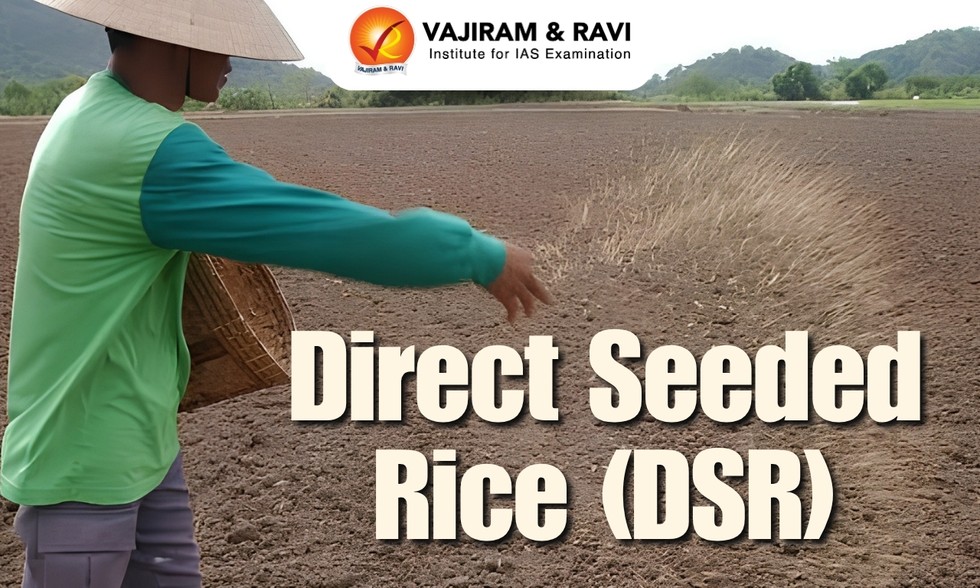
About Direct Seeded Rice (DSR):
- It is a modern farming technique where rice seeds are sown directly into the field, replacing the traditional method of transplanting seedlings from a nursery.
- Preferred Soil Types for DSR:
- DSR can be operationalized on soils ranging from medium texture (loam) to heavy texture (clay).
- However, it is recommended not to go for DSR if the soil is light textured and poorly drained.
- Advantages:
- This method skips the labor-intensive step of transplanting, saving farmers time and effort.
- DSR uses less water (up to 50%) because it doesn’t require continuous flooding of the fields.
- By conserving water and reducing labor, DSR makes rice farming more efficient and sustainable.
- DSR also reduces greenhouse gas emissions, which helps combat climate change.
- It also offers a congenial soil environment for better growth and productivity of succeeding crops.
- It increases total income by reducing the cost of cultivation.
- Mechanized DSR also creates avenues for employment through new service provisions and is less labor-intensive and free from drudgery, hence more attractive to youth and women
- Challenges in DSR Cultivation:
- Higher seed rates
- Seeds exposed to birds and pests
- Weed management
- Higher risk of lodging
- Risk of poor or non-uniform crop establishment.