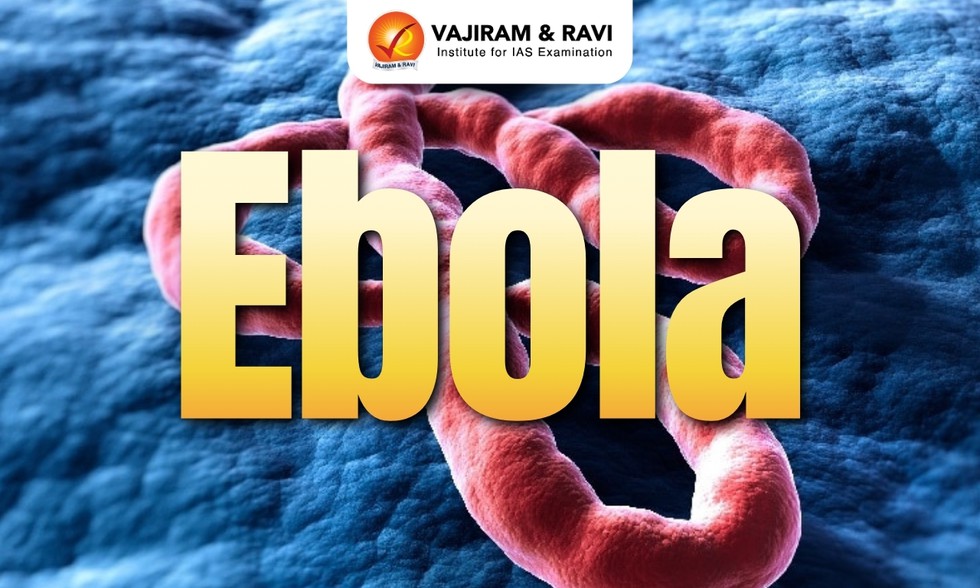
An Ebola outbreak in the Democratic Republic of Congo is now over, Congolese health officials and the U.N.'s World Health Organization said recently, after the country went 42 consecutive days without recording a new case.
About Ebola:
It is a severe and often deadly disease caused by a group of viruses known as orthoebolaviruses (formally ebolavirus).
Orthoebolaviruses were discovered in the Democratic Republic of the Congo and are found primarily in sub-Saharan Africa.
It is known as a hemorrhagic fever virus because it can cause problems with the clotting system of the body and lead to internal bleeding as blood leaks from small blood vessels.
It gets its name from the Ebola River, which is near one of the villages in the Democratic Republic of Congo where the disease first appeared.
Ebola can occur in humans and other primates (gorillas, monkeys, and chimpanzees).
Transmission:
The virus is transmitted to people from wild animals (such as fruit bats, porcupines, and non-human primates) and then spreads in the human population through direct contact with the blood, secretions, organs, or other bodily fluids of infected people and with surfaces and materials (e.g., bedding, clothing) contaminated with these fluids.
Ebola cannot be transmitted by air.
Symptoms:
It includes fever, diarrhea, vomiting, bleeding, and often, death.
Treatment:
There is no known cure for Ebola. Experimental treatments have been used, but none have been fully tested to see if they work well and are safe.
For example, there are two FDA-approved monoclonal antibody treatments for the Ebola Zaire strain (Inmazeb and Ebanga).
Current therapy consists of maintenance of fluid and electrolyte balance and the administration of blood and plasmato control bleeding.
Dear Student,
You have still not entered your mailing address. Please enter the address where all the study materials will be sent to you. (If applicable).