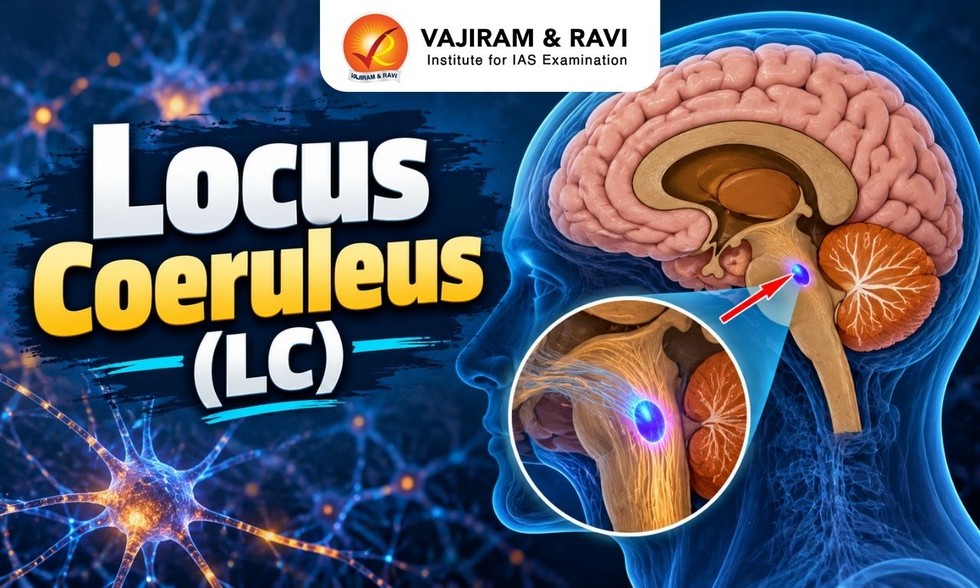
About Locus Coeruleus (LC):
- The Locus Coeruleus (LC) is a small nucleus (cluster of nerve cells) located in the pons, a part of the brainstem.
- The Pons act as a connection between the cerebrum and cerebellum.
- The Locus Coeruleus gets its name from the Latin words for "blue place."
- Although it contains only a small fraction of the brain's neurons, it produces norepinephrine (NE), a chemical messenger that helps regulate attention, learning, heart rate, and the body's reactions to stress and excitement.
- LC is the primary source of norepinephrine to the brain.
- Recent Findings:
- Scientists have long assumed that the LC operates like a loudspeaker, sending essentially the same norepinephrine signal across the brain.
- However, in a new study using brain imaging, recordings of neural activity, genetic techniques, and behavioral experiments, researchers discovered that the LC communicates through several distinct pathways.
- Rather than broadcasting one general message, it delivers signals to specific destinations, with different groups of neurons responding to different experiences.
- Different groups of cells communicate with specific regions of the nervous system.
- These pathways determine where signals trigger the release of norepinephrine, creating a much more organized communication network than previously recognized.
- Neurons in the upper (dorsal) portion of the LC primarily connect to the cerebral cortex and forebrain.
- Meanwhile, cells in the lower (ventral) portion send their signals mainly to the brainstem and spinal cord.
- This arrangement allows different parts of the LC to influence separate brain functions.
- Why the Discovery Could Matter for Brain Disorders?
- Norepinephrine plays a central role in regulating attention and mood, making it an important target for medications used to treat depression, anxiety, and ADHD.
- Neurons in the LC are also among the earliest brain cells to deteriorate in Alzheimer's disease, suggesting that the new findings could have implications for understanding and treating these conditions.
- Current treatments that influence norepinephrine can affect multiple brain circuits at once, sometimes producing beneficial effects in one region while causing unwanted effects elsewhere.
- A clearer map of the LC's specialized pathways could help scientists develop therapies that act more selectively on the circuits involved in particular symptoms.