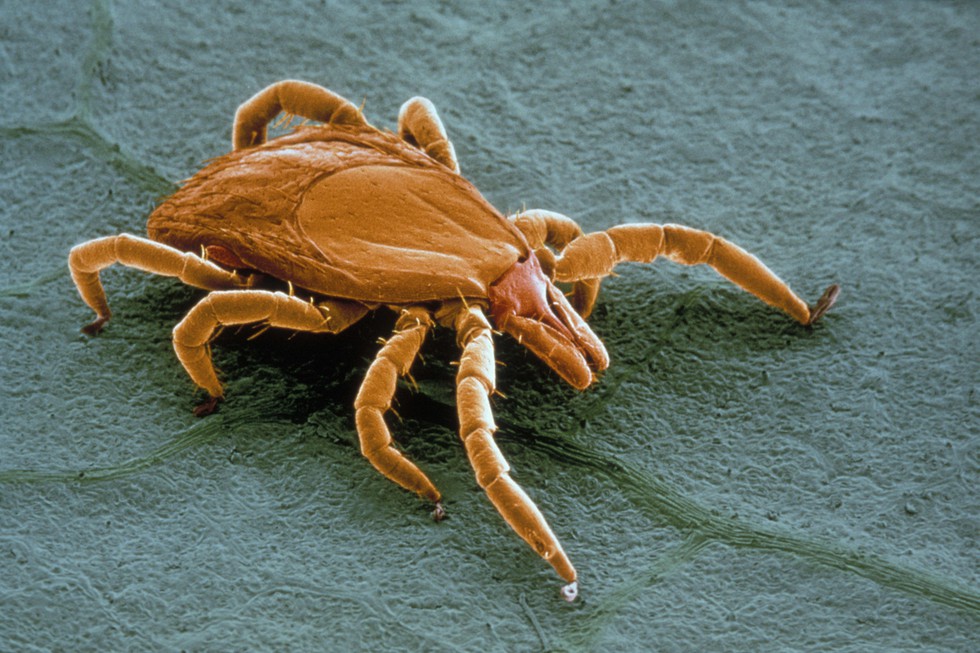
The U.S. drugmaker Pfizer and France's Valneva recently said their experimental Lyme disease vaccine showed more than 70% efficacy in a late-stage trial.
About Lyme Disease:
Lyme disease, also known as Lyme borreliosis, is an infectious illness caused by a type of bacteria called Borrelia burgdorferi.
It primarily affects the skin, nervous system, heart, and joints.
It was named after the town of Lyme, Connecticut, United States, where it was first identified in children in 1976.
It is most commonly reported in North America, Europe, and some parts of Asia.
Transmission:
It is transmitted (spread) to humans through a tick bite.
Not all tick bites cause Lyme disease. Only deer ticks (also called black-legged ticks) can spread the bacteria that cause Lyme disease.
These ticks are often found in grassy, wooded, or bushy areas, and they can attach to the skin without being noticed.
Once the bacteria enter the bloodstream, they can travel to different parts of the body and cause a wide range of symptoms.
It cannot spread between humans or from pets to humans,through air, food,or water. Lice, mosquitoes, fleas, and flies also do not transmit
Symptoms:
Lyme disease occurs in stages. The signs and symptoms of each stage can overlap.
In many cases, Lyme disease begins with a red circular rash around the site of the tick bite, often described as looking like a bull’s-eye.
Other early signs may include fever, body aches, fatigue, and swollen lymph nodes.
Untreated Lyme disease can cause severe arthritis and damage the heart and nervous system.
Treatment:
Most cases are treatable with antibiotics, although recovery can take time, especially for those who are left undiagnosed in the early stages.
Dear Student,
You have still not entered your mailing address. Please enter the address where all the study materials will be sent to you. (If applicable).