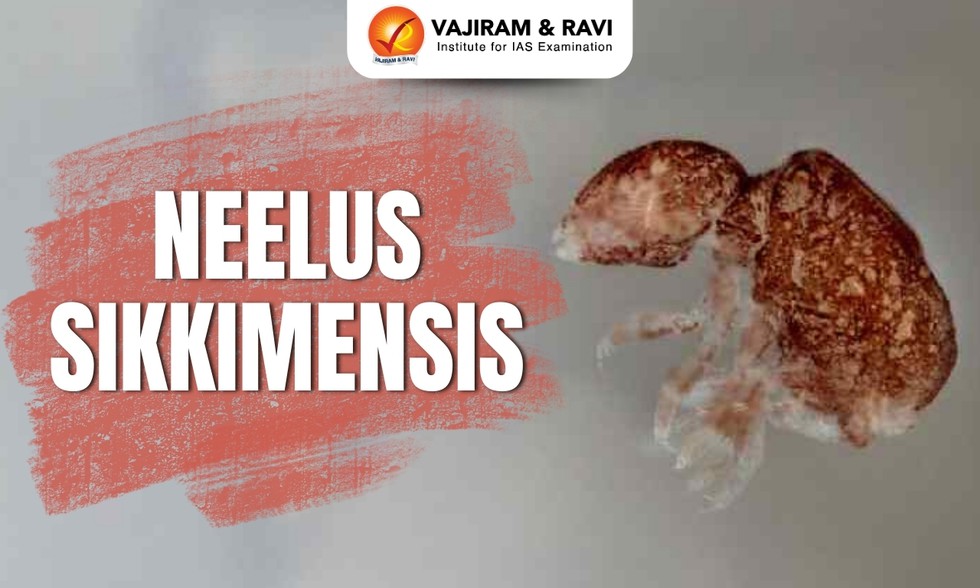
About Neelus sikkimensis:
- It is a new species of Collembola—tiny, soil-dwelling micro-arthropods.
- It was discovered in the high-altitude landscapes of Sikkim.
- It marks the first-ever record of the genus Neelus in India.
- It brings the total number of known species under this genus worldwide to eight.
- It exhibits several distinctive biological characteristics.
- Microscopic Size: An extremely small body adapted for life deep within soil and moss.
- Sensory Adaptation: A complete absence of eyes, typical of species living in dark, subterranean environments.
- Unique Morphology: A specific “labral chaetotaxy” (arrangement of bristles on the mouthparts) that distinguishes it from its global relatives.
Key Facts about Arthropods:
- Arthropods are invertebrates with jointed legs.
- They make up about 75% of all animals on Earth and have a major role in maintaining ecosystems as pollinators, recyclers of nutrients, scavengers, and food for other animals.
- They include many animals we come across in our gardens, such as spiders, ants, centipedes, and slaters.
- Arthropods are divided into four major groups:
- insects;
- myriapods (including centipedes and millipedes);
- arachnids (including spiders, mites, and scorpions);
- crustaceans (including slaters, prawn, and crabs)
Key Facts about Collembola:
- Collembola are among the most abundant and diverse soil microarthropods, which are found in almost all (semi) terrestrial environments.
- They are among the oldest and most abundant hexapods on Earth and play a crucial role in soil health and nutrient cycling.
- They are commonly known as “springtails,” because of their ability to jump using a tail-like appendage.
- They live in all types of soil and feed on algae, fungi, plant roots, and decaying organic matter.