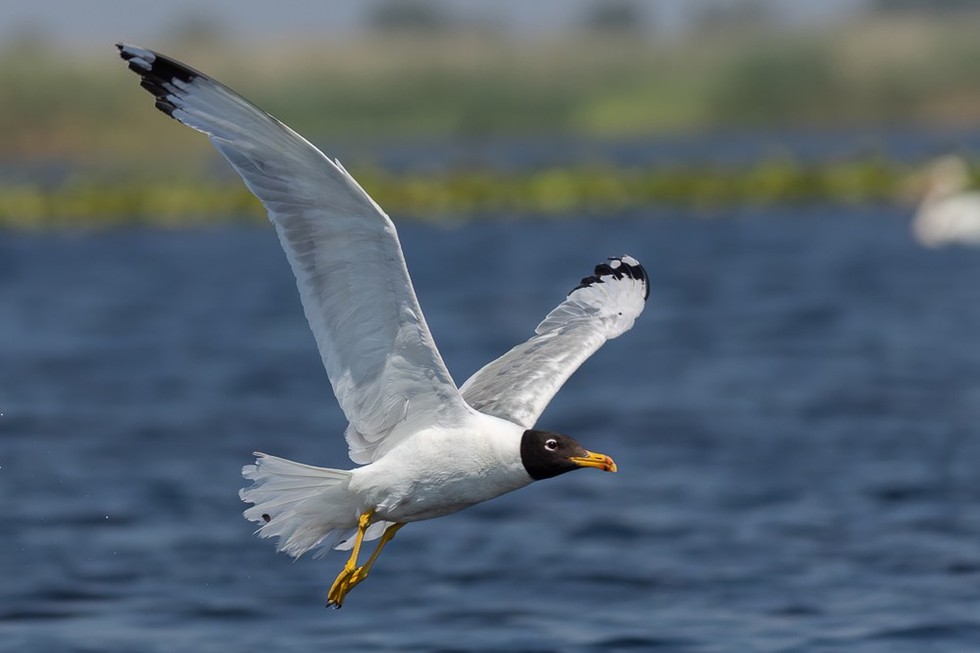
About Pallas’s Gull:
- Pallas’s Gull, also called the Great Black-headed Gull, is a large bird species belonging to the family Laridae.
- It is the world’s largest black-headed gull and the third-largest species of gull in the world.
- Scientific Name: Ichthyaetus ichthyaetus.
- Habitat and Distribution:
- It breeds in colonies in marshes and islands from southern Russia to Mongolia.
- It is migratory, wintering in warmer places. These include the eastern Mediterranean Sea, the Arabian Peninsula, and India.
- It prefers wetlands, salt lakes, lagoons, and slow-flowing rivers.
- Sometimes, a Pallas's gull might fly far off its usual path. When this happens, it is called a "vagrant."
- These gulls are sometimes seen as vagrants in Western Europe. They also visit parts of the Indian Ocean and the coasts of Africa.
- Features:
- These birds are predatory, taking fish, crustaceans, insects, and even small mammals.
- Typical Lifespan: 12 to 24 years in the wild.
- Conservation Status:
- IUCN Red List: Least Concern
Key Facts about Chandratal Lake:
- Chandra Taal (meaning the Lake of the Moon), or Chandra Tal, is a high-altitude lake situated in the Spiti Valley of Himachal Pradesh.
- This crescent-shaped lake is situated at an altitude of about 4,300 metres (14,100 ft) in the Himalayas.
- It has a circumference of about 2-3 kms and is one of the sources of the Chandra River.
- It is beautifully surrounded by snow-capped mountains on one side and cirques on the other.
- The lake is famous for its crystal-clear turquoise waters, which often change shades from blue to green depending on sunlight and weather conditions.
- It is also celebrated in Hinduism for its mention in the epic Mahabharata.
- It is a designated Ramsar site.