¯
(current)
Login
Register
Not LOGGED In
CLICK TO LOGIN
Feed
Courses
Live Classes
Mains CA Articles
Prelims CA Pointers
MCQs
Handouts
Prelims Test
Mains Test
Mains Daily Answer
Videos
Materials
CA Notes
Analyst
Mentoring Courses
Mentoring Sessions
Counselling Sessions
Home
/
Current Affairs
/
What is Phulkari?
What is Phulkari?
Jan. 23, 2026
Over 40 rare pre-Partition textiles at an exhibition trace how phulkari functioned within women’s lives, and their everyday worlds.
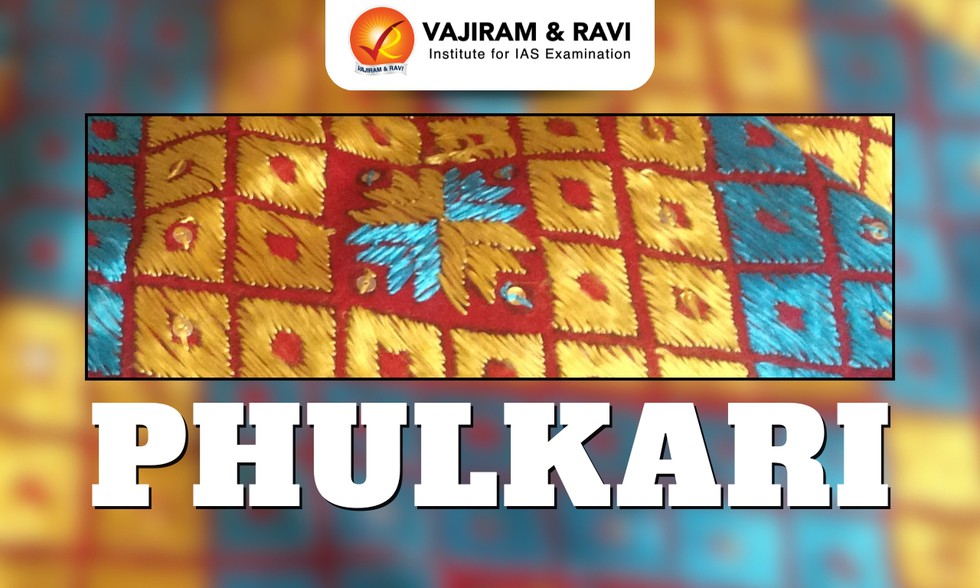
About Phulkari:
Phulkari, meaning
"flower work,"
is a
traditional embroidery of Punjab and Haryana.
The
term first appeared in 18th-century Punjabi literature
and
may be linked to the Iranian art of gulkari.
Historically
, phulkari chaddars were an essential
part of a girl's marriage trousseau, crafted by mothers
and grandmothers from the girl's birth.
Girls learned to embroider early,
with the
number of phulkaris reflecting
the
family's status
and marking cultural milestones.
Features
:
It is a form of
counted-thread embroidery
recognised by its
neat, regular patterns of geometric and natural motifs.
Phulkari embroidery
uses khaddar,
a handspun and handwoven
cotton fabric,
traditionally dyed in madder brown, rust red, indigo, or green.
Colourful silk threads
are
used to create flower patterns
on the fabric.
The mix of colourful silk threads creates a beautiful and exciting design.
The
floral imagery
used in phulkari
includes marigolds, jasmines, lotuses,
and Tree of Life motifs.
Modern motifs such as trains, trucks, and cars have also found their way into phulkari patterns.
Phulkari’s product range includes embroidered chaddars, dupattas, and stoles, traditionally worn by brides or for ceremonies.
Source :
Blooms of tradition
Latest Current Affairs
See All
Enquire Now
Mailing Address Not Entered
Dear Student,
You have still not entered your mailing address. Please enter the address where all the study materials will be sent to you. (If applicable).
Click here to enter to Proceed
Vajiram