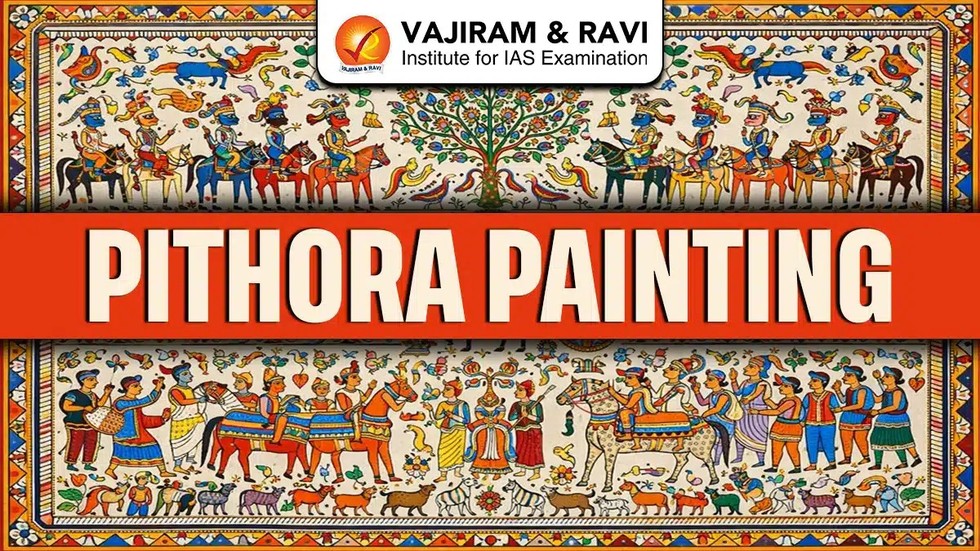
The Pithora painting, a centuries-old wall art tradition of Gujarat’s Rathwa tribal community, recently received a Geographical Indication (GI) tag.
About Pithora Painting:
It is a traditional tribal wall art that has originated in the tribal regions of Gujarat, mainly in Panchmahal and Chhota Udaipur.
It is done by tribes such as the Rathwa, Bhil, and Bhilala, who hold a strong belief in nature, spirits, and divine powers.
It holds a long history, and its existence dates back to around the 13th century.
It is named after Pithora De, who is their tribal god and is associated with marriage, prosperity, and the well-being of the tribe.
Traditionally, Pithora paintings were created on the walls of home The paintings were often commissioned during significant life events, such as weddings, births, and festivals, serving as a means of invoking blessings and protection from deities.
Artists: Traditionally executed by specialist ritual painters known as Lakharas, under the guidance of a priest called Badwa.
Surface Preparation: Traditionally, walls are prepared by applying a mixture of cow dung and clay.
Natural Colors:
Artists use natural pigments derived from minerals, plants, and other organic materials to create the colors for their paintings.
Common colors include red, yellow, green, and blue, each derived from specific natural sources.
Painters use a combination of bamboo sticks, cotton and wooden stencils to create their art.
The paintings show tribal and Hindu deities, horses, animals, and scenes from daily life like farming, hunting, and dancing.
It plays a crucial role in preserving tribal stories, beliefs, and customs and helps to teach younger generations about their culture.
Although it is traditionally practiced only as wall art, today’s generation of pithora painters use paper and canvas that they sell commercially.
It has been awarded a Geographical Indication (GI) tag in 2026.
Dear Student,
You have still not entered your mailing address. Please enter the address where all the study materials will be sent to you. (If applicable).