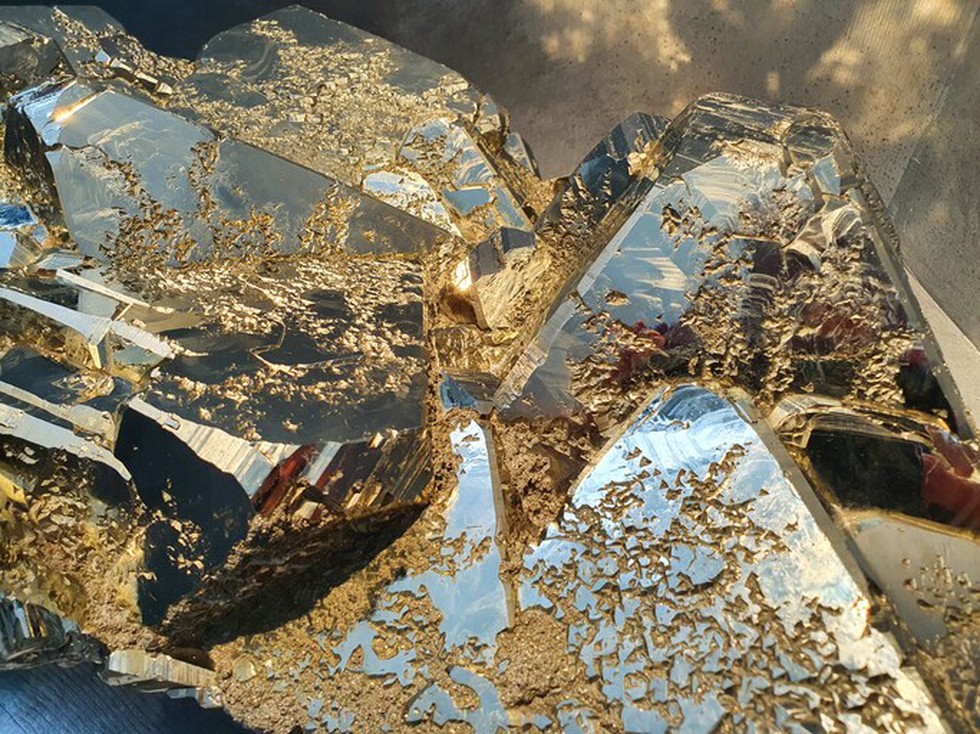
Scientists recently discovered the oldest-known evidence of fire-making by prehistoric humans in England, which included a patch of heated clay, some heat-shattered flint handaxes, and two pieces of iron pyrite - a mineral that creates sparks when struck against flint to ignite tinder.
About Pyrite:
It is a brass-yellow mineral with a bright metallic luster.
It has a chemical composition of iron sulfide (FeS2), and is the most common sulfide mineral.
The name comes from the Greek word pyr, “fire,” because pyrite emits sparks when struck by metal.
Nodules of pyrite have been found in prehistoric burial mounds, which suggests their use as a means of producing fire.
Pyrite is called “Fool’s Gold” because it resembles gold to the untrained eye.
However, pyrite is quite easy to distinguish from gold:pyrite is much lighter but harder than gold and cannot be scratched with a fingernail or pocket knife.
It is found in a wide variety of geological formations worldwide, from sedimentary deposits to hydrothermal veins and as a constituent of metamorphic rocks.
Uses:
It is a source of iron and sulfur and is used for the production of sulfuric acid.
It is used to create iron sulfate that is used to make nutritional supplements, ink, lawn conditioner, water treatment and flocculation, moss killer, and many other chemical processes.
Iron sulfate, which comes from pyrite, is used to treat iron-deficiency anemia.
Some types of pyrite contain enough microscopic gold to warrant mining them as a gold ore.
Dear Student,
You have still not entered your mailing address. Please enter the address where all the study materials will be sent to you. (If applicable).