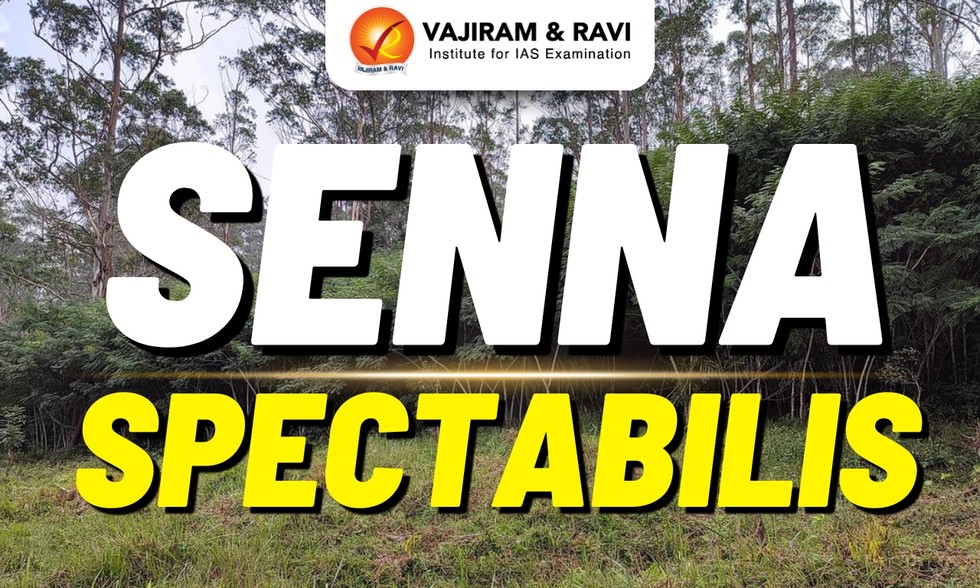
About Senna Spectabilis:
- It is a versatile, flowering tree belonging to the family Fabaceae native to the tropical Americas.
- Common names: Popcorn Bush Cedar, Archibald’s Cassia, Calceolaria Cassia, Golden Shower, Golden Wonder, Scented Shower, Fetid Cassia.
- It is admired for its vivid yellow blossoms and its capacity to grow in a variety of climates, making it a popular choice as an ornamental tree in gardens and parks worldwide.
- However, this adaptability has led to it becoming invasive in some regions of the world.
- This tree prefers sunny areas and welldrained, loamy soils but is adaptable to various soil types.
- It is classified as Least Concern under the IUCN Red List.
- Challenges: It has a very aggressive growth rate and degrades lands in forest ecosystems, which make it challenging to control its spread.
Key Facts about Male Mahadeshwara Hills Wildlife Sanctuary:
- It is located at the intersection of the Western and the Eastern Ghats and falls in the Chamarajanagara District of Karnataka.
- It is contiguous to Biligiri Rangaswamy Temple (BRT) Tiger Reserve, Sathyamangalam Tiger Reserve, and the Cauvery Wildlife Sanctuary.
- It’s the home of the famous Male Mahadeshwara Temple, dedicated to Lord Shiva, known here as Mahadeshwara.
- It is bound by the Kaveri River to the northeast and by the Palar River to the south.
- Flora: The forests are principally of the dry deciduous type, degrading to scrub forest in the fringe areas, and are interspersed with patches of moist deciduous, semi-evergreen, evergreen and shola forests occurring at varying altitudes.
- Fauna:
- It is home to several animals, including elephants, Indian bison, wild dogs, leopards, foxes, sambars, spotted deer, and many species of birds.
- It is also a tiger habitat noted for its increasing number of tigers.