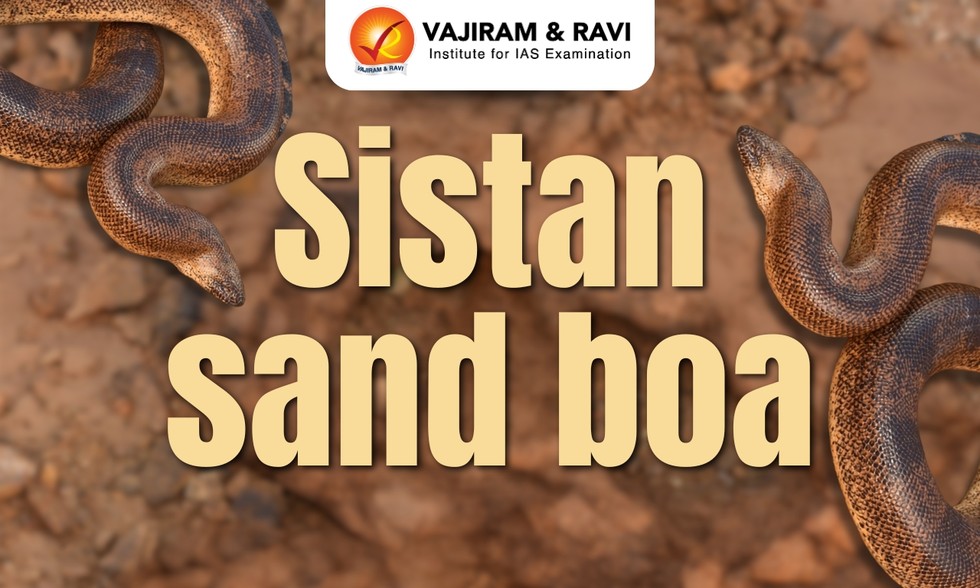
About Sistan sand boa:
- It is a species of sand boa snake.
- Scientific Name: Eryx sistanensis
- It can be distinguished from the red sand boa by its persistent dark bands and a tail that gradually tapers towards the tip.
- While red sand boas lose their body bands as they mature, the Sistan sand boa retains its sooty bands throughout life.
- Juveniles are buff-coloured, while subadults and adults are tan to tan-brown.
- The species has not yet been evaluated by the IUCN.
Key Facts about Sand Boas:
- Sand Boas are a group of non-venomous snakes belonging to the genus Eryx.
- Unlike most snakes, the tail of a sand boa snake is almost as thick as the body and gives the reptile the appearance of being “double-headed”.
- These snakes prefer dry, sandy, and loose soil environments that support their fossorial lifestyle.
- Body coloration is pale yellow to reddish to brownish, depending on the type of soil in the region.
- Most species display a mottled or blotched pattern that blends perfectly with their sandy and pebbly surroundings, an adaptation known as protective coloration.
- Sand boas spend most of their time buried just below the surface in sand or loose soil, exposing only the eyes and nostrils.
- They seize passing prey, consisting of mostly mice and lizards, which they kill by constriction.