Lunar regolith brought from the Moon by China's Chang'e 6 mission has revealed that the Moon is formed from the remains of an ancient collision between an object with Earth.
About Chang'e-6 Mission:
It is the first human sampling and return mission from the far side of the moon.
It is part of the broader Chang’e lunar exploration program, named after a Chinese goddess of the Moon.
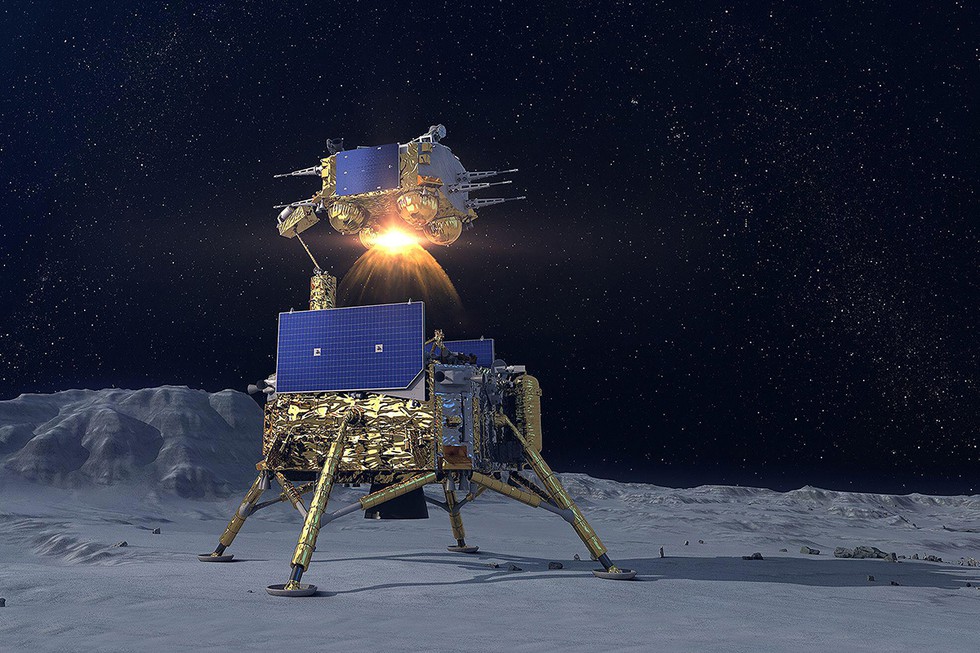
Chang’e-6 consists of an orbiter, a returner, a lander, and an ascender.
The lander was equipped with multiple sensors, including microwave, laser, and optical imaging sensors which can measure distance and speed, and identify obstacles on the lunar surface.
The probe has adopted two methods of moon sampling, which include:
Using a drill to collect subsurface samples
Grabbing samples on the surface with a robotic arm.
It marks the second time a mission has successfully reached the far side of the moon. China first completed that historic feat in 2019 with its Chang’e-4
Though the far side of the Moon holds great scientific promise, it is harder to explorethe far side of the Moon than the near side.
Communication signals from Earth can’t directly reach the far side, so relay satellites have to be launched ahead of any mission.
The Chang'e-6landed on the lunar far side and collected rock and regolith samples, and launched them to eventually return to Earth nearly a month later.
Chang’e-6 landed in the South Pole-Aitken Basin, a massive and roughly 4-billion-year-old crater covering a vast portion of the far side of the Moon.
The samples Chang’e-6 collected there could include pieces of the Moon’s interior that would have been excavated by the giant impact that formed the basin.
Dear Student,
You have still not entered your mailing address. Please enter the address where all the study materials will be sent to you. (If applicable).