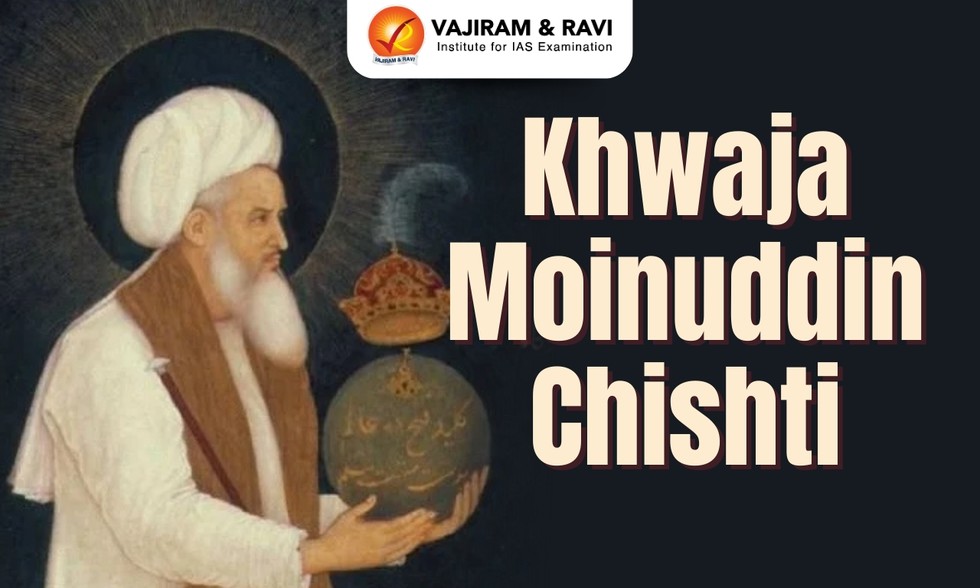
About Khwaja Moinuddin Chishti:
- He was a very important Sufi saint.
- People often call him Gharīb Nawāz, which means 'Benefactor of the Poor'.
- A follower of Sunni Hanafi theology, he became the disciple of Hazrat Khwaja Usman Harooni, who later declared him his spiritual successor.
- He came to India around the year 1192 AD. He finally settled in the city of Ajmer during the reign of Sultan Iltutmish in Delhi and Prithviraj Chauhan in Ajmer.
- He is famous for bringing the Chishti Order of Sufism to India.
- He preached love, tolerance, charity, and detachment from materialism, and established a Khanqah in Ajmer to serve the poor.
- His tomb is known as the Dargah Sharif, or the Ajmer Sharif Dargah.
- The architectural style of Dargah Sharif purely reflects the Mughal style of architecture.
- All Mughal rulers from Humayun to Shah Jahan have made modifications in the structure.
The Chishti Order's Beliefs:
- The Chishti Order is a group within Sufism.
- Sufism is a way of life in Islam that focuses on finding a deeper, more personal connection with God.
- The Chishti Order was started by a saint named Abu Ishaq Shami in Chisht, a town in Afghanistan.
- The Chishti Order is mostly followed in Afghanistan and South Asia.
- Moinuddin Chishti brought this order to India.
- The Chishti Order teaches several important things:
- Love for all people.
- Helping the poor and needy.
- Living a simple life.
- Being tolerant and peaceful.
- Listening to spiritual music, called Qawwali, to feel closer to God.