




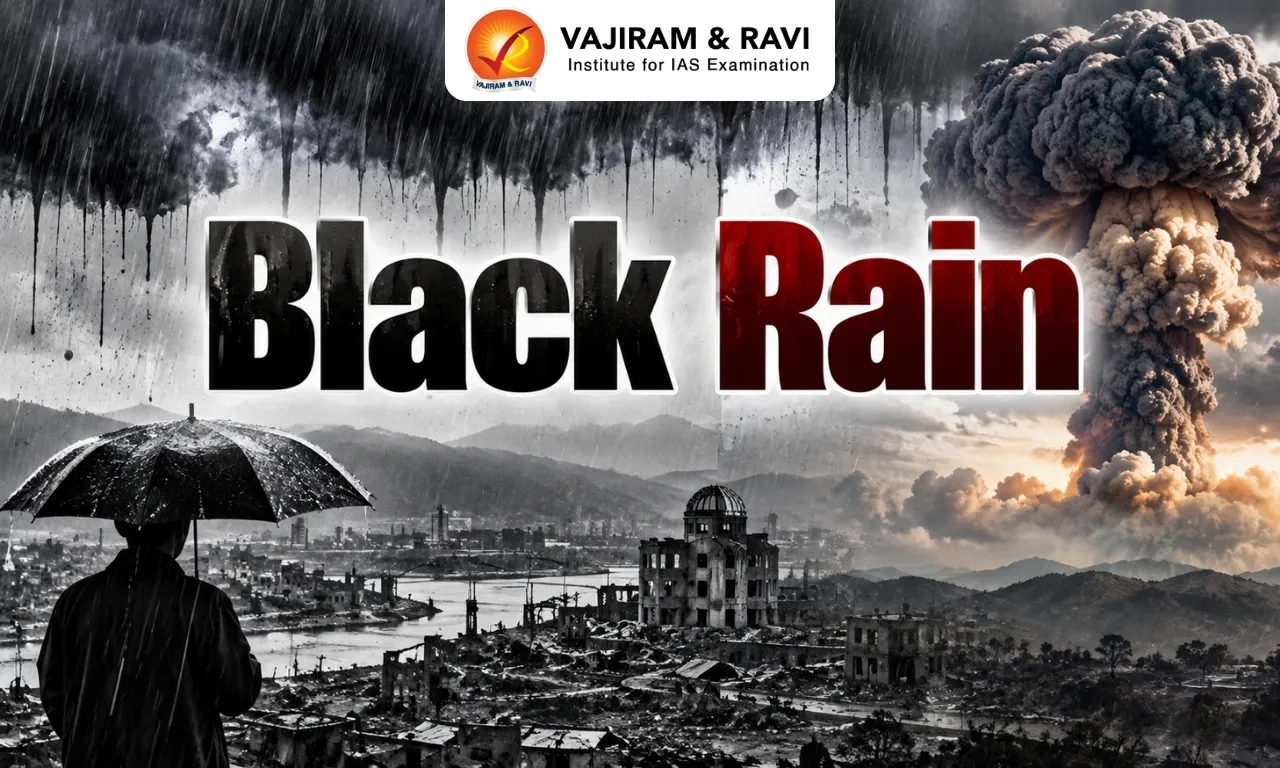
What is Black Rain?
Black rain is a type of rainfall contaminated with soot, ash, oily particles and harmful chemicals released into the atmosphere by large fires or explosions.
It occurs when raindrops mix with smoke and airborne pollutants, making the rain appear dark, oily or greasy. Black rain can pose serious risks to the environment and human health.
Why Is Black Rain in Tehran in the News?
Black rain in Tehran, Iran, has drawn attention in 2026 following reports linking Israeli strikes to fires and smoke from oil facilities. These fires can release large amounts of soot and harmful pollutants into the atmosphere, which may mix with rainfall.
The incident highlights the environmental and public health consequences of military conflicts, particularly in densely populated urban areas.


How Does Black Rain Form?
Black rain develops when airborne pollutants mix with rainwater.
- Large fires or explosions release soot, ash, hydrocarbons and other pollutants.
- Smoke plumes carry these pollutants into the atmosphere.
- Rain clouds collect pollutants as droplets form and pass through polluted air.
- Contaminated rainfall deposits dark particles and chemicals on roads, buildings, soil and vegetation.
In Tehran, the burning of oil facilities released pollutants that mixed with rainfall. The event also raised concerns about acid rain, depending on the chemical composition of the precipitation.
Environmental and Health Impacts of Black Rain
- Air pollution: Smoke and fine particles reduce air quality and can cause breathing difficulties.
- Respiratory problems: Exposure may cause coughing, headaches and breathing irritation.
- Skin and eye irritation: Contact with contaminated rain or residue may irritate the skin and eyes. Highly acidic or corrosive substances can cause burns.
- Soil contamination: Soot, heavy metals and other pollutants may accumulate in soil and affect plant growth.
- Water pollution: Contaminants can enter rivers, lakes and groundwater through surface runoff.
- Food chain contamination: Some persistent pollutants can accumulate in plants and animals and move through the food chain.
- Long-term health risks: Prolonged exposure to certain chemicals, including benzene, may increase the risk of cancer.
What Is the Connection Between Black Rain and Acid Rain?
Black rain and acid rain are related but different phenomena.
|
Basis |
Black Rain |
Acid Rain |
|
Meaning |
Rain containing soot, ash, oily particles or other pollutants |
Rain that is unusually acidic |
|
Main causes |
Large fires, explosions and industrial accidents |
Sulphur dioxide (SO₂) and nitrogen oxides (NOₓ) released into the atmosphere |
|
Formation |
Raindrops collect airborne particles and pollutants |
Sulphur and nitrogen oxides react with atmospheric moisture to form acids |
|
Effects |
Air, soil and water contamination; health risks |
Damage to soil, aquatic ecosystems, vegetation and infrastructure |
Historical Examples of Black Rain
- Hiroshima, Japan (1945): After the atomic bombing of Hiroshima during World War II, dark rain containing soot and radioactive fallout was reported. It spread radioactive contamination beyond the immediate blast area.
- Kuwait (1991): During the Gulf War, burning oil wells released massive amounts of smoke, soot and oil pollutants. The fires caused severe air pollution and widespread oil contamination, including hardened oil-and-sand deposits known as tarcrete.
- Tehran, Iran (March 2026): Fires following reported Israeli/U.S. strikes on oil facilities released dense smoke and pollutants. These pollutants mixed with rainfall, raising concerns about toxic contamination and public health.

 Last updated on Oct, 2026
→ UPSC 2027 Notification will be released on 13 January 2027 at upsconline.nic.in.
→ Check Nobel Prize 2026 Winners List here.
→ Check out the latest UPSC Syllabus here.
→ Download UPSC Calendar 2027 PDF Here.
Black Rain FAQs
Q1. What caused black rain in Tehran in March 2026?+
Q2. What chemicals are associated with black rain?+
Q3. Did the WHO warn about black rain in Iran?+
Q4. Can black rain contaminate groundwater?+
Q5. Is black rain always radioactive?+
Tags: black rain rain