




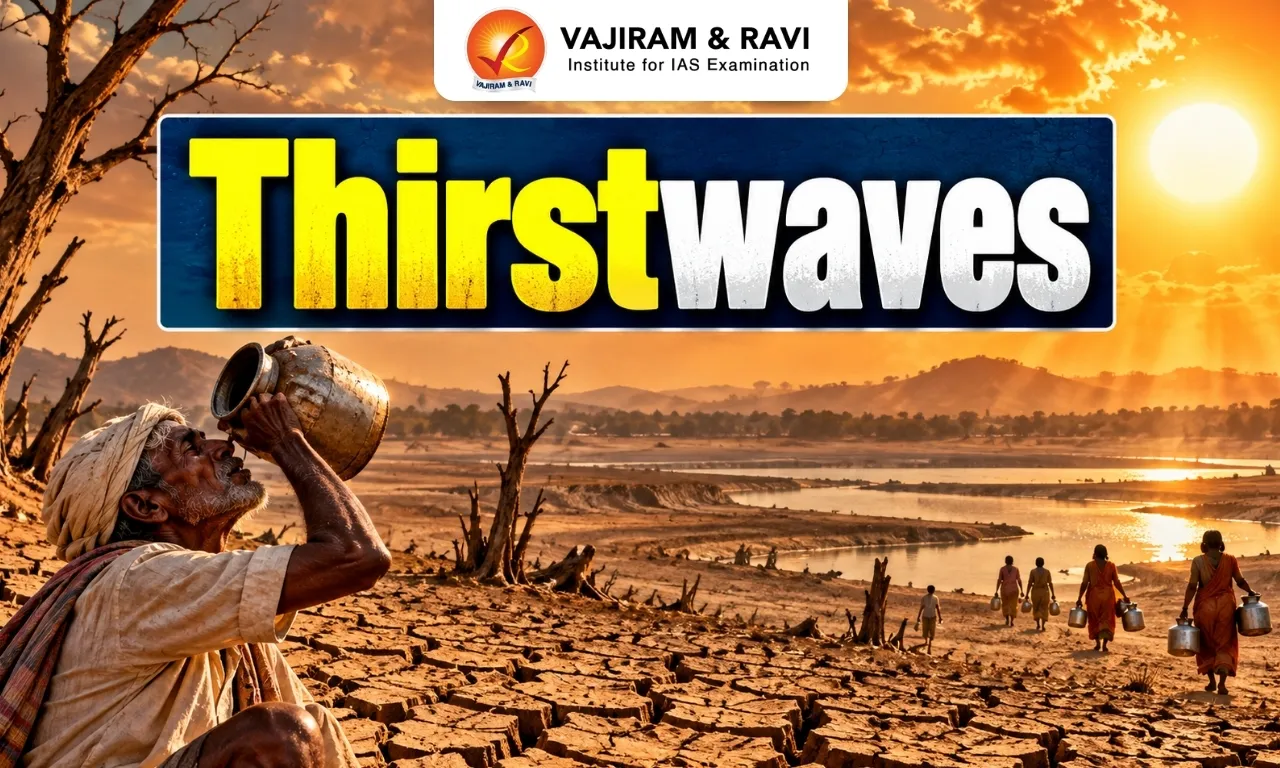
Thirstwaves are prolonged periods of unusually high atmospheric demand for moisture, during which the air draws water rapidly from soil, plants and other surfaces. The concept, introduced in 2025, helps explain how global warming intensifies land drying beyond the effects of high temperatures alone. Understanding Thirstwaves is important for agriculture, water management and climate adaptation, as these events can increase crop stress, irrigation needs and environmental risks even when rainfall or irrigation has provided water.
What are Thirstwaves?
The Definition of Thirstwave refers to three or more consecutive days when atmospheric evaporative demand exceeds its historical 90th percentile threshold. Researchers Meetpal Kukal and Mike Hobbins introduced the term to describe prolonged exposure to extreme moisture demand, particularly during the crop growing season from April to October. Unlike heatwaves, Thirstwaves account for several weather conditions together, providing a broader understanding of how atmospheric conditions accelerate water loss from agricultural land and vegetation.
Thirstwaves Features
The major highlighting features of the Thirstwaves are:
- Causes of Thirstwaves: Higher temperatures, reduced humidity, stronger winds and increased solar radiation raise atmospheric moisture demand, accelerating water loss from soil and vegetation.
- Measurement of Thirstwaves: Standardised short crop evapotranspiration (ETₒₛ) measures atmospheric demand using a hypothetical, well watered grass surface of approximately 12 centimetres, with vegetation characteristics kept constant.
- Difference Between Heatwaves and Thirstwaves: Heatwaves primarily describe periods of extreme heat, whereas Thirstwaves combine temperature, humidity, wind speed and solar radiation to assess the atmosphere's overall drying potential.
- Impact on Agriculture: High evaporative demand increases moisture loss from crops and soil, raising irrigation requirements and potentially reducing crop health and yields, even under adequate irrigation.
- Increasing Global Trends: Research published in Earth's Future in 2025 examined US croplands from 1981 to 2021 and found that Thirstwaves became more frequent, longer and more intense.
- Environmental Consequences: Prolonged atmospheric moisture demand reduces soil water availability and increases vegetation dryness. When combined with low precipitation, these conditions can heighten drought severity and wildfire danger.


Thirstwaves in India
India needs greater understanding of Thirstwaves because agricultural productivity and water availability are sensitive to changing climatic conditions. Existing research provides useful evidence of regional changes in evaporative demand.
- Rising Evaporative Demand: Research published in 2022 identified increases in actual evapotranspiration across northern India, the Western Himalayas and several areas of the Eastern Himalayas, potentially linked to vegetation growth or agricultural expansion.
- Role of Humidity: A 1997 study reported declining evaporation and potential evapotranspiration in India over the preceding three decades, suggesting that humidity had offset the influence of rising temperatures.
- Future Climate Risks: Continued warming may outweigh humidity's moderating influence, increasing atmospheric moisture demand and creating additional pressure on agricultural water resources across different regions and seasons.
- Limited Thirstwave Data: Detailed evidence on extreme Thirstwaves in India remains unavailable. Regional differences in climate, crops and ecosystems make local measurement essential for identifying vulnerable agricultural areas.
- Research on South Asia: Researchers are investigating Thirstwave behaviour across South Asia, including through collaboration involving Indian scholars. Such work can strengthen understanding of climate risks affecting food production and water security.
Thirstwaves Challenges and Way Forward
Managing Thirstwaves requires reliable climate information, region specific research and improved agricultural planning. Recognising extreme evaporative demand can help farmers and policymakers prepare for emerging environmental risks.
- Strengthen Monitoring Systems: Develop systematic observations of evaporative demand and Thirstwave duration across Indian regions to identify emerging hotspots and improve assessments of agricultural climate risks.
- Improve Irrigation Planning: Use evaporative demand measurements to guide irrigation timing and water allocation, helping farmers respond to changing atmospheric conditions and avoid unnecessary water losses.
- Support Climate Specific Research: Examine how different crops, ecosystems and geographical regions respond to Thirstwaves, enabling locally appropriate adaptation measures rather than relying on uniform national assessments.
- Increase Farmer Awareness: Educate farmers and water managers about atmospheric moisture demand, its relationship with soil drying and the importance of adjusting agricultural practices to changing weather conditions.
- Reassess Vulnerable Regions: Identify areas where Thirstwaves may cause severe impacts despite comparatively lower evaporative demand, ensuring that climate preparedness considers actual vulnerability alongside conventional climate indicators.
- Integrate Climate Adaptation: Incorporate Thirstwave monitoring into agricultural planning, drought preparedness and water management strategies to strengthen resilience against increasing climatic extremes.
What is Evaporative Demand?
Evaporative Demand describes the atmosphere's potential to draw moisture from land, vegetation and water surfaces when sufficient water is available. It reflects weather conditions rather than actual water loss, making it a useful indicator for understanding surface drying and agricultural water requirements.
- Meaning of Evaporative Demand: It indicates the maximum potential for water to move from Earth's surface into the atmosphere under prevailing weather conditions, assuming sufficient moisture is available.
- Influencing Factors: Temperature, humidity, wind speed and solar radiation determine atmospheric moisture demand. Warm, dry, sunny and windy conditions generally increase the rate at which surfaces can lose water.
- Evapotranspiration and Water Loss: Evapotranspiration combines evaporation from surfaces with transpiration through plant leaves. Its reference measurement estimates potential water use under standardised vegetation and water availability conditions.
- Difference Between Demand and Actual Evaporation: High evaporative demand does not guarantee high actual water loss. When soil moisture is limited, evaporation may remain low despite the atmosphere's strong capacity to draw water.
- Importance for Agriculture: Evaporative demand helps estimate crop water requirements and plan irrigation schedules, supporting better agricultural water management under changing climatic conditions.

 Last updated on Oct, 2026
→ UPSC 2027 Notification will be released on 13 January 2027 at upsconline.nic.in.
→ Check Nobel Prize 2026 Winners List here.
→ Check out the latest UPSC Syllabus here.
→ Download UPSC Calendar 2027 PDF Here.
Thirstwaves FAQs
Q1. What is a Thirstwave?+
Q2. How are Thirstwaves different from heatwaves?+
Q3. What causes Thirstwaves?+
Q4. What is the impact of Thirstwaves on agriculture?+
Q5. Are Thirstwaves increasing in India?+
Tags: thirstwaves