




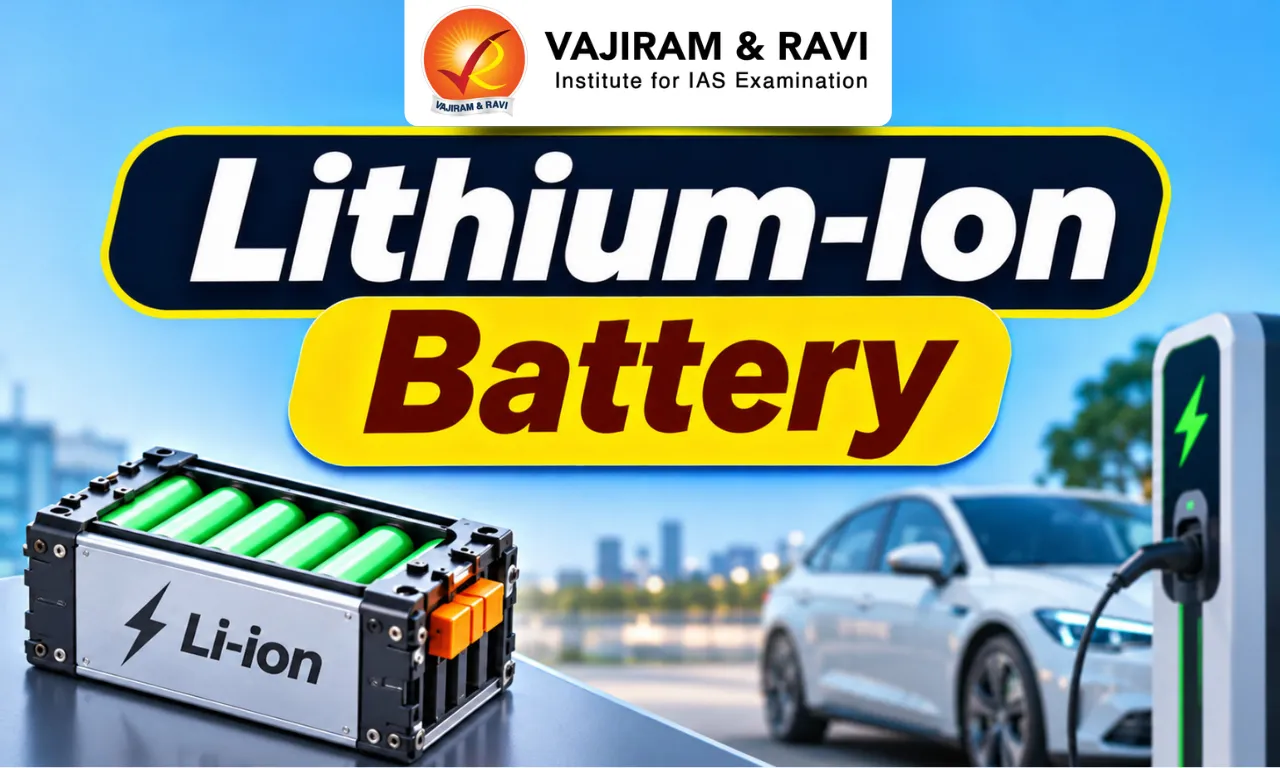
Lithium-Ion Battery technology is essential for modern energy storage, electric mobility and renewable energy integration. These rechargeable batteries power electronic devices, electric vehicles and energy storage systems. Their importance extends to India's energy security, critical mineral requirements, domestic manufacturing, recycling and the global transition towards cleaner energy sources.
What are Lithium-Ion Battery?
A Lithium-Ion Battery (Li-ion) is a rechargeable energy storage device that uses lithium ions to transfer charge between two electrodes. It offers high energy density, lightweight construction, low self discharge and efficient performance, making it suitable for portable electronics, electric vehicles and large scale renewable energy storage.
Lithium-Ion Battery Components and Structure
A Lithium-Ion Battery consists of five major components that enable energy storage, ion movement and safe operation.
- Cathode (Positive Electrode): Usually made of lithium metal oxides such as Lithium Cobalt Oxide (LCO), Lithium Iron Phosphate (LFP) and Nickel Manganese Cobalt (NMC). Its material determines battery performance.
- Anode (Negative Electrode): Generally made of graphite, which stores lithium ions during charging. Silicon based materials are also being explored to improve energy storage capacity.
- Electrolyte: Consists of a lithium salt, commonly LiPF₆, dissolved in an organic solvent. It provides a medium for lithium ions to move between the electrodes.
- Separator: A permeable membrane placed between the anode and cathode. It prevents direct contact and short circuits while allowing lithium ions to pass through.
- Current Collectors: Two current collectors connect the electrodes with the external circuit. They facilitate electron movement during charging and discharging.


Lithium-Ion Battery Working
The working of a Lithium-Ion Battery is based on reversible electrochemical reactions involving the movement of lithium ions and electrons.
- Discharging Process: Lithium ions move from the anode towards the cathode through the electrolyte. Simultaneously, electrons travel through the external circuit, generating electricity to operate connected devices.
- Charging Process: External electrical energy reverses the process. Lithium ions move from the cathode back towards the anode, where they are stored for subsequent use.
- Electrochemical Reactions: Oxidation and reduction reactions occur during discharging and charging, respectively. These reversible reactions enable repeated energy storage and electricity generation.
- Rechargeability: The movement of lithium ions between the electrodes allows batteries to undergo hundreds or thousands of charging and discharging cycles, depending on their chemistry and operating conditions.
Lithium-Ion Battery Applications
The high energy density, compact design and rechargeable nature of Li-ion batteries make them useful across several important sectors.
- Electric Vehicles: Used in electric and hybrid vehicles to provide efficient energy storage, support transportation electrification and reduce dependence on conventional fossil fuel based mobility.
- Portable Electronics: Widely used in smartphones, laptops, tablets and other electronic devices because of their lightweight construction and ability to store considerable energy.
- Renewable Energy Storage: Store electricity generated through solar and wind energy systems, helping manage intermittent power generation and improve renewable energy integration.
- Aerospace and Defence: Used in aircraft electrical systems, submarines and defence equipment where lightweight energy storage, reliable power supply and operational efficiency are important.
- Medical Devices: Used in cardiac pacemakers, implantable medical equipment and other devices requiring compact and dependable rechargeable power sources.
- Emergency Power Systems: Provide backup electricity in uninterruptible power supply (UPS) systems, server facilities and other critical infrastructure during power interruptions.
- Industrial Applications: Support telecommunications, industrial equipment, electric wheelchairs, stairlifts and other applications requiring portable or reliable electrical power.
Lithium-Ion Battery Significances
Lithium-Ion Battery technology has significant economic, environmental and strategic importance in the transition towards sustainable energy systems.
- High Energy Density: Stores substantial energy relative to its weight and volume. Energy density can reach approximately 260–270 Wh/kg, making it suitable for electric vehicles and portable electronics.
- High Efficiency: Offers approximately 90–95% charge discharge efficiency, reducing energy losses and making these batteries suitable for renewable energy storage applications.
- Lightweight and Compact Design: Weighs approximately 50–60% less than traditional batteries, supporting lightweight electronic devices and improving the practical range of electric vehicles.
- Low Self Discharge: Loses relatively little stored charge when not in use, allowing energy to remain available for longer periods compared with several conventional rechargeable batteries.
- Longer Battery Life: Can support approximately 2,000 charge discharge cycles under suitable conditions, with certain batteries offering an operational lifespan of around 8–10 years.
- No Memory Effect: Does not suffer from the memory effect associated with certain older rechargeable batteries, allowing charging without requiring complete discharge beforehand.
- Clean Energy Transition: Supports electric mobility and renewable energy storage, contributing to reduced dependence on fossil fuels and India's transition towards cleaner energy sources.
- Strategic Mineral Security: Lithium, cobalt and nickel are important battery materials. Securing their supply is essential for India's energy security, manufacturing capacity and reduced import dependence.
Lithium-Ion Battery Strategic Importance
India's Initiatives and Strategic Importance related to the Lithium-Ion Battery are:
- 500 GW Non Fossil Energy Target: Lithium-ion batteries can support India's target of achieving 500 GW of non fossil fuel based energy capacity by 2030 through electricity storage and grid management.
- Khanij Bidesh India Ltd (KABIL): Incorporated in August 2019 by NALCO, Hindustan Copper and Mineral Exploration Ltd to acquire strategic mineral assets, including lithium and cobalt, overseas.
- Lithium Triangle: Chile, Argentina and Bolivia possess significant lithium reserves. Australia is another major source, while China has a strong position in lithium processing and battery supply chains.
- International Mineral Partnerships: KABIL has pursued overseas mineral partnerships, including cooperation with Argentina, to strengthen India's access to lithium and reduce dependence on imports.
- Black Mass Recycling: In November 2026, the Directorate General of Foreign Trade (DGFT) prohibited exports of lithium-ion battery black mass under ITC(HS) Code 85491400 to retain valuable materials for domestic recycling.
Lithium-Ion Battery Challenges
Despite their advantages, Li-ion batteries face several economic, environmental and technological challenges affecting their wider adoption.
- Fire and Thermal Runaway: Overheating, physical damage or electrical stress can cause thermal runaway, potentially resulting in fires and safety hazards during operation.
- High Manufacturing Cost: Dependence on lithium, cobalt, nickel and other specialised materials increases production costs, making batteries relatively expensive compared with some alternatives.
- Import Dependence: Uneven geographical distribution of lithium reserves and concentration of processing facilities create supply chain vulnerabilities for countries such as India.
- Environmental Impact of Mining: Lithium extraction can require substantial water resources, creating environmental pressure in mining regions and raising concerns about sustainable resource management.
- Battery Degradation: Repeated charging, discharging and exposure to high temperatures gradually reduce storage capacity, affecting long term performance and replacement costs.
- Safety Requirements: Lithium ion battery packs require protective circuits and monitoring systems to regulate temperature, voltage and internal operating conditions, increasing system complexity.
- Limited Low Temperature Performance: Charging performance can decline at freezing temperatures, restricting efficient operation under certain climatic conditions.
- Recycling Challenges: Improper disposal can cause environmental damage, while recovering valuable materials requires suitable recycling infrastructure, technology and effective waste management systems.
Lithium-Ion Battery Alternatives
Research into alternative battery technologies aims to reduce dependence on critical minerals, improve safety, lower costs and enhance energy storage performance.
- Sodium-Ion Batteries: Use sodium instead of lithium, which is over 500 times more abundant. They offer potential cost advantages, wider temperature tolerance and reduced dependence on geographically concentrated lithium resources.
- Solid-State Batteries: Replace conventional liquid electrolytes with solid alternatives. They have the potential to improve battery safety, increase energy density and reduce charging time.
- Lithium-Sulfur Batteries: Use sulfur as a major cathode material and offer the potential for substantially higher energy storage capacity than conventional lithium-ion technologies.
- Graphene Batteries: Explore graphene based materials to improve electrical conductivity and charging performance, offering potential applications in advanced energy storage systems.
- Fluoride Batteries: Use fluoride ions for energy storage and have the potential to provide considerably higher energy capacity than conventional lithium based batteries.
- Silicon Based Batteries: Replace conventional graphite anodes with silicon based materials to improve energy storage capacity while retaining the basic lithium ion battery framework.
- Ammonia Powered Systems: Explore ammonia as a potential hydrogen carrier for fuel cells. Their wider adoption depends on developing cleaner ammonia production and efficient conversion technologies.
- Carbon Nanotube Electrodes: Vertically aligned carbon nanotubes are being explored as electrode materials because of their potential to improve battery capacity and high rate charging performance.
Note: The Nobel Prize in Chemistry 2019 was awarded to M. Stanley Whittingham, John B. Goodenough and Akira Yoshino for their contributions to the development of lithium ion batteries.

 Last updated on Nov, 2026
→ UPSC 2027 Notification will be released on 13 January 2027 at upsconline.nic.in.
→ Check Nobel Prize 2026 Winners List here.
→ Check out the latest UPSC Syllabus here.
→ Download UPSC Calendar 2027 PDF Here.
Lithium-Ion Battery FAQs
Q1. What is a Lithium-Ion Battery used for?+
Q2. Who developed the Lithium-Ion Battery?+
Q3. What are the main components of a Lithium-Ion Battery?+
Q4. What are the major disadvantages of Lithium-Ion Batteries?+
Q5. Which batteries can replace Lithium-Ion Batteries in the future?+
Q6. Why are Lithium-Ion Batteries important for renewable energy storage?+
Q7. What is the role of KABIL in lithium resource security?+
Q8. What is black mass in Lithium-Ion Battery recycling?+
Tags: battery lithium lithium battery lithium-ion battery