




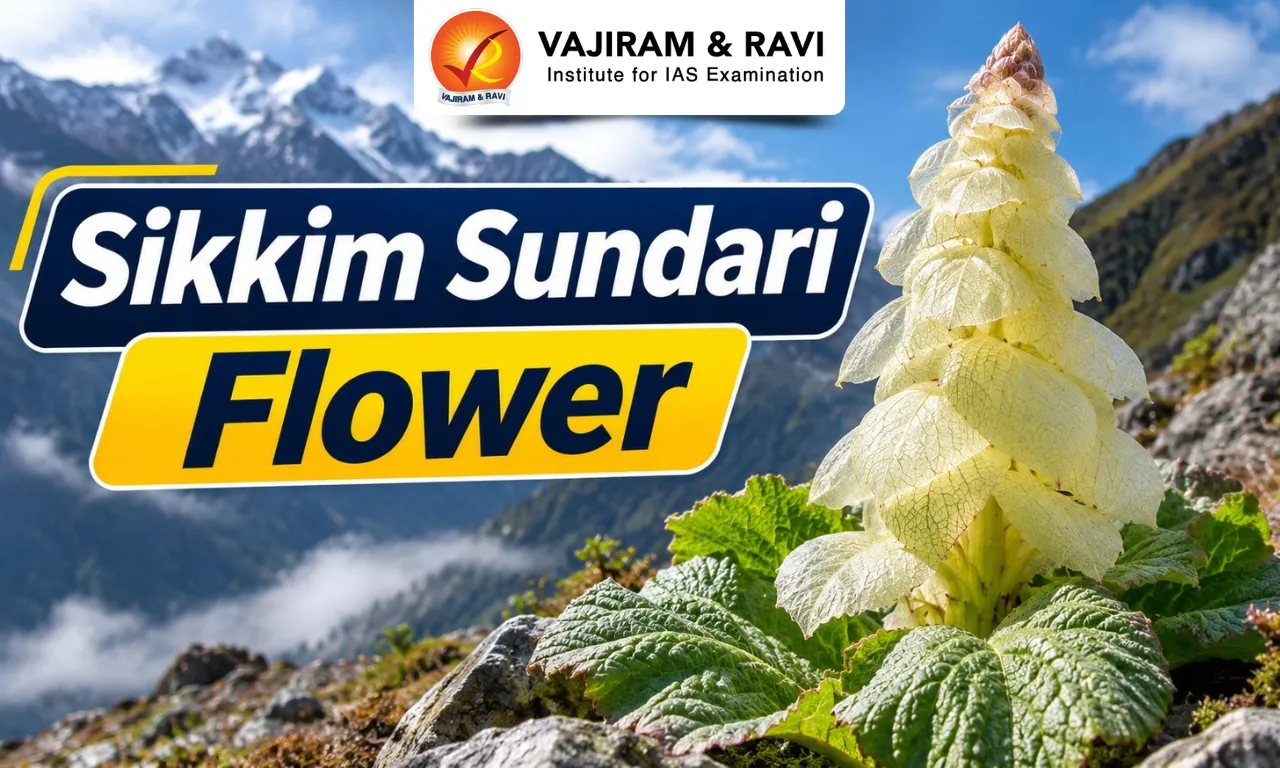
Sikkim Sundari Flower, scientifically known as Rheum nobile, is a rare high-altitude plant found in the eastern Himalayas. It is known for its unusual flowering structure, in which translucent bracts surround the flowers and create a glasshouse-like appearance. This adaptation helps the plant survive the cold, windy conditions of high-altitude environments.
The plant gained attention after industrialist Anand Mahindra shared a post describing its unusual life cycle as a “masterclass in patience”. Its ability to survive extreme climatic conditions and its distinctive reproductive cycle make it an interesting feature of Himalayan biodiversity.
About Sikkim Sundari Flower
- Rheum nobile belongs to the Polygonaceae family, which also includes rhubarb and buckwheat.
- It is a giant herbaceous perennial commonly known as noble rhubarb or the Glasshouse Plant.
- It grows in alpine regions of the eastern Himalayas, generally at elevations of around 4,000-4,800 metres.
- It is found in parts of India, Nepal, Bhutan and Tibet.
- In Sikkim, it occurs in high-altitude areas of North Sikkim, particularly near alpine passes and glacial valleys.
Also Read:- Folk Dances of Sikkim
Sikkim Sundari Flower Distinctive Features and Adaptations
The most striking feature of Sikkim Sundari is its tall flowering structure, surrounded by overlapping, translucent and straw-coloured bracts. These bracts give the plant its glasshouse-like appearance.
- The translucent bracts allow sunlight to enter while helping retain heat around the flowers.
- They protect the delicate reproductive structures from freezing winds and intense ultraviolet (UV) radiation.
- The enclosed structure creates a relatively warmer microclimate, helping the plant reproduce in cold alpine conditions.
- The thin, papery bracts rustle in the wind, giving the plant a distinctive appearance and sound.


Life Cycle of Sikkim Sundari Flower
Sikkim Sundari has a monocarpic life cycle, meaning that it flowers and produces seeds only once during its lifetime and dies after reproduction.
- For several years, the plant remains close to the ground in the form of a small rosette of leaves.
- During this period, it stores energy and resources to support its eventual flowering.
- After reaching maturity, it produces a flowering stem that can grow up to around two metres.
- The flowering stem develops a distinctive pagoda-like structure, followed by seed production.
- After dispersing its seeds, the plant dies.
The plant is commonly reported to spend around 7-30 years in its vegetative stage before flowering. The duration may vary depending on environmental conditions.
Traditional and Local Uses of Sikkim Sundari Flower
Rheum nobile is associated with traditional knowledge and local practices in the Himalayan region.
- Its stems are reported to be consumed by local communities for their sour taste and are locally known as “Chuka”.
- Different parts of the plant have been associated with traditional medicinal uses in Himalayan communities.
- These traditional uses do not, by themselves, establish the plant's medicinal effectiveness through clinical research.
Sikkim Sundari Flower Conservation Concerns
The plant's restricted high-altitude habitat and slow reproductive cycle make it vulnerable to environmental disturbances.
- Its long vegetative phase means that plants may take several years to reach reproductive maturity.
- Disturbances to alpine habitats can affect its survival and regeneration.
- Research on Rheum nobile populations in southwestern China has identified yak grazing as a factor that can adversely affect population growth.
- Protection of fragile alpine habitats and management of grazing pressure are important for conserving high-altitude plant species.

 Last updated on Nov, 2026
→ UPSC 2027 Notification will be released on 13 January 2027 at upsconline.nic.in.
→ Check Nobel Prize 2026 Winners List here.
→ Check out the latest UPSC Syllabus here.
→ Download UPSC Calendar 2027 PDF Here.
Sikkim Sundari Flower FAQs
Q1. What is the scientific name of Sikkim Sundari?+
Q2. Why is Sikkim Sundari called the Glasshouse Plant?+
Q3. What is the life cycle of Sikkim Sundari?+
Q4. At what altitude does Sikkim Sundari grow?+
Q5. What is the major threat to Sikkim Sundari?+
Tags: sikkim sundari sikkim sundari flower