Why in the News?
- Escalating geopolitical tensions in West Asia have renewed attention on critical maritime chokepoints such as the Strait of Hormuz, Bab-el-Mandeb, and the Malacca Strait.
What’s in Today’s Article?
- Maritime Chokepoints (Strait of Hormuz, Bab-el-Mandeb, Malacca Strait)
- News Summary (Significance of the Chokepoints)
Strategic Maritime Chokepoints in the Indian Ocean
- Maritime chokepoints are narrow sea routes through which a substantial volume of global trade and energy supplies pass.
- Any disruption in these routes can significantly affect global shipping, oil prices, supply chains, and energy security.
- The Indian Ocean region hosts some of the world’s most important chokepoints, particularly for oil and container trade.
Strait of Hormuz
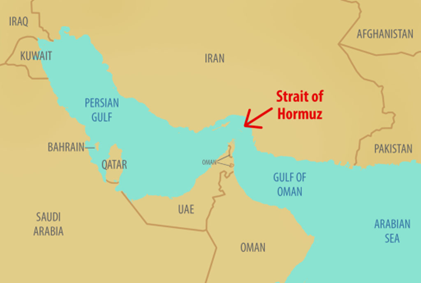
- The Strait of Hormuz lies between Iran and Oman and connects the Persian Gulf with the Gulf of Oman and the Arabian Sea.
- It is one of the most critical energy chokepoints in the world because:
- Around 20-25% of the global oil trade passes through it.
- Major Gulf oil exporters such as Saudi Arabia, Iraq, Kuwait, UAE, and Qatar depend on this route.
- India, China, Japan, and European countries rely heavily on oil shipments passing through the strait.
- Any blockade or military disruption in the Strait of Hormuz can trigger sharp increases in global crude oil prices and disrupt international trade.
Bab-el-Mandeb Strait
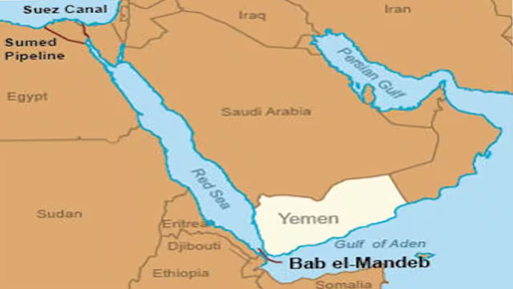
- The Bab-el-Mandeb Strait lies between Yemen on the Arabian Peninsula and Djibouti/Eritrea in Africa. It connects the Red Sea to the Gulf of Aden, ultimately linking maritime traffic to the Suez Canal.
- Its importance lies in the fact that:
- It serves as a key route for Europe-Asia trade.
- Nearly 10% of the global seaborne oil trade passes through this route.
- It is essential for container shipping between Asia and Europe.
- Recent attacks by Houthi rebels in the Red Sea region have increased security concerns and disrupted shipping routes, forcing vessels to take longer alternate routes.
Malacca Strait
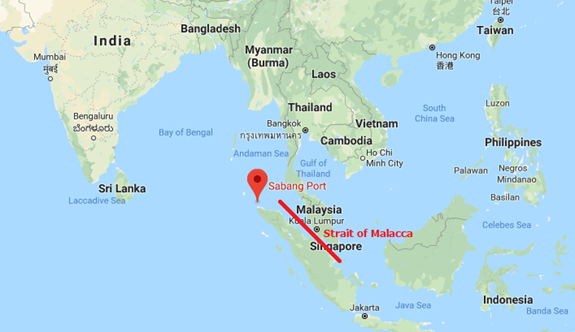
- The Malacca Strait, located between Malaysia, Singapore, and Indonesia, connects the Indian Ocean with the Pacific Ocean.
- It is one of the busiest shipping routes globally because:
- Nearly one-fourth of global trade passes through it.
- Around 80% of China’s oil imports transit through this route.
- It is vital for energy imports of India, China, Japan, and South Korea.
- Due to its strategic significance, the Malacca Strait is often viewed as a potential geopolitical vulnerability, especially in the context of Indo-Pacific competition.
News Summary
- While global attention remains focused on the Strait of Hormuz, two additional chokepoints in the Indian Ocean, Bab-el-Mandeb and the Malacca Strait, are equally critical for global commerce and energy movement.
- Concerns Over Strait of Hormuz
- Amid rising tensions between Iran and Israel/US, concerns have emerged regarding possible disruptions in the Strait of Hormuz.
- The Strait handles nearly one-fifth of global oil supply, making it indispensable for global energy markets. Even temporary disruptions can raise freight costs, fuel inflation, and affect energy-importing countries like India.
Red Sea Crisis and Bab-el-Mandeb Risks
- Shipping through the Bab-el-Mandeb Strait has already faced disruptions due to attacks by Houthi rebels in the Red Sea region. As a result:
- Several shipping companies diverted vessels around the Cape of Good Hope in South Africa.
- Shipping time increased significantly.
- Freight and insurance costs rose sharply.
- This demonstrates how instability in one chokepoint can disrupt global supply chains.
Limited Alternatives to Chokepoints
- Experts underline that there are few practical alternatives to these narrow maritime passages. For example:
- Ships bypassing Bab-el-Mandeb through the Cape of Good Hope face higher transport costs and delays.
- Alternative pipelines to bypass the Strait of Hormuz have limited capacity.
- Thus, uninterrupted functioning of these chokepoints remains essential for global economic stability.

