




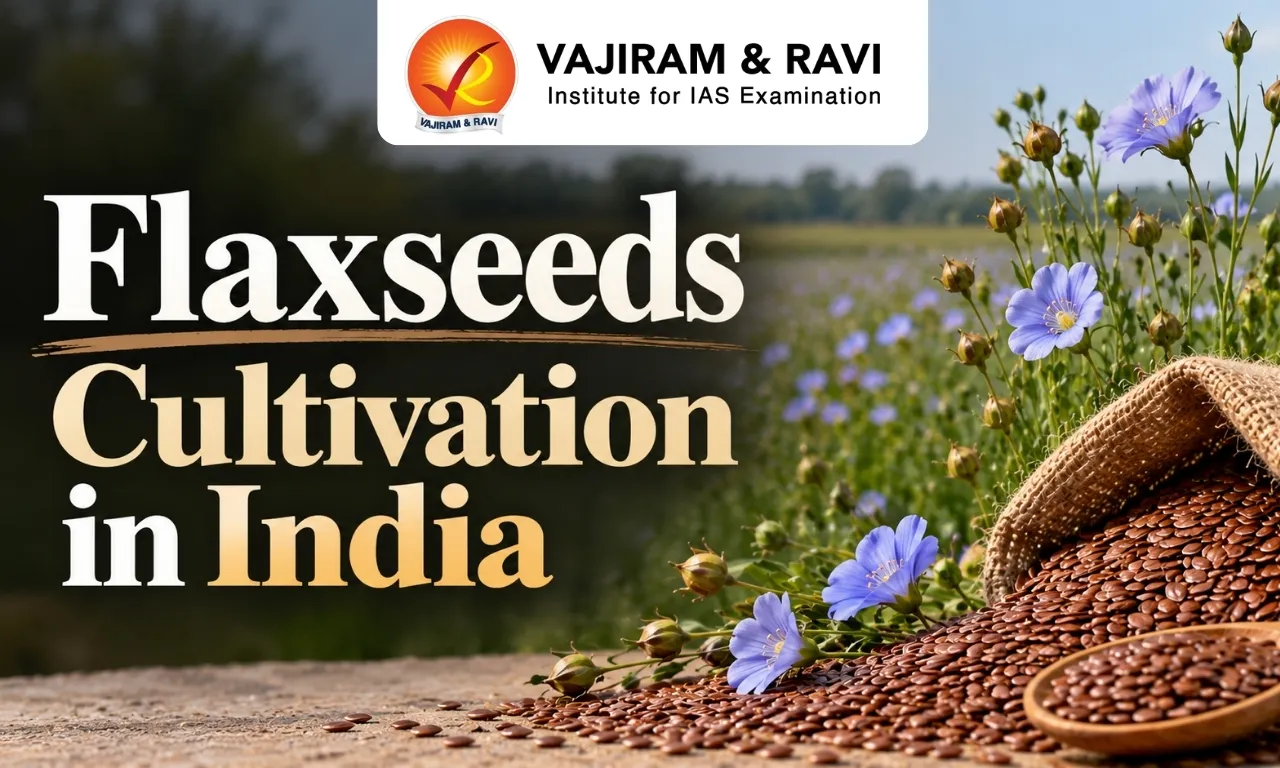
Flaxseeds cultivation in India is mainly practised as a Rabi (winter) crop. Flaxseed, locally known as Alsi, is scientifically called Linum usitatissimum. It is grown for its seeds, oil and fibre. Linseed oil is used in industries, while flax fibre is used to make linen fabric.
Major Flaxseed-Producing States in India
Flaxseed (Alsi or linseed) is mainly cultivated in the central and eastern parts of India as a Rabi crop. Madhya Pradesh, Uttar Pradesh and Jharkhand are among the major producing states, while several other states also contribute to its cultivation.
- Madhya Pradesh: One of the leading linseed-producing states, with cultivation in areas suitable for winter oilseed crops.
- Uttar Pradesh: An important producer, particularly in regions where winter conditions and soil moisture support linseed cultivation.
- Jharkhand: A major linseed-growing state, where the crop is cultivated in suitable rainfed areas.
- Bihar: Linseed is grown in selected agricultural areas during the Rabi season.
- Chhattisgarh: The crop is cultivated in suitable areas as part of the winter cropping system.
- Rajasthan: Flaxseed is grown in selected regions where soil moisture and winter conditions are favourable.
- Maharashtra: Linseed is cultivated in suitable areas, depending on soil conditions and local farming practices.
- Odisha: The crop is grown in selected areas during the winter season.
- West Bengal: Suitable agricultural areas support linseed cultivation, including regions with favourable soil conditions.
- Assam: Linseed is also cultivated in selected areas as a winter crop.
Climate and Soil Requirements
Flaxseed grows best in cool, relatively dry winter conditions. Suitable climate and soil help improve plant growth and seed production.
- Climate: Cool and dry winter weather is suitable for flaxseed cultivation.
- Temperature: Around 10°C to 27°C is a general growing range.
- Soil: Well-drained loamy, alluvial and clay loam soils are suitable.
- Soil pH: A pH of approximately 5.5–7 is generally favourable.
- Drainage: Avoid waterlogged and highly saline soils, as they can affect crop growth.


Sowing and Cultivation Practices
Proper sowing and crop management help improve flaxseed growth and yield.
- Sowing time: Generally October to November, depending on the region.
- Sowing method: Line sowing is preferred for uniform plant growth and easier weed control.
- Irrigation: Flaxseed can grow under rainfed conditions where soil moisture is sufficient. Irrigation may be needed during dry periods, particularly at critical growth stages.
Flaxseeds Cultivation in India Importance
Flaxseed cultivation in India is important for agriculture, food production and industry because the crop provides seeds, oil and fibre.
- Oil Production: Flaxseeds are used to extract linseed oil, which has several industrial applications.
- Food and Nutrition: Flaxseeds are used in food products and are a source of omega-3 fatty acids, fibre and protein.
- Textile Industry: Flax fibres are used to make linen fabric and other textile products.
- Industrial Uses: Linseed oil is used in paints, varnishes and protective coatings.
- Livelihood Support: Flaxseed farming provides income opportunities for farmers in suitable growing regions.
- Agricultural Diversification: As a Rabi oilseed crop, flaxseed offers an additional crop option in suitable agricultural areas.
- By-products: Linseed meal obtained after oil extraction can be used in animal-feed formulations where suitable.
Challenges in Flaxseed Cultivation
Despite its adaptability to different cropping systems, flaxseed farming faces several challenges in India.
- Weather variability: Unseasonal rainfall, heat and drought can affect flowering and seed development.
- Limited irrigation: Water shortages can reduce productivity in rainfed areas.
- Low productivity in some regions: Poor-quality seed, unsuitable sowing dates and inadequate crop management may affect yields.
- Pests and diseases: Insect attacks and fungal diseases can damage plants and capsules.
- Market access: Farmers may face difficulties accessing suitable buyers, processing facilities and stable prices.
- Variety selection: A variety suitable for one region may not perform equally well in another.

 Last updated on Oct, 2026
→ UPSC 2027 Notification will be released on 13 January 2027 at upsconline.nic.in.
→ Check Nobel Prize 2026 Winners List here.
→ Check out the latest UPSC Syllabus here.
→ Download UPSC Calendar 2027 PDF Here.
Flaxseeds Cultivation in India FAQs
Q1. What is the best season for flaxseeds cultivation in India?+
Q2. What is the scientific name of flaxseed?+
Q3. Which states are the major producers of flaxseed in India?+
Q4. What type of soil is best for flaxseed cultivation?+
Q5. What is the difference between flaxseed and linseed?+
Tags: flaxseeds flaxseeds cultivation flaxseeds cultivation in india