



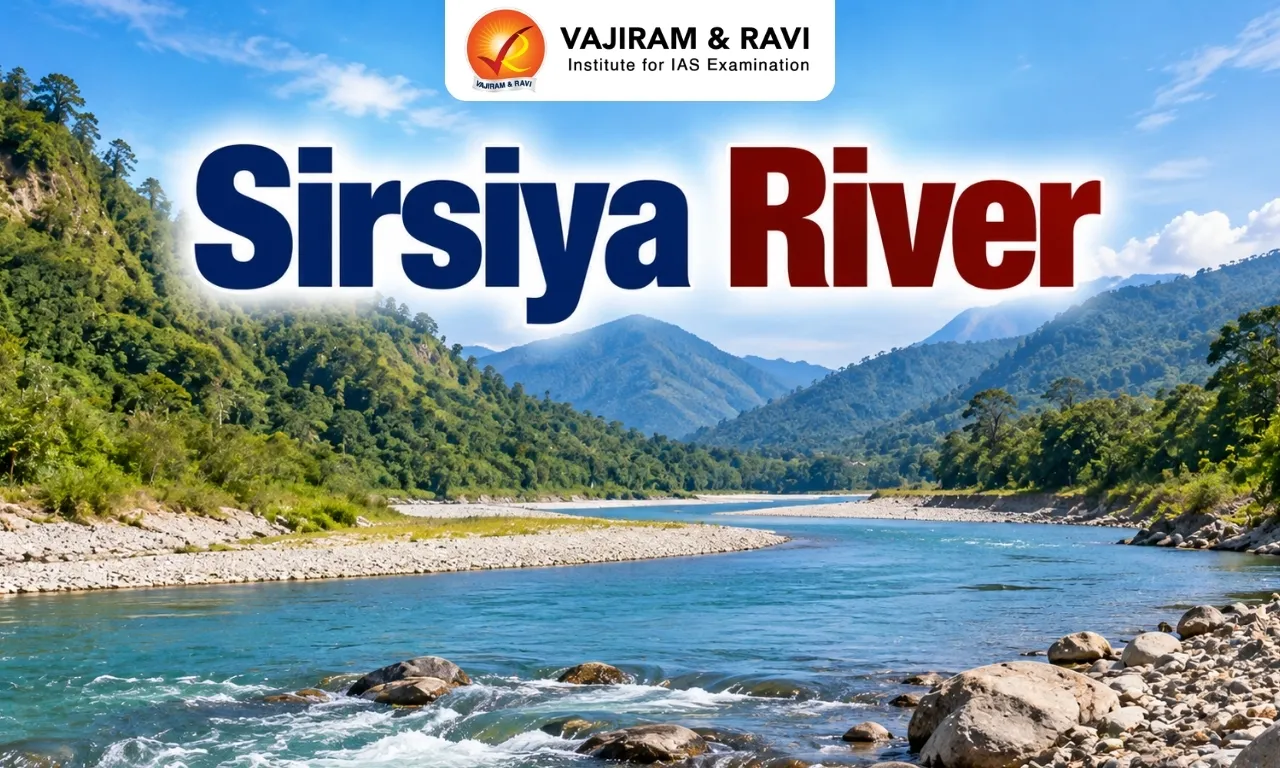
The Sirsiya River, also known as the Sariswa River, is a transboundary river flowing from southern Nepal into Bihar, India. It originates in the Ramban forest region of Nepal, passes through the Bara-Parsa industrial corridor and enters India near Raxaul. The river is important for regional drainage and local religious practices, but untreated industrial effluents and sewage have caused severe water pollution.
Geographical Features of the Sirsiya River
- Origin: The river originates near Pathlahia Hill in the Ramban forest region of Bara district, Nepal, in the vicinity of Jitpur Simara.
- Course in Nepal: It flows through the Bara and Parsa districts, including the industrial area around Birgunj.
- Entry into India: It enters Bihar near Raxaul in East Champaran district.
- Course in India: It flows southwards through parts of East Champaran.
- Confluence: It joins the Bangari River, which subsequently joins the Burhi Gandak River near Sugauli.
- River basin: Through the Burhi Gandak, its waters form part of the wider Ganga river system.
The river is significant for India-Nepal transboundary environmental management because pollution generated upstream in Nepal can affect communities and water quality downstream in India.
Pollution Crisis in the Sirsiya River
The Sirsiya River has suffered severe pollution, particularly along the Bara–Parsa industrial corridor, which includes the industrial hub around Birgunj in Nepal.
- Industrial effluents: Industries have been reported to discharge untreated or inadequately treated wastewater into the river.
- Domestic sewage: Sewage from settlements also contributes to water contamination.
- Water quality deterioration: The river has been reported to turn black and emit a foul smell, indicating severe degradation.
- Impact on aquatic life: Industrial and domestic pollution threatens aquatic organisms and damages the river ecosystem.
- Public health concerns: Polluted water creates risks for communities that depend on the river and nearby water sources.
- Agricultural impact: Contaminated water can affect irrigation and soil quality, threatening local livelihoods.
In September 2026, Nepal’s Ministry of Industry, Commerce and Supplies again raised concerns about industrial wastewater entering the river and warned industries to comply with environmental standards. This indicates that controlling industrial discharge remains an ongoing challenge.


Cultural Significance of the Sirsiya River
The Sirsiya River holds religious and cultural importance for local communities in Nepal and India. Its banks serve as gathering places during the Chhath festival, when devotees offer prayers to the setting and rising Sun. The river has also traditionally supported daily activities such as bathing, washing and irrigation. However, severe pollution has disrupted religious observances in some areas, forcing communities to seek alternative locations for performing Chhath rituals.

 Last updated on Oct, 2026
→ UPSC 2027 Notification will be released on 13 January 2027 at upsconline.nic.in.
→ Check Nobel Prize 2026 Winners List here.
→ Check out the latest UPSC Syllabus here.
→ Download UPSC Calendar 2027 PDF Here.
Sirsiya River FAQs
Q1. Where does the Sirsiya River originate?+
Q2. Where does the Sirsiya River enter India?+
Q3. Which river system does the Sirsiya River belong to?+
Q4. What is the main cause of pollution in the Sirsiya River?+
Q5. Why is the Sirsiya River relevant to environmental governance?+
Tags: river river in india sirsiya river