




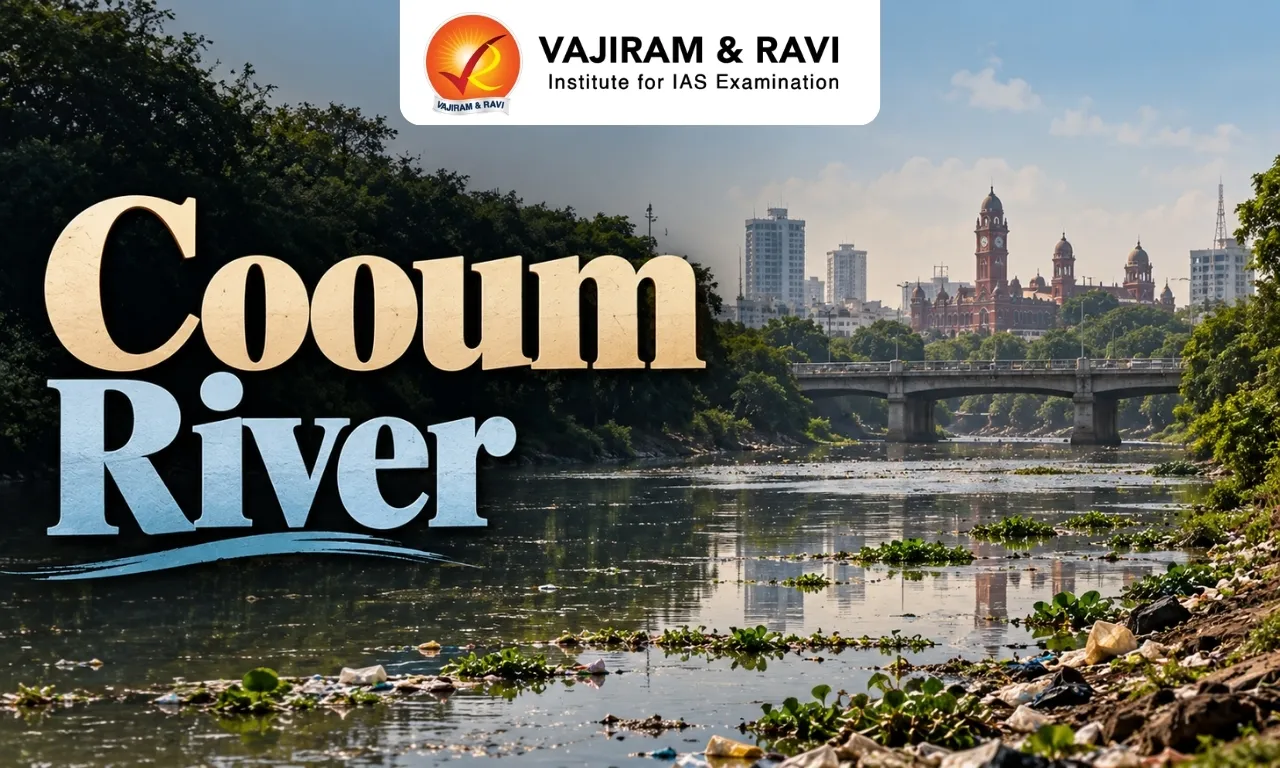
The Cooum River, also known as Koovam, is a short river in Tamil Nadu that drains into the Bay of Bengal. It flows through rural areas of Tiruvallur district and the urban landscape of Chennai. Once an important source of freshwater and a route for navigation, the river now faces serious environmental challenges. Its geographical course, pollution problems, ecological importance and restoration initiatives highlight the need for sustainable river management and urban environmental protection.
Cooum River
The Cooum River is an important drainage system in Tamil Nadu, connecting rural water resources with Chennai’s urban landscape before reaching the Bay of Bengal.
- Cooum River Origin: The river originates near Cooum village in Tiruvallur district, with its main flow associated with the Cooum tank surplus course and the Kesavaram Anaicut system.
- Cooum River Length: The total length is approximately 65-72 km, with a substantial portion flowing through rural areas and the remainder crossing Chennai’s urban and peri urban regions.
- Cooum River Starting Point And End Point: Its starting region lies near Cooum village in Tiruvallur district, while its endpoint is the Bay of Bengal near Napier Bridge and the Marina Beach area.
- Course and Flow: The river flows eastward through areas including Thiruverkadu, Avadi and Arumbakkam before passing through Chennai neighbourhoods such as Egmore, Chetpet and Chintadripet.
- Cooum River Map: A Cooum River Map would show its eastward route from Tiruvallur district towards Chennai’s coastline, along with its connections to nearby water bodies and drainage channels.
- Historical Importance: The river once supported fishing, navigation, freshwater use and regional trade. Its historical role demonstrates how rivers contribute to settlement patterns, economic activities and cultural development.
Cooum River Projects
The Cooum River restoration initiatives aim to reduce pollution, improve water movement and revive the ecological condition of the waterway through coordinated environmental management.
- Integrated Cooum River Eco-Restoration Project: The project covers a 32 km stretch from Paruthipattu check dam to the river mouth, with an administrative sanction of ₹735.08 crore.
- Sewage Interception and Diversion: Interceptor pipelines and sewage treatment facilities are planned to prevent untreated wastewater from entering the river, addressing a major source of contamination.
- Desilting and Channel Improvement: Desilting and improvements to the river channel aim to maintain water movement, reduce obstructions and support ecological flows, particularly during periods of low freshwater availability.
- Riverbank Development: Planned measures include parks, maintenance pathways, riverbank vegetation and mangrove plantations to improve the surrounding environment and strengthen the river’s ecological condition.
- Community Participation: Educational programmes involving students, residents, commercial establishments and local institutions encourage public awareness and responsible waste disposal, supporting long term river conservation.


Cooum River Challenges
The Cooum River faces interconnected environmental and management problems caused by wastewater discharge, reduced freshwater flow, waste disposal and physical changes to its channel.
- Cooum River Pollution: Untreated sewage, industrial effluents and dumped solid waste contaminate the urban stretch, reducing water quality and making the river unsuitable for ordinary domestic use.
- Low Dissolved Oxygen: Water samples have shown extremely low dissolved oxygen levels and the presence of harmful contaminants, creating unfavourable conditions for aquatic organisms and disrupting the river ecosystem.
- Reduced Freshwater Flow: Upstream water use for agriculture, groundwater extraction and limited seasonal flows reduce freshwater availability, weakening the river’s capacity to dilute pollutants and maintain ecological balance.
- Sandbar Formation: Sediment accumulation near the river mouth restricts the exchange of river water and seawater. Reduced tidal flushing allows pollutants to remain trapped in downstream stretches.
- Encroachment and Waste Disposal: Settlements and other encroachments along the banks, together with dumping of construction debris and municipal waste, obstruct maintenance and complicate efforts to restore the river channel.
- Public Health Concerns: Stagnant, contaminated water contributes to foul odours, mosquito breeding and potential groundwater contamination, creating environmental and health concerns for communities living near the river.
Cooum River Biodiversity
The Cooum River once supported diverse aquatic life, while restoration plans seek to improve habitats through vegetation, pollution control and better ecological management.
Flora
- Native Trees: Proposed riverfront planting includes neem, banyan, sacred fig and Indian almond, which can contribute to green cover, habitat formation and improved conditions along the riverbanks.
- Additional Plant Species: Indian cork tree, kadamba, punnai and Indian mulberry are among the species identified for proposed nature trail planting, supporting a more diverse riverbank environment.
- Grasses and Other Plants: Vetiver grass, palmarosa, agave and lemongrass feature in the proposed planting plan, with vegetation helping manage soil erosion and improve the surrounding landscape.
Fauna
- Decline in Fish Diversity: Historical records indicate that the river supported 49 fish species around 1950, falling to 21 by the late 1970s. Severe pollution has since devastated its fish population.
- Birdlife: Egrets and cormorants have been observed visiting the river when temporary improvements in water conditions allowed fish to become available, highlighting the relationship between water quality and wildlife.
- Potential Habitat Recovery: Improved water quality, riverbank vegetation and mangrove development could support the gradual recovery of habitats and biodiversity, provided pollution sources are effectively controlled.

 Last updated on Oct, 2026
→ UPSC 2027 Notification will be released on 13 January 2027 at upsconline.nic.in.
→ Check Nobel Prize 2026 Winners List here.
→ Check out the latest UPSC Syllabus here.
→ Download UPSC Calendar 2027 PDF Here.
Cooum River FAQs
Q1. Where does the Cooum River originate?+
Q2. What is the total length of the Cooum River?+
Q3. Where does the Cooum River end?+
Q4. Why is the Cooum River polluted?+
Q5. What is the Cooum River Cleaning Project?+
Tags: cooum river river in india