May 15, 2019
Prelims Pointers
May 15, 2019
Wayanad Wildlife Sanctuary (WWS):
- It is located in Wayanad, Kerala.
- This biodiversity hotspot is an integral part of the Nilgiri Biosphere Reserve. It is bounded by protected area network of Nagarhole and Bandipur of Karnataka in the northeast, and on the southeast by Mudumalai of Tamil Nadu.
- The wildlife sanctuary comes under Protect Elephant.
Recent study:
- The study was organised by Kerala Forest Department for 2017-18 in association with the Parambikulam and Periyar Tiger Conservation Foundations. It took nearly a year-and-a-half to complete the project.
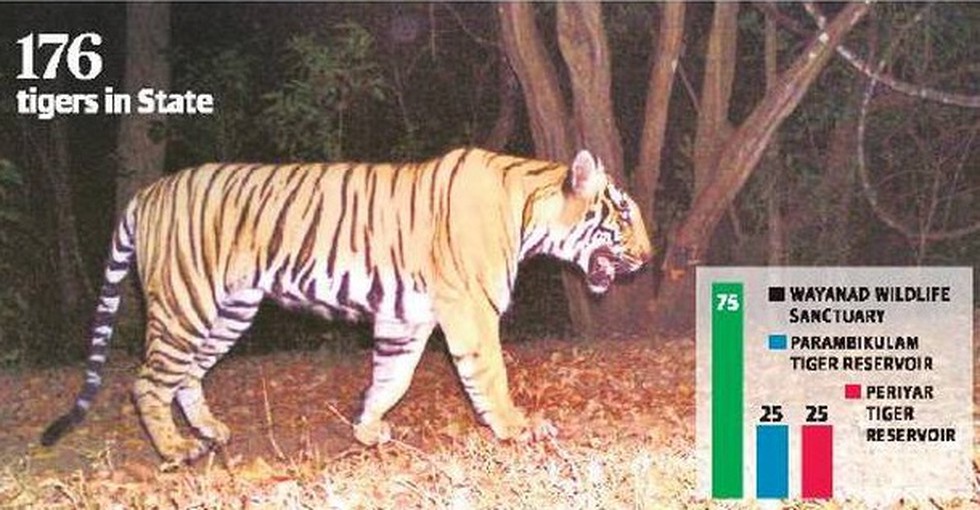
- Wayanad Wildlife Sanctuary (WWS) holds the largest tiger population in Kerala. Of the total 176 tigers in the State, 75 were identified from the WWS.
- The Periyar and Parambikulam tiger reserves followed suit, where 25 tigers each were captured in camera traps.
- There are no tigers in the Idukki Wildlife Sanctuary and the adjoining Kottayam and Kothamangalam forest divisions as the landscape is cut off from the adjacent mainland (Munnar and Malayattoor forest divisions).
- As the Wayanad Wildlife Sanctuary (WWS) and the adjoining tiger reserves in Karnataka and Tamil Nadu constitute a major tiger habitat in the country, the sanctuary has the potential to get the status of a tiger reserve.
Prelims Pointers
May 15, 2019
About:
- This is the first in the world Point-of-Care (POC) test for specific diagnosis of any common bleeding disorder.
- According to Indian Council of Medical Research (ICMR), working cost of these kits is less than ₹50 in comparison to existing conventional test for the diseases that costs around ₹4,000 to ₹10,000.”
- Patients with severe Haemophilia A or VWD can have life threatening spontaneous or post-traumatic bleeding like brain haemorrhage and gastrointestinal bleed or they may have bleeding into joints or superficial bleeding from the nose or gums.
Von Willebrand Disease (VWD)?
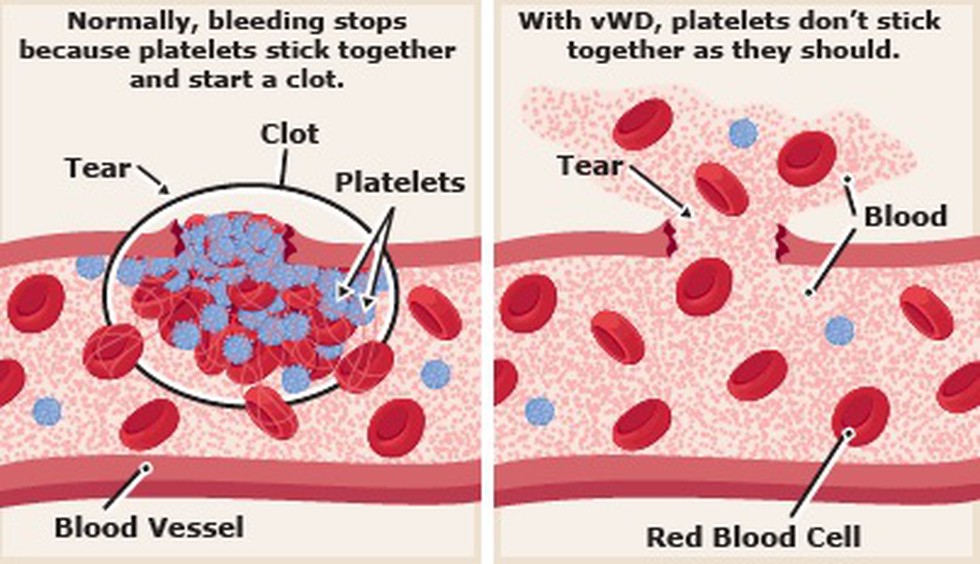
- Von Willebrand Disease (VWD) is a genetic disorder caused by missing or defective Von Willebrand factor (VWF), a clotting protein.
- When a blood vessel is injured and bleeding occurs, VWF helps cells in the blood, called platelets, mesh together and form a clot to stop the bleeding.
- People with VWD do not have enough VWF, or it does not work the way it should. It takes longer for blood to clot and for bleeding to stop.
- VWD is generally less severe than other bleeding disorders. For most people with VWD, the disorder causes little or no disruption to their lives except when there is a serious injury or need for surgery.
- It is estimated that up to 1% of the world’s population suffers from VWD.
Prelims Pointers
May 15, 2019

About STRI:
- Launched in: 2014.
- Launched by: The Organisation for Economic Cooperation and Development (OECD).
- Objective: It ranks countries based on their services trade policies.
- Coverage: The STRI is now available for 2018 for a total of 45 economies (36 OECD and the rest non-OECD) and 22 sectors. These countries and sectors represent over 80% of global trade in services.
Grievances by India:
- A study commissioned by the Commerce Ministry has found that this index has a large number of design issues that render it impractical for use.
- For example, the index seems to show the Indian services sector as one of the most restrictive, particularly in policy areas like foreign entry. This seems surprising as since 1991, the one area that has seen maximum liberalisation in India is FDI.
- India has approached several developing countries during the recently-concluded WTO talks in New Delhi to try to build consensus around the new method of measuring trade restrictiveness in the services sector.
Prelims Pointers
May 15, 2019

About:
- Signatories: The Christchurch Call is a non-binding set of agreements that a group of governments and major tech companies will sign. It is believed to be the first document of its type - one signed by both private companies and major governments.
- What it does?
- It will ask signatory nations to pledge to eliminate terrorist and violent extremist content on social media and other online platforms. It asks them to adopt and enforce laws that ban objectionable material, and set guidelines on how traditional media can report acts of terrorism without amplifying them.
- It also asks tech companies to enforce their terms of service, as well as “re-evaluate their algorithms that direct users to extremist content, and commit to redirecting people looking for extremist material”.
- It will ask signatory nations to pledge to eliminate terrorist and violent extremist content on social media and other online platforms. It asks them to adopt and enforce laws that ban objectionable material, and set guidelines on how traditional media can report acts of terrorism without amplifying them.
- What it doesn’t?
- However, the pledge does not contain any enforcement or regulatory measures, and it would be up to each individual country and company to decide how it would honour its voluntary commitments.
- A definition of violent extremist content was not included in the pledge, and it would be up to individual companies to decide on what constituted objectionable material
- However, the pledge does not contain any enforcement or regulatory measures, and it would be up to each individual country and company to decide how it would honour its voluntary commitments.
Social Media and Extremism:
- Ardern and the Government began work on the pledge in the weeks following the Christchurch terror attack of March 15, when 51 Muslims were killed while worshipping at two mosques and many more injured.
- The mass murder was livestreamed from a head-mounted camera to Facebook live, and redistributed hundreds of thousands of times.
- Ardern promised to do something about the way social media had been weaponised by the attacker, but said domestic law changes would not go far enough and a global framework was needed.
Prelims Pointers
May 15, 2019

About:
- The GSI presented the data during its annual interactive meeting with the Department of Geology and Mining and Government of Arunachal Pradesh in Itanagar.
- Key findings:
- India is now importing Graphite from other countries.
- Around 35 % of India's Graphite deposits is found in Arunachal Pradesh. The State could be the leading producer of graphite in the country in future.
- Thus, the survey and drilling activities of the GSI should be moved towards the lndo-China international Border. Development of road towards the international border should be a boon for exploration of the mineral.
- China was reportedly undertaking huge mining activities across the border in Tibet.
- India is now importing Graphite from other countries.
The Geological Survey of India (GSI)?
- History: It was set up in 1851 primarily to find coal deposits for the Railways.
- Headquarters: Kolkata.
- Status: It is an attached office to the Ministry of Mines.
- Function:
- The main functions of GSI relate to creation and updation of national geoscientific information and mineral resource assessment.
- These objectives are achieved through ground, air-borne and marine surveys, mineral prospecting and investigations, multi-disciplinary geoscientific, geo-technical, geo-environmental and natural hazards studies, and carrying out fundamental research.
Prelims Pointers
May 15, 2019

About:
- Name: Poly(Diketoenamine), or PDK.
- Features: This next-generation plastic can be fully recycled into new materials of any colour, shape, or form, without loss of performance or quality. This recyclable plastic can be disassembled into its constituent parts at the molecular level.
- Developed by: A team of researchers at the US Department of Energy's (DOE) Lawrence Berkeley National Laboratory.
- Problem with conventional Plastics:
- All conventional plastics are made up of large molecules called polymers, which are composed of repeating units of shorter carbon-containing compounds called monomers.
- However, the problem with them is that the chemicals added to make them useful (tough yet flexible) are tightly bound to the monomers and stay in the plastic even after it is been processed at a recycling plant.
- All conventional plastics are made up of large molecules called polymers, which are composed of repeating units of shorter carbon-containing compounds called monomers.
- Process involved in PDK Plastics:
- Unlike conventional plastics, the monomers of PDK plastic could be recovered and freed from any compounded additives simply by dunking the material in a highly acidic solution.
- Not only does the acid break down PDK polymers into monomers, but the process also allows the monomers to be separated from entwined chemical additives that give plastic its look and feel.
- Unlike conventional plastics, the monomers of PDK plastic could be recovered and freed from any compounded additives simply by dunking the material in a highly acidic solution.
- Way ahead: The researchers next plan to develop PDK plastics with a range of thermal and mechanical properties for applications including textiles, 3D printing, and foams. They are also looking to expand the formulations by incorporating plant-based materials and other sustainable sources.
Prelims Pointers
May 15, 2019
About:
- History: LTTE, an association based in Sri Lanka, was banned in India after the assassination of former Prime Minister Rajiv Gandhi in 1991.
- Objective of LTTE: To secure an independent state of Tamil Eelam in the north and east of Sri Lanka (areas comprising Tamil Majority).
- Recent step: The Government of India has extended the ban on the LTTE for another 5 years under sub-sections (1) and (3) of section 3 of the Unlawful Activities (Prevention) Act, 1967 with immediate effect by declaring LTTE as an Unlawful Association.
- Justification by Government of India:
- The LTTE, even after its military defeat in May 2009 in Sri Lanka, has not abandoned the concept of Eelam and is undertaking fundraising and propaganda activities for the Eelam cause in Europe.
- The Tamil chauvinist groups and pro-LTTE groups continued to foster a separatist tendency amongst the masses in India particularly in Tamil Nadu. The activities of the LTTE remnant cadres and supporters have been traced out recently in Tamil Nadu.
- The Diaspora continued to spread through articles in the Internet portals, the anti-India feeling amongst the Sri Lankan Tamils by holding Government of India responsible for the defeat of the LTTE.
- The LTTE’s continued violent and disruptive activities are prejudicial to the integrity of India and poses a grave threat to the security of Indian nationals.
- The LTTE, even after its military defeat in May 2009 in Sri Lanka, has not abandoned the concept of Eelam and is undertaking fundraising and propaganda activities for the Eelam cause in Europe.
Prelims Pointers
May 15, 2019

About:
- What is it? It is a grant-funding mechanism, managed by the World Bank, that supports disaster risk management projects worldwide.
- Objective: GFDRR is a global partnership that helps developing countries better understand and reduce their vulnerability to natural hazards and climate change.
- Established in: 2006.
- Present status: It is presently working on the ground with over 400 local, national, regional, and international partners and provides knowledge, funding, and technical assistance.
- Secretariat: Washington, DC.
India as co-chair of the Consultative Group (CG) of GFDRR:
- The decision was taken during the meeting of GFDRR held in Geneva, Switzerland on the margins of the 6th Session of the Global Platform for Disaster Risk Reduction.
- Additionally, GFDRR in cooperation with the UNDRR and the EU is also organizing the 4th edition of World Reconstruction Conference (WRC) on May 13-14, 2019.
- India became a member of CG of GFDRR in 2015 and expressed its interest to co-chair in October 2018. This is the first time that India will be co-chairing the CG meeting of GFDRR.
- This will give the country an opportunity to work with the member countries and organizations towards advancing the disaster risk reduction agenda during the course of the year.
Prelims Pointers
May 15, 2019

About:
- What is it? Economic Census (EC) is the complete count of all establishments/units located within the geographical boundaries of the country.
- Is Agriculture covered in Economic Census? No, Agriculture is not covered in Economic census (Only Growing of agricultural crops and plantations should not be counted as establishments for the purpose of this Economic Census).
- What is Establishment? The establishment is a unit situated in a single location in which predominantly one kind of economic activity is carried out such that at least a part of the goods and/or services produced by the unit goes for sale (i.e. entire produce is not for sole consumption).
- Which are the Bodies involved in carrying it out?
- 7th Economic Census -2019 is being conducted by the Ministry of Statistics and Program Implementation (MoSPI).
- MoSPI has partnered with Common Service Centres, CSC e-Governance Services India Limited, a Special Purpose Vehicle (SPV) under the Ministry of Electronics and Information Technology (MeitY) as the implementing agency for 7th EC.
- 7th Economic Census -2019 is being conducted by the Ministry of Statistics and Program Implementation (MoSPI).
- Timeline: The fieldwork for the 7th EC will commence in June 2019. The results of the exercise will be made available after verification and validation of the fieldwork.
- History: Six Economic Censuses (EC) have been conducted till date: First EC (1977), Second EC (1980), Third EC (1990), Fourth EC (1998), Fifth EC (2005) and Sixth EC (2013).
Prelims Pointers
May 15, 2019

About:
- Objective of the day: To promote awareness of issues relating to families and to increase knowledge of the social, economic and demographic processes affecting them.
- Day of observance: 15th of May every year.
- History: The Day was proclaimed by the UN General Assembly in 1993.
- 2019 Theme: “Families and Climate Action: Focus on SDG 13”. The 2019 observance focuses on families, family policies and major SDG 13 targets –
- SDG 13 target 13.3: Improve education, awareness-raising and human and institutional capacity on climate change mitigation, adaptation, impact reduction and early warning.
- SDG 13 target 13.2: integrate climate change measures into national policies, strategies and planning.
- SDG 13 target 13.3: Improve education, awareness-raising and human and institutional capacity on climate change mitigation, adaptation, impact reduction and early warning.
In 2015, the 193 member states of the United Nations unanimously adopted the Sustainable Development Goals. Families and family-oriented policies and programmes are vital for the achievement of many of these goals.
May 14, 2019
Prelims Pointers
May 14, 2019
About:
- When conducted:
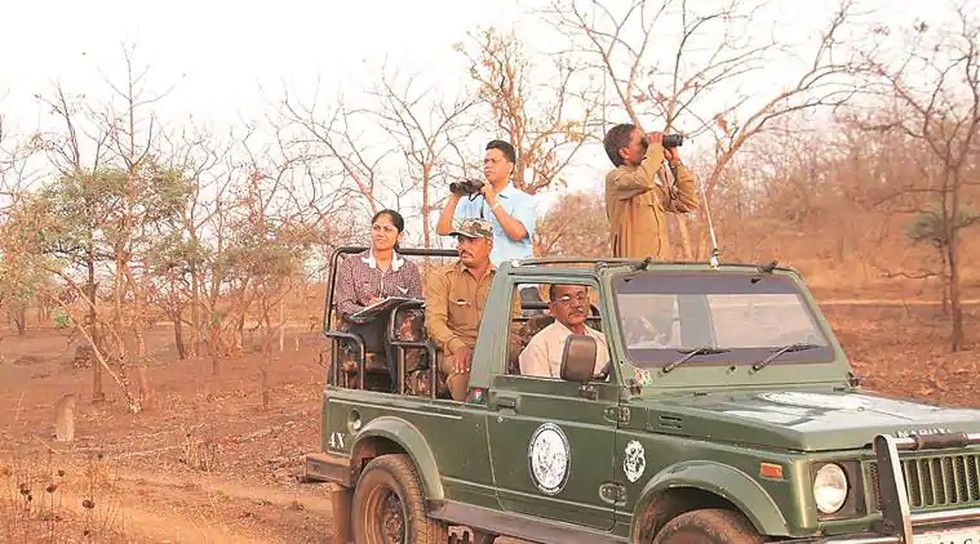
- Every year during summer, the forest department of Gujarat conducts a census of herbivores in Gir forest and other protected areas, the last abode in the world of Asiatic lions.
- During summer, foliage is reduced to its minimum levels in dry and deciduous tropical forests like Gir. Such a forest affords the best opportunity to spot maximum number of wild animals in the forest.
- Every year during summer, the forest department of Gujarat conducts a census of herbivores in Gir forest and other protected areas, the last abode in the world of Asiatic lions.
- Animals covered:
- The census covers wild ungulates like spotted deer, blue bulls (nilgais), sambars, Indian gazelles (chinkaras), four-horned antelopes (choshinga) and wild boars.
- Additionally, the forest department also counts Indian langurs as well as peafowl.
- Wild ungulates and langurs are the main prey of Asiatic lions.
- The census covers wild ungulates like spotted deer, blue bulls (nilgais), sambars, Indian gazelles (chinkaras), four-horned antelopes (choshinga) and wild boars.
- Significance:
- A count of ungulates gives the forest department an idea of the availability of prey-base for the top predator lions as well as other predators like leopards, hyenas, wolves etc.
- Such a count helps the forest department to notice any changes in the food availability for lions and also indicates the health of the forest in general and of fauna in particular.
- A count of ungulates gives the forest department an idea of the availability of prey-base for the top predator lions as well as other predators like leopards, hyenas, wolves etc.
- What has been the herbivore population trend in recent years? Since 1974, the population of herbivorous in Gir forest has been on the rise. In 2013, the population of ungulates was estimated to be 1,26,893 or 76.49 animals per square kilometres.
Prelims Pointers
May 14, 2019
About:
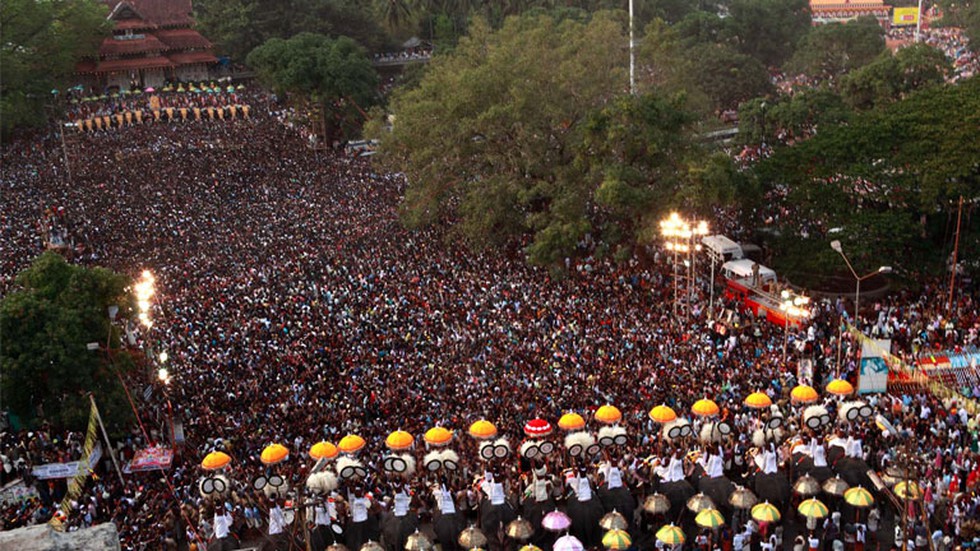
- Duration and Time: Thrissur Pooram is a seven-day festival which is celebrated on the day when the star sign ”Pooram” occurs in the Malayalam month of ”medam”.
- History: Thrissur Pooram has a tradition of more than 200 years. This spectacular event was the brainchild of Raja Rama Varma, famously known as Sakthan Thampuran, the Maharaja of Cochin (1790–1805).
- Participants:
- The main temples in Thrissur such as the Paramekkavu Devi temple and the Thiruvambadi Sri Krishna temple have to pay their obeisance to Lord Shiva, the presiding deity of the famed Vadakunnathan temple.
- The two aforementioned temples oppose each other during the celebrations and their ”elephant teams” compete with one another on the sixth day through the elephant procession, fire works and overall cultural representation.
- The main temples in Thrissur such as the Paramekkavu Devi temple and the Thiruvambadi Sri Krishna temple have to pay their obeisance to Lord Shiva, the presiding deity of the famed Vadakunnathan temple.
- Key highlights:
- A grand display of the fifteen elephants is one of the most anticipated aspects of this festival. The fifteen elephants are decorated in stunning, gold-threaded work and finery.
- Fireworks are an integral part of Kerala’s temple festivals, but the Thrissur Pooram is referred to as ”the mother of all” firework and temple celebrations.
- A grand display of the fifteen elephants is one of the most anticipated aspects of this festival. The fifteen elephants are decorated in stunning, gold-threaded work and finery.
Prelims Pointers
May 14, 2019
About:
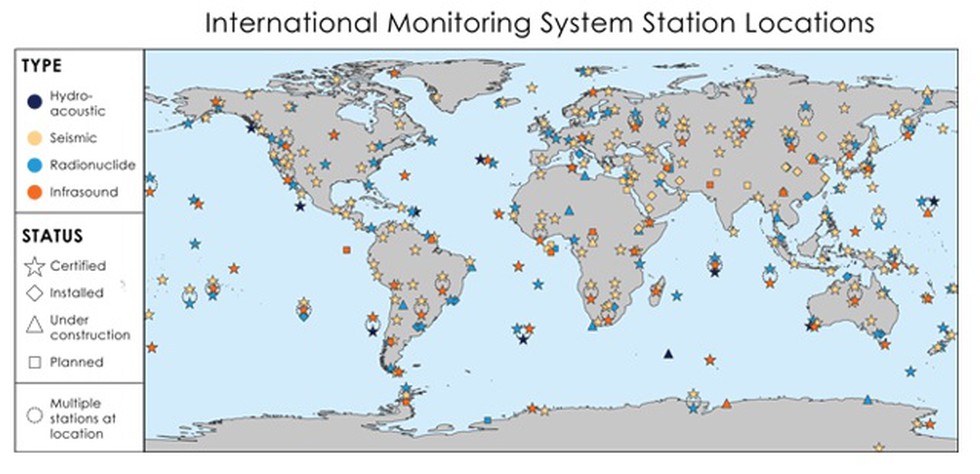
- Objective: The International Monitoring System (IMS) is a worldwide network of monitoring stations that will help to verify compliance with the Comprehensive Nuclear Test-Ban Treaty (CTBT) by detecting events that might indicate violations of the Treaty.
- Components: When complete, the IMS will consist of 337 monitoring facilities located all over the world.
- Present status: Today the IMS is more than 85 percent complete. Currently, 275 of the IMS monitoring stations and 11 of the 16 radionuclide laboratories have been certified.
- Technologies used: The IMS uses four technologies to support the CTBT –
- Seismological: There will be 50 primary and 120 auxiliary seismic stations to monitor shockwaves in the earth that could be caused by a nuclear test.
- Radionuclide: Eighty stations worldwide will measure the atmosphere for radioactive particles. Radionuclide evidence can confirm that a nuclear explosion has occurred, if there is a leak.
- Hydroacoustic: There will be 11 hydroacoustic stations listening for sound waves traveling through the oceans that could be caused by a nuclear test explosion.
- Infrasound: When complete, 60 stations on the earth’s surface will be able to detect ultra-low frequency sound waves caused by large explosions; these sound waves are inaudible to the human ear.
- Seismological: There will be 50 primary and 120 auxiliary seismic stations to monitor shockwaves in the earth that could be caused by a nuclear test.
- The Comprehensive Nuclear-Test-Ban Treaty (CTBT) is a multilateral treaty that bans all nuclear explosions, for both civilian and military purposes, in all environments. It was adopted by the United Nations General Assembly in 1996, but has not entered into force.
- India, North Korea and Pakistan have not signed it, but Pakistan is an observer.
Prelims Pointers
May 14, 2019
About:
- Scientific Name: Delphinapterus leucas.
- Common names: Beluga Whale.
- Belugas can produce a series of chirps, clicks, whistles and squeals, which give the beluga its other name, "the canary of the sea."
- Belugas are also called white whales, and their unusual colour makes them one of the most familiar and easily distinguishable of all the whales.
- Belugas can produce a series of chirps, clicks, whistles and squeals, which give the beluga its other name, "the canary of the sea."
- Features: They can grow up to 6 m long, and are related to dolphins.
- Distribution:
- These whales are common in the Arctic Ocean's coastal waters around Greenland, Norway and Russia, though they are found in subarctic waters as well.
- Arctic belugas migrate southward in large herds when the sea freezes over.
- They can also be found near river mouths, and sometimes even venture up river.
- These whales are common in the Arctic Ocean's coastal waters around Greenland, Norway and Russia, though they are found in subarctic waters as well.
- IUCN Red List Status: Near Threatened.
- Population: over 1,50,000.
Can a beluga whale be trained as a military spy?
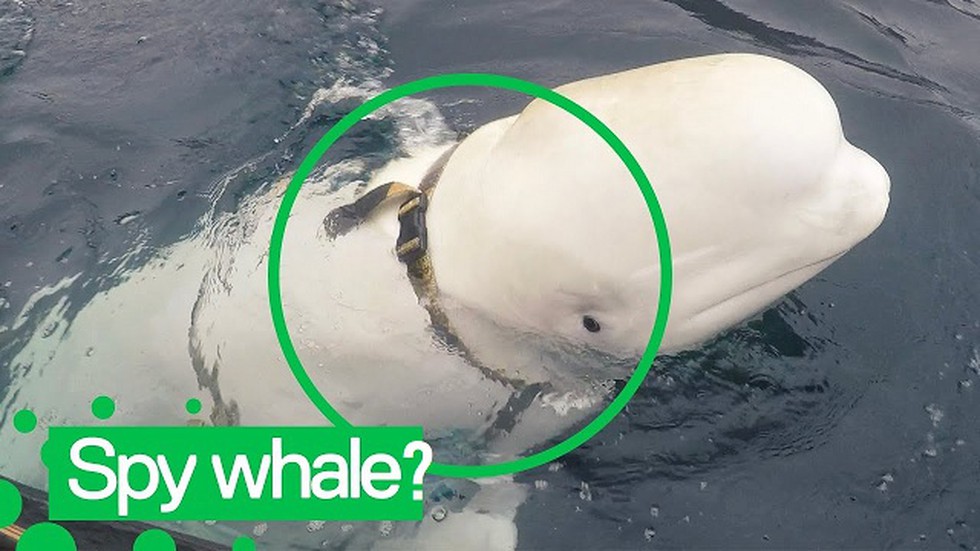
- The reason it is being described as a spy is a harness it was wearing, with the words “Equipment St. Petersburg” in English, along with a GoPro camera holder.
- It is tame, allowing humans to pet it, and one video shows it returning a phone to a woman who had accidentally dropped into the ocean.
- Other marine mammals are known to have been used for military use, including bottlenose dolphins by the US Navy since the 1960s. A dolphin can identify objects underwater that would be invisible to human divers.
- While Russia has not issued any official reaction, Russian scientists have denied the speculation.
Prelims Pointers
May 14, 2019

About:
- What is it? Fujairah is one of the seven emirates that make up the United Arab Emirates (UAE).
- Location: It is the only emirates in UAE that has a coastline solely on the Gulf of Oman and none on the Persian Gulf.
- Capital City: Fujairah City.
- Fujairah Port: It is a deep port located in Fujairah. It is the largest port on the eastern seaboard of the United Arab Emirates and the world second largest bunkering hub.
Prelims Pointers
May 14, 2019

About:
- Developed by: Scientists from the University of Cambridge in the UK.
- Process of Creation:
- The world's smallest pixels have been created by trapping particles of light under tiny rocks of At the centre of the pixels is a tiny particle of gold a few billionths of a metre across.
- The grain sits on top of a reflective surface, trapping light in the gap in between. Surrounding each grain is a thin sticky coating which changes chemically when electrically switched, causing the pixel to change colour across the spectrum.
- Scientists made the pixels by coating vats of golden grains with an active polymer called polyaniline and then spraying them onto flexible mirror-coated plastic, to dramatically drive down production cost.
- The world's smallest pixels have been created by trapping particles of light under tiny rocks of At the centre of the pixels is a tiny particle of gold a few billionths of a metre across.
- Features:
- The pixels are the smallest yet created, a million times smaller than typical smartphone pixels.
- They can be seen in bright sunlight and because they do not need constant power to keep their set colour, have an energy performance that make large areas feasible and sustainable.
- The pixels are the smallest yet created, a million times smaller than typical smartphone pixels.
- Potential Applications and Benefits:
- The pixels could enable a host of new application possibilities such as building-sized display screens, architecture which can switch off solar heat load, active camouflage clothing and coatings, as well as tiny indicators for coming internet-of-things devices.
- The colour pixels are compatible with roll-to-roll fabrication on flexible plastic films, dramatically reducing their production cost.
- The pixels could enable a host of new application possibilities such as building-sized display screens, architecture which can switch off solar heat load, active camouflage clothing and coatings, as well as tiny indicators for coming internet-of-things devices.
Prelims Pointers
May 14, 2019

About:
- Of the five FTII courses which have received AICTE approval, four are in Television wing (Direction, Electronic Cinematography, Video Editing and Sound Recording & TV Engineering) and one in Film wing (Feature Film Screenplay Writing).
- Significance:
- This approval makes FTII, the first and only Institute in this category in India to receive such recognition.
- The AICTE approval lends more value to the TV courses making them as attractive as the film wing specializations.
- This approval makes FTII, the first and only Institute in this category in India to receive such recognition.
FTII, Pune:
- FTII is India's premier film and television institute, with its alumni becoming technicians, actors and directors in the film and television industry.
- Status: It is an autonomous institute under the Ministry of Information and Broadcasting of the Government of India.
- Location: It is situated in Pune.
- Established in: 1960.
FTII, Arunachal Pradesh:
- In February 2019, The Prime Minister Narendra Modi laid the foundation stone of a permanent campus of Film and Television Institute of India (FTII) at Jollang-Rakap (Jote), Papum Pare, Arunachal Pradesh.
- This is the third Film and Television Institute of Ministry of Information and Broadcasting (I&B), the first two being FTII Pune and SRFTI Kolkata. It is the first Film and Television Institute of entire North-East.
Prelims Pointers
May 14, 2019

About:
- History: It was established in 1969 by the Government of India on the recommendation of the then Planning Commission
- Location: New Delhi.
- Status: It is an autonomous organisation funded by Ministry Of Human Resource Development (MHRD).
- Functions: ICSSR provide grants for projects, fellowships, international collaboration, capacity building, survey, publications etc. to promote research in social sciences in India.
- National Social Science Documentation Centre (NASSDOC): It was established in 1970 as a Division of the ICSSR. It is the documentation center of ICSSR which provides library and information support services to researchers in social sciences.
Prelims Pointers
May 14, 2019
About:
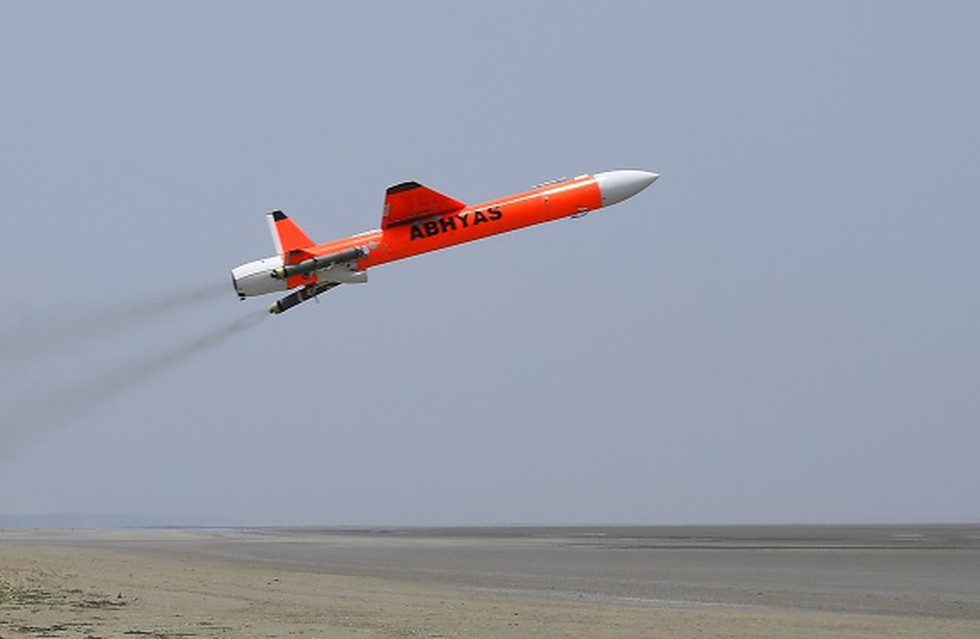
- The configuration of ABHYAS is designed on an in-line small gas turbine engine and uses indigenously developed MEMS based navigation system for its navigation and guidance.
- The flight test was tracked by various Radars & Electro Optic Systems and proved its performance in fully autonomous way point navigation mode.
- The recent successful test flight demonstrated the capability of ABHYAS to meet the mission requirement for a cost effective High-speed Expendable Aerial Target (HEAT) i.e. a target drone usually used in the training of anti-aircraft crews.
Prelims Pointers
May 14, 2019
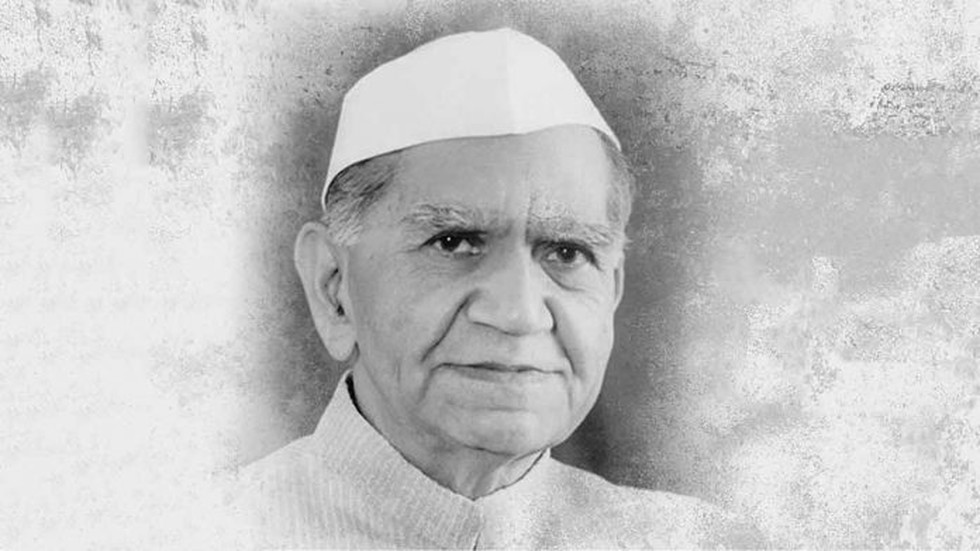
About:
- Fakhruddin Ali Ahmed (1905 – 1977) was the former President of India.
- Freedom Struggle: He joined the Indian National Congress and actively participated in the Indian Freedom Movement. In 1942 he was arrested during the Quit India Movement.
- Political career:
- He was a member of the Assam Pradesh Congress Committee and remained the Minister of Finance, Revenue and labour in 1938 Gopinath Bordoloi Ministry.
- After Independence he was elected to the Rajya Sabha and Lok Sabha. In the Central Cabinet he was given important portfolios relating to Food and Agriculture, Co-operation, Education, Industrial Development and Company Laws.
- He also served as the Advocate-General of the Government of Assam.
- He was a member of the Assam Pradesh Congress Committee and remained the Minister of Finance, Revenue and labour in 1938 Gopinath Bordoloi Ministry.
- President of India:
- He served as the fifth President of India from 1974 to 1977.
- He was the second Muslim to be elected President of India (the first being Zakir Hussain).
- He is known to have issued the proclamation of emergency by signing the papers at midnight after a meeting with Indira Gandhi the same day.
- He was the second Indian president to die in office (in 1977). He died due to heart attack (the first being Zakir Hussain).
- He served as the fifth President of India from 1974 to 1977.
May 13, 2019
Prelims Pointers
May 13, 2019
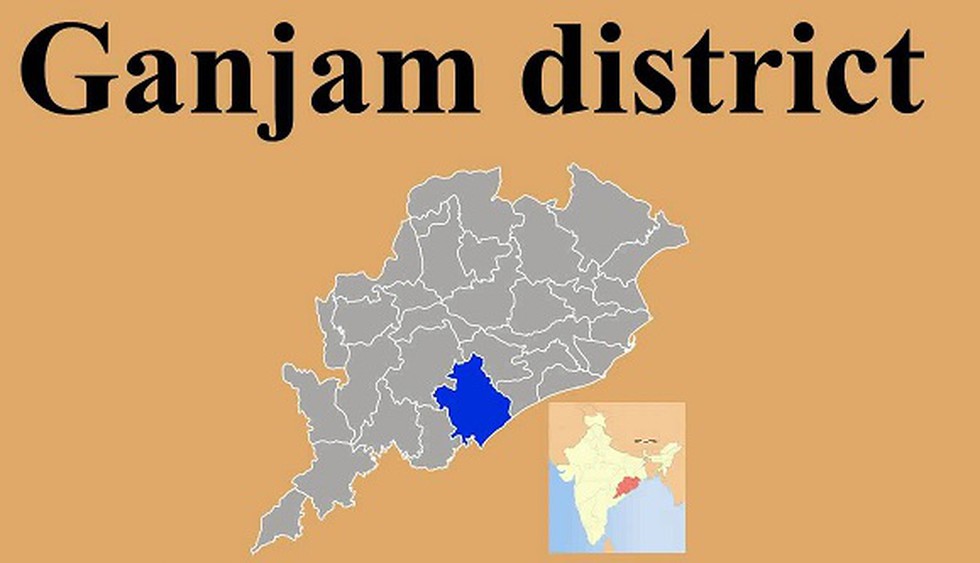
About:
- Under it, Odisha’s Ganjam district administration will train women in evacuation, rescue, restoration and rehabilitation during natural calamities, especially cyclones.
- Members of Women Self-Help Groups (WSHGs) in the age group of 18 to 35 of this cyclone-prone region will be roped in.
- Training of WSHG members is expected to start from June this year. A control room of ‘swayamsiddha’ will operate at district headquarters Chatrapur.
- The Kerala government used WSHGs successfully in rehabilitation and restoration work after the floods it faced last year. The WSHG movement has been quite successful in Ganjam district and penetrated to the grassroots.
Ganjam district and cyclones:
- After facing Phailin, Hudhud and Titli cyclones in the past, Ganjam escaped the wrath of Fani.
- It has always faced cyclones in October. By that time, Ganjam will be well prepared through these trained women volunteers.
Prelims Pointers
May 13, 2019

About:
- IGST meaning Integrated Goods and Service Tax, is one of the three categories under Goods and Service Tax (CGST, IGST and SGST) with a concept of one tax one nation.
- IGST falls under Integrated Goods and Service Tax Act 2016.
- IGST is charged on movement of goods and services from one state to another. For example, if goods are moved from Tamil Nadu to Kerala, IGST is levied on such goods.
- The revenue out of IGST is shared by state government and central government as per the rates fixed by the authorities.
- Under Article 269A of the Constitution,
- The GST on supplies in the course of interState trade shall be levied and collected by the Government of India and
- such tax shall be apportioned between the Union and the States according to the provisions of law on the recommendations of the Goods and Services Tax Council.
- The GST on supplies in the course of interState trade shall be levied and collected by the Government of India and
- Under the IGST scheme, 50% of the collections will go to the Centre (as the Central Goods and Services Tax component) and the remaining 50% will be allocated to the States and Union Territories (as the State Goods and Services Tax component). And, 42% of the CGST will be devolved to the States and Union Territories.
Prelims Pointers
May 13, 2019
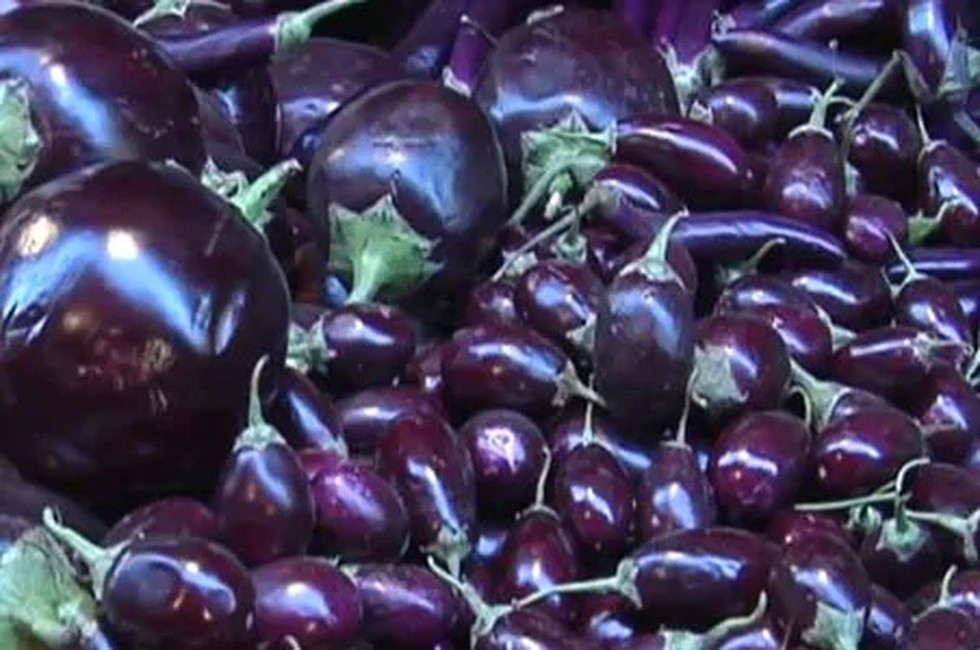
About:
- Developed by: Mahyco (Maharashtra Hybrid Seeds Company) in collaboration with the Dharward University of Agricultural sciences and the Tamil Nadu Agricultural University.
- Technology: Bt brinjal was the first food crop made to contain an insecticidal protein, called cry1 ac, sourced from the genes of the soil bacterium, Bacillus thuringienesis.
- Timeline: Though this was cleared for commercial cultivation it was put on hold by former Union Environment Minister Jairam Ramesh in 2010 on the grounds that there was scientific and public disagreement on its safety.
Recent development:
- Bhushan’s letter comes in the aftermath of activist groups recently proffering evidence of Bt Brinjal, a GM crop, being grown in a farmer’s field in Haryana.
- He has demanded that the Environment Ministry uproot and destroy planted Bt brinjal in farms and seedlings in nurseries, undertake a scaled-up exercise of testing of seeds and plantings and, ascertain the supply chain - from seed developers to intermediaries.
Genetically Modified (GM) organisms and GM foods?
- A genetically modified organism (GMO) is an organism in which one or more genes (called transgenes) have been introduced into its genetic material from another organism using recombinant DNA technology.
- The genes may be from
- a different kingdom (such as from a bacterium to a plant) or
- a different species within the same kingdom (e.g. from one plant species to another).
- Foods produced from or using GM organisms are often referred to as GM foods.
Prelims Pointers
May 13, 2019

About:
- Names: Al-Hudaydah is also transliterated as Hodeda, Hodeida, Hudaida or Hodeidah.
- Location: It is the principal port on the Red Sea.
- Port’s significance: It is an important port, exporting coffee, cotton, dates and hides. It serves as the entry point for Yemen's humanitarian aid and around 70% of commercial imports.
Houthi?
- Religion: The Houthis are Zaydi Shiites, or Zaydiyyah. Shiite Muslims are the minority community in the Islamic world and Zaydis are a minority of Shiites, significantly different in doctrine and beliefs from the Shiites who dominate in Iran, Iraq, and elsewhere.
- Background: The Houthi movement was founded in the 1990s by Hussein Badreddin al-Houthi, a member of Yemen’s Zaidi Shia minority. Hussein was killed by Yemeni soldiers in 2004, and the group is now led by his brother Abdul Malik.
- Goals: The Houthis’ slogan, known as the sarkha, or scream, is “God is great, death to America, death to Israel, curse on the Jews, victory to Islam.” Apart from the resistance narrative, the Houthis have no stated political or governance goals for Yemen.
- Conflict:
- The Houthis and the Yemeni government have battled on and off since 2004, but much of the fighting was confined to the Houthis' stronghold, northern Yemen's impoverished Saada province.
- In September 2014, the Houthis took control of Yemen's capital, Sanaa, and proceeded to push southwards towards the country's second-biggest city, Aden.
- In response to the Houthis' advances, a coalition of Arab states launched a military campaign in 2015 to defeat the Houthis and restore Yemen's government.
- Recent pull-out:
- The Houthis began the long-delayed pull out of their forces from the key port of Hodeidah, as well as the two smaller ports of Saleef and Ras Isa, as part of a ceasefire deal reached in Sweden in December.
- The Houthi move is seen as a key first step towards ending the civil war.
Prelims Pointers
May 13, 2019
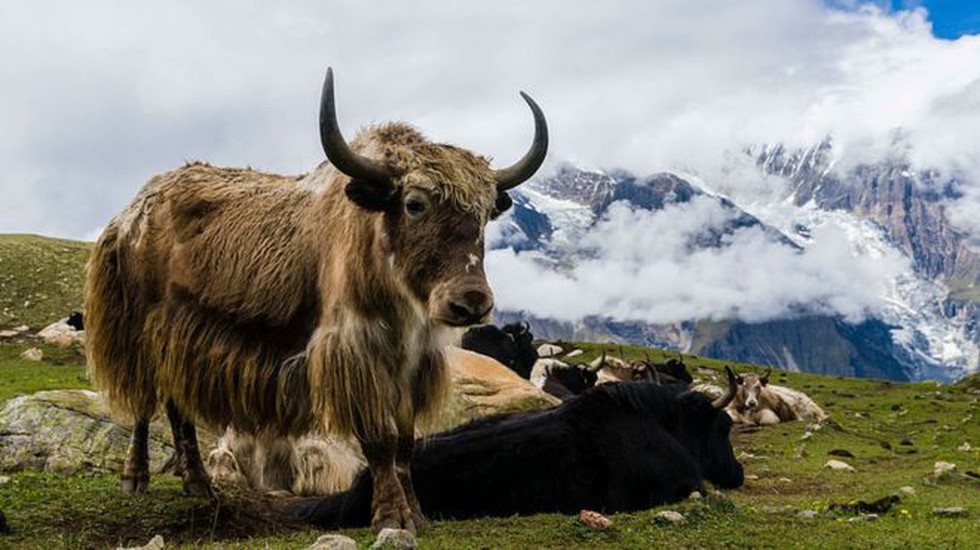
About:
- Scientific name: Bos grunniens.
- Common name: Domestic yak.
- Taxonomy: Yaks belong to the genus Bos and are therefore related to cattle (Bos primigenius species). Domestic Yak (Bos Grunniens) descended from the wild yak (Bos mutus).
- Features:
- Yaks have long shaggy hair with a dense woolly undercoat over the chest, flanks, and thighs to insulate them from the cold.
- Yaks grunt and, unlike cattle, are not known to produce the characteristic bovine lowing (mooing) sound, which inspired the scientific name of the domestic yak variant, Bos grunniens (grunting bull).
- While wild yaks are generally dark, domestic yaks can be quite variable in colour, often having patches of rusty brown and cream.
- Yaks have long shaggy hair with a dense woolly undercoat over the chest, flanks, and thighs to insulate them from the cold.
- Distribution: It is found throughout the Himalayan region of the Indian subcontinent, the Tibetan Plateau and as far north as Mongolia and Russia.
- Relationship with humans: Yaks are a source of local milk, milk products, transportation and wool.
- National Research Centre on Yak: The Government of India established the ICAR-National Research Centre on Yak, in 1989 at Dirang, Arunachal Pradesh as a dedicated centre for research into yak husbandry.
Prelims Pointers
May 13, 2019

About:
- What is it? PMO consists of the immediate staff of the Prime Minister of India, as well as multiple levels of support staff reporting to the Prime Minister.
- History: This executive body was formed in 1947. The PMO was originally called the Prime Minister's Secretariat until 1977, when it was renamed during the Morarji Desai ministry.
- Principal Secretary: The PMO is headed politically by PM and administratively by the Principal Secretary (currently Nripendra Misra).
- During the tenure of Nehru as PM, the then Prime Minister's Secretariat was headed by a Joint Secretary until his death.
- The post of Principal Secretary to PM was created during the tenure of Indira Gandhi.
- During the tenure of Nehru as PM, the then Prime Minister's Secretariat was headed by a Joint Secretary until his death.
- Location: It is located in the South Block (Secretariat Building) New Delhi.
- Functions: Following 5 key functions are assigned to the PMO in the Government of India Allocation of business rules 1961 (as amended in 1970) –
- To deal with all references that have, under the rules of business, come to the Prime Minister.
- To help the Prime Minister in respect of his/her overall responsibilities as head of Government. It includes liaison with the Union Ministries and the state Governments on matters in which the Prime Minister maybe interested.
- To help the Prime Minister in the discharge of his responsibilities as the chairman of the Planning Commission (Now replaced by NITI Aayog).
- To deal with the public relations side of the Prime Minister's office, that is, relations with the press, public.
- To assist the Prime Minister in the examination of cases submitted to him for orders under prescribed rules.
- To deal with all references that have, under the rules of business, come to the Prime Minister.
Prelims Pointers
May 13, 2019
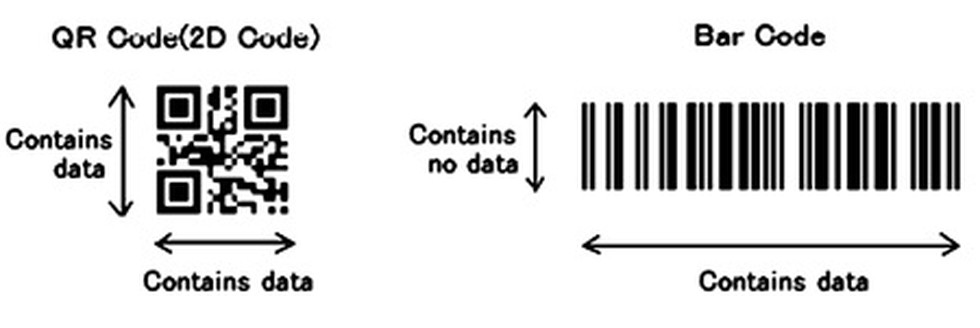
QR Code:
- What is it? The QR Code is a two-dimensional version of the barcode. ‘QR’ stands for "Quick Response", which refers to the instant access to the information hidden in the Code.
- Working:
- It consists of black squares arranged in a square grid on a white background.
- Up to 7089 digits or 4296 characters can be entered in one Code.
- The hidden information can be read by an imaging device such as a camera and the required data is then extracted from patterns that are present in code.
- It consists of black squares arranged in a square grid on a white background.
- Applications: It was first designed in 1994 for the automotive industry in Japan. Now it is widely used to get to websites more quickly. Key applications are Product tracking, item identification, general marketing etc.
QR code vs Barcode:
- QR code is two-dimensional (can be read horizontally & vertically) whereas line barcodes are one-dimensional (can be only read horizontally).
- As compared to line barcodes, QR codes can store much more data (including URL links, geo coordinates, and text), have high fault tolerance and doesn’t require a hand-held scanner to scan them (as modern cell phones can scan them).
Prelims Pointers
May 13, 2019

About:
- Discovery: It has been discovered by an Assamese forest officer Jatindra Sarma in Assam. The orchid was discovered earlier in Japan, Taiwan, and Laos.
- Features:
- It is a variant of a Japanese orchid.
- Lecanorchis taiwaniana is a mycoheterotroph, one of two types of parasitic plants that have abandoned photosynthesis.
- It is India’s one of the smallest orchids in terms of size and duration of bloom to be recorded botanically.
- It is a variant of a Japanese orchid.
- Significance: Lecanorchis taiwaniana adds to the orchid wealth of northeast India, which has 800 of some 1,300 species in the country. About 300 species are found in the Western Ghats and 200 in the northwestern Himalayas.
Prelims Pointers
May 13, 2019

About:
- Name:
- The name “Russian poplar” is a misnomer and has nothing to do with Russia.
- The tree is a Western American species known as Eastern Cottonwood (Populus deltoides) in the US.
- The species is Locally called as Russi Frass.
- The name “Russian poplar” is a misnomer and has nothing to do with Russia.
- History in Kashmir: The variety of poplar trees was introduced in Kashmir in 1982 from the US under a Word Bank-aided social forestry scheme.
- Potential benefits: The species takes less time (10-15 years) to grow, as compared to the Kashmir poplar that takes 30-40 years. Due to their high yield, poplars are intensively used in the timber and construction industry.
- Health concerns: During summers, populous deltoids—female poplar—sheds a cotton-like material carrying seeds that cause allergy and aggravate respiratory disorders. This cotton has become an irritant in the recent past for the locals as well as tourists.
- View of experts: Three years ago, this led to the Jammu & Kashmir High Court ordering chopping of all Russian poplars in the Valley. Some scientists, on the other hand, have concluded that the seeds from these trees do not cause allergy.
Prelims Pointers
May 13, 2019

About:
- Who constitutes vacation bench? A Vacation Bench of the Supreme Court is a special bench constituted by the Chief Justice of India.
- When is vacation bench constituted? The Supreme Court takes two long vacations each year, the summer and winter breaks, but is technically not fully closed during these periods.
- Urgent matters:
- Litigants can still approach the Supreme Court during vacations and, if the court decides that the plea is an “urgent matter”, the Vacation Bench hears the case on its merits.
- While there is no specific definition as to what is an “urgent matter”, during vacations the court generally admits writs related to habeas corpus, certiorari, prohibition and quo warranto matters for enforcement of any fundamental right.
- Litigants can still approach the Supreme Court during vacations and, if the court decides that the plea is an “urgent matter”, the Vacation Bench hears the case on its merits.
- Underlying rules: Under Rule 6 of Order II of The Supreme Court rules, 2013, the Chief Justice may appoint one or more Judges to hear during summer vacation or winter holidays all matters of an urgent nature.
The High Courts and trial courts too have Vacation Benches to hear urgent matters under their jurisdiction.
May 12, 2019
Prelims Pointers
May 12, 2019
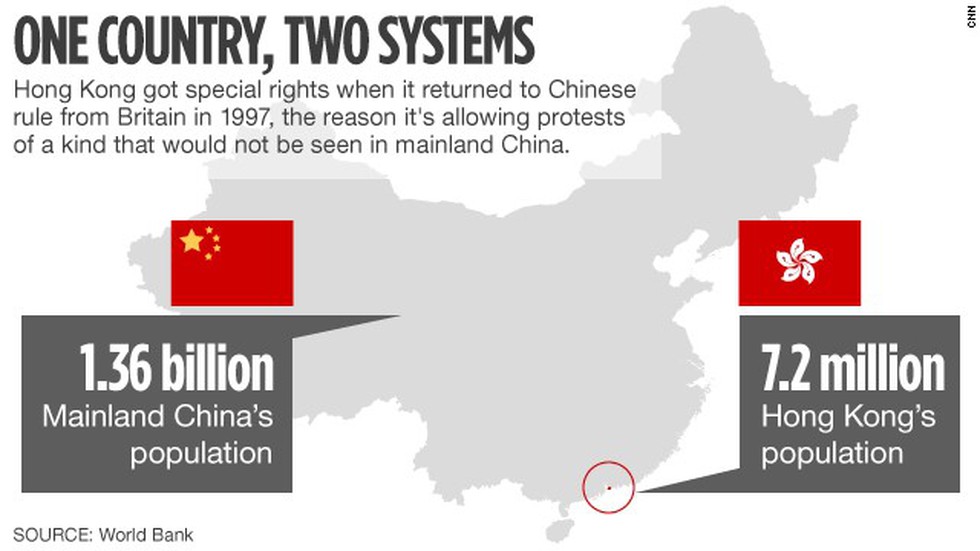
About:
- The principle of “one country, two systems” was first proposed by Deng Xiaoping in the early 1980s as way to reconcile the communist mainland with historically Chinese territories—Taiwan, Hong Kong and Macau—that had capitalist economies.
- He suggested that there would be only one China, but distinct Chinese regions such as Hong Kong and Macau could retain their own economic and administrative systems, while the rest of the PRC (or simply "China") uses the socialism with Chinese characteristics system.
- In 1984 the concept was enshrined in the Sino-British Joint Declaration, in which the two countries agreed that Britain would hand over sovereignty of Hong Kong to China (China regained control over the former British colony in 1997).
- It is also in Hong Kong’s mini-constitution, the Basic Law. The Hong kong’s Basic Law states that even though Hong Kong is an “inalienable” part of the People’s Republic, China’s parliament authorises it to exercise a “high degree of autonomy” to enjoy executive, legislative and independent judicial power.
- China is responsible for defence and foreign affairs but Hong Kong runs its own internal security.
- The central government is banned from interfering in Hong Kong’s affairs, and the Communist Party has no official presence. Freedom of speech, press, religion and protest are all defended by law.
Macau, which was returned from Portugal in 1999, has a similar version; the concept has so far failed to tempt back Taiwan.
Prelims Pointers
May 12, 2019

About:
- What is it? A supernova is the explosion of a star. It is the largest explosion that takes place in space.
- Where Do Supernovas Take Place? Supernovas are often seen in other galaxies. But supernovas are difficult to see in our own Milky Way galaxy because dust blocks our view.
- What Causes a Supernova? A supernova happens where there is a change in the core, or center, of a star. A change can occur in two different ways.
- The first type of supernova happens in binary star systems. Binary stars are two stars that orbit the same point. One of the stars, a carbon-oxygen white dwarf, steals matter from its companion star. Eventually, the white dwarf accumulates too much matter. Having too much matter causes the star to explode, resulting in a supernova.
- The second type of supernova occurs at the end of a single star’s lifetime. As the star runs out of nuclear fuel, some of its mass flows into its core. Eventually, the core is so heavy that it cannot withstand its own gravitational force. The core collapses, which results in the giant explosion of a supernova. The sun is a single star, but it does not have enough mass to become a supernova.
- The first type of supernova happens in binary star systems. Binary stars are two stars that orbit the same point. One of the stars, a carbon-oxygen white dwarf, steals matter from its companion star. Eventually, the white dwarf accumulates too much matter. Having too much matter causes the star to explode, resulting in a supernova.
- Why Do Scientists Study Supernovas?
- A supernova burns for only a short period of time, but it can tell scientists a lot about the universe. One kind of supernova has shown scientists that we live in an expanding universe, one that is growing at an ever increasing rate.
- Supernovas play a key role in distributing elements throughout the universe. When the star explodes, it shoots elements and debris into space. These elements travel on to form new stars, planets and everything else in the universe.
- A supernova burns for only a short period of time, but it can tell scientists a lot about the universe. One kind of supernova has shown scientists that we live in an expanding universe, one that is growing at an ever increasing rate.
Fast neutrino oscillations?
- Neutrinos come in three flavours: electron neutrino, muon neutrino and tau neutrino, so named because of the corresponding leptons they are associated with (electron, muon and tau).
- Neutrinos have a small mass and they can change from one flavour to another – a phenomenon named neutrino oscillations.
- Fast neutrino oscillations:
- When the same neutrinos are in the presence of many other neutrinos and when the different flavours are emitted slightly differently in various directions (anisotropy) the oscillations from one flavour to another happen at a higher frequency.
- This is called fast oscillation and is proportional to the density of neutrinos in the medium, and not the masses of the neutrinos.
Prelims Pointers
May 12, 2019

Arguments by petitioner:
- An NGO, named Justice For Rights Foundation, has alleged that online platforms are -
- displaying sexually explicit, vulgar, violent, unlicenced, unregulated, uncertified content and
- collecting subscription amounts from Indian consumers whereas the content was illegal under the provisions of the Indian Cinematograph Act and not cleared by the Central Board for Film Certification (CBFC).
- displaying sexually explicit, vulgar, violent, unlicenced, unregulated, uncertified content and
- The petition seeks the formulation of guidelines or legislation to regulate content being displayed by them.
- The absence of guidelines has given rise to a special class of broadcasters and this discriminates against customers, cable TV producers and direct-to-home operators.
Counter-arguments:
- In February, the Delhi High Court had dismissed the plea after it was informed by the central government that the online platforms were neither required to obtain a licence from the Ministry of Information and Broadcasting, nor was their content regulated by it.
- The Ministry of Law and Justice had also stated that the matter was outside its domain.
- In January, online platforms like Netflix, Hotstar, Jio and ALTBalaji and Eros Now signed a voluntary censorship code that stops them from showing certain kinds of content. They also set up a redressal mechanism for complaints.
Prelims Pointers
May 12, 2019
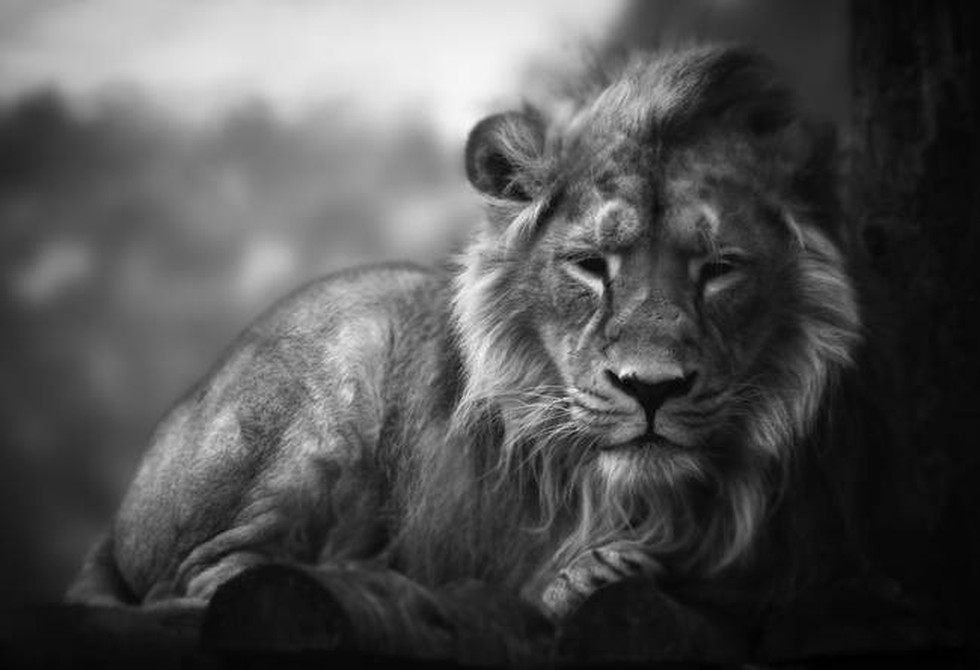
About:
- The genome sequencing would enable scientists in better understanding the evolution of Asiatic lions, to develop specific markers to study population genetics (the differences at the gene level within a population) and get newer insights into its population status and subsequent management.
- With the complete genome of royal Bengal tiger, African Cheetah and Jaguar available, comparative studies of all these big cats would be possible.
- Only partial genomic information of the African lion was available now. Comparative genomics between African and Asiatic lions could be undertaken once the complete genome of the African lion is sequenced.
Asiatic Lion?
- Scientific Name: Panthera Leo Persica.
- Common Name: Asiatic lion, Indian Lion.
- Status: Listed in Schedule I of Wildlife (Protection) Act 1972, in Appendix I of CITES and as Endangered on IUCN Red List.
- Characteristics: Asiatic lions are slightly smaller than African lions. The most striking morphological character, which is always seen in Asiatic lions, and rarely in African lions, is a longitudinal fold of skin running along its belly.
- Major threats: The Asiatic lion currently exists as a single subpopulation, and is thus vulnerable to extinction from unpredictable events, such as an epidemic or large forest fire. There are indications of poaching incidents in recent years.
- Habitat and Distribution: At present Gir National Park and Wildlife Sanctuary is the only abode of the Asiatic lion. The last surviving population of the Asiatic lions is a compact tract of dry deciduous forest and open grassy scrublands in southwestern part of Saurashtra region of Gujarat.
- Asiatic Lion Conservation Project: In February 2019, the Union Ministry of Environment approved a dedicated project for conservation of Asiatic Lion for three financial years FY 2018-21.
Prelims Pointers
May 12, 2019

Key Highlights of the study:
- The incidence of cancer (excluding non-melanomatous skin cancers) is projected to rise from 17.0 million to 26.0 million between 2018 and 2040.
- Between 2018 and 2040, the number of patients requiring first-course chemotherapy annually will increase from 9.8 million to 15 million.
- A steady growth curve of patients (eligible for chemotherapy) will be seen in low and middle income countries going from 63% in 2018 to 67% in 2040.
- The most common indications for chemotherapy worldwide in 2040 will be lung cancer (16.4%), breast cancer (12.7%) and colorectal cancer (11.1%).
- In 2018, 65,000 cancer physicians were required worldwide to deliver optimal chemotherapy. The figure is estimated to rise to 1,00,000 by 2040.
- This first of its kind study is aimed at helping the global community scale up chemotherapy provisions. Strategic investments in chemotherapy service provision and cancer physicians are needed to meet the projected increased demand for chemotherapy in 2040.
An Indian study “Projections of number of cancer cases in India by cancer groups’’ has noted that for the country the cancer cases are likely to go up from 9.7 Lakh cases in 2010 to 11.4 Lakh cases in 2020.
Prelims Pointers
May 12, 2019
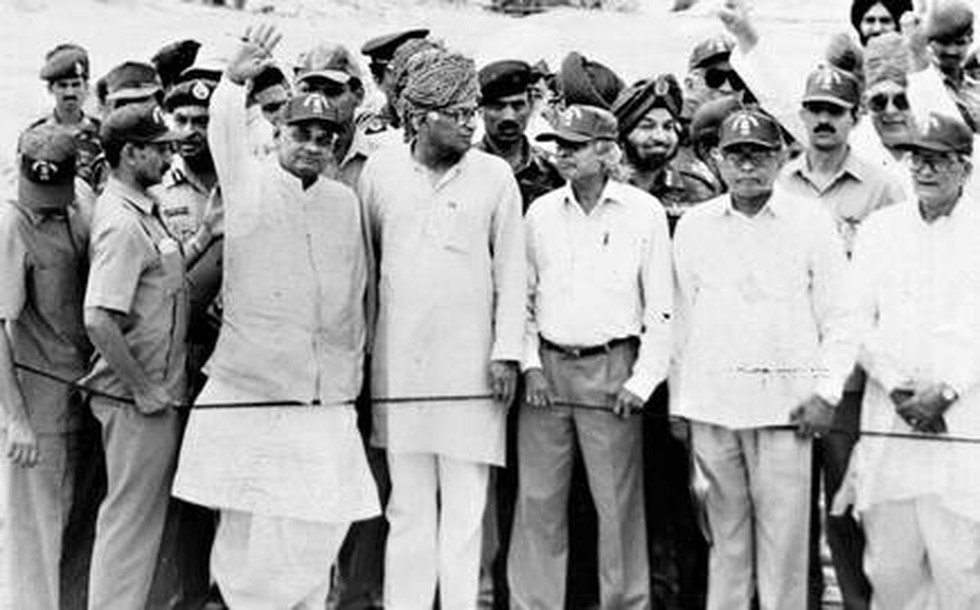
Operation Shakti:
- Pokhran-II (a.k.a Operation Shakti-98) is the name assigned to the series of five nuclear bomb test explosions conducted by India at the Indian Army's Pokhran Test Range in May 1998.
- On May 11, 1998, India carried out three nuclear tests. Two days later, India carried out two more tests. Of the five detonations, the first was a fusion bomb and the remaining four were fission bombs.
- Subsequently, the then Prime Minister Atal Bihari Vajpayee declared India a full-fledged nuclear state.
- It was the second Indian nuclear test; the first test, code-named Smiling Buddha, was conducted in 1974.
- The key scientists behind the triumph of ‘Operation Shakti’ were APJ Abdul Kalam, R Chidambaram, K Santhanam and Anil Kakodkar. The three top politicians in the NDA Government who decided to conduct the tests were Prime Minister AB Vajpayee; Defence Minister George Fernandes and Foreign Minister Jaswant Singh.
Reasons for conducting it:
- By the late 1990s India was faced with a situation in which two neighbours with whom it had fought wars, Pakistan (covertly) and China, already had nuclear weapons. By conducting the tests, India was able to insulate itself from nuclear threats and blackmail.
- In the 1990s, India had come under pressure from the US and Western nations to sign the Comprehensive Test Ban Treaty (CTBT) that sought to embargo all nuclear testing. If we signed on to CTBT, we would have been closing our nuclear option for ever. If we refused to sign, we would have to explicitly state why we do not want to sign.
- India conducted its first nuclear test in 1974. By conducting it, India demonstrated its capability to produce a nuclear bomb. But it simultaneously stated that it would not produce a nuclear bomb. This created a sense of uncertainty about India's real intentions, which changed with operation Shakti.
Prelims Pointers
May 12, 2019
About:
- The 1,400 representatives, in a meeting organized by the UN Environment Programme (UNEP) reached the agreement in Geneva.
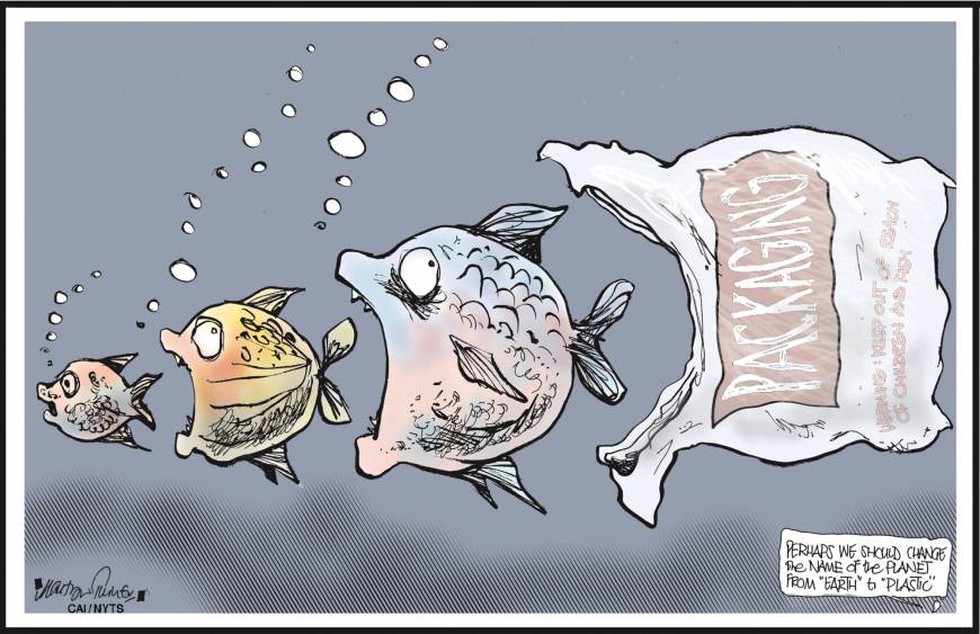
- The Geneva meeting amended the 1989 Basel Convention on the control of hazardous wastes to include plastic waste in a legally-binding, globally-reaching framework for managing plastic waste.
- The new amendment would empower developing countries to refuse plastic waste dumping.
- For far too long developed countries like the US and Canada have been exporting their mixed toxic plastic wastes to developing Asian countries claiming it would be recycled in the receiving country.
- Instead, much of this contaminated mixed waste cannot be recycled and is instead dumped or burned, or finds its way into the ocean.
- For far too long developed countries like the US and Canada have been exporting their mixed toxic plastic wastes to developing Asian countries claiming it would be recycled in the receiving country.
- The Geneva meeting also undertook to eliminate two toxic chemical groups— Dicofol and Perfluorooctanoic Acid, plus related compounds. The latter has been used in a wide variety of industrial and domestic applications including non-stick cookware and food processing equipment, as well as carpets, paper and paints.
Basel convention?
- Full name: The Basel Convention on the Control of Transboundary Movements of Hazardous Wastes and their Disposal.
- History: It was adopted in 1989 by the Conference of Plenipotentiaries in Basel, Switzerland. The Convention entered into force in 1992.
- Background: It was adopted in response to a public outcry following the discovery in developing world of deposits of toxic wastes imported from abroad.
- Aims: The provisions of the Convention center around the following principal aims –
- the reduction of hazardous waste generation and the promotion of environmentally sound management of hazardous wastes, wherever the place of disposal;
- the restriction of transboundary movements of hazardous wastes except where it is perceived to be in accordance with the principles of environmentally sound management; and
- a regulatory system applying to cases where transboundary movements are permissible.
Prelims Pointers
May 12, 2019
About:
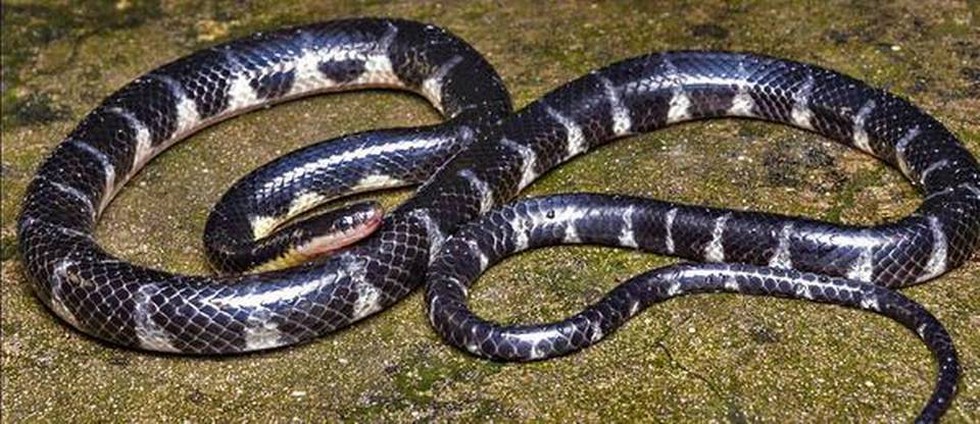
- Scientific Name: Smithophis atemporalis (named after eminent British herpetologist Malcolm Arthur Smith for his immense contribution to Indian herpetology).
- Common Name: Mizo rain snake, Ruahlawmrul and rain-loving snake.
- Distribution: The species is found in Mizoram.
- Features:
- It is a non-venomous snake.
- It is a predominantly aquatic species. It is commonly seen in human dominated landscapes after rains.
- It lacks specific enlarged scales in the temporal region of the head. This character is extremely rare in snakes of this family, hence its name Smithophis atemporalis.
- It is a non-venomous snake.
Recent discoveries of Reptiles in North-east:
- It is the latest reptile to be discovered in the Northeast in recent time.
- The discovery comes after a Russian journal recently published the discovery of a reddish-brown pit viper in Arunachal Pradesh.
- The discovery of another non-venomous snake species — the Crying Keelback, in Arunachal Pradesh’s Lepa-Rada district, was published in an international journal about six months ago.
Prelims Pointers
May 12, 2019

About:
- Name: The new ‘province’ claimed by the militant group Islamic State (IS) is called “Wilayah of Hind.”
- Ishfaq Ahmad Sofi:
- IS's Amaq News Agency also claimed that IS inflicted casualties on Indian army soldiers in the town of Amshipora in the Shopian district of Kashmir.
- The IS statement corresponds with a recent police statement that a militant called Ishfaq Ahmad Sofi was killed in an encounter in Shopian.
- According to a military officials, Sofi had been involved in several militant groups in Kashmir for more than a decade before pledging allegiance to Islamic State.
- IS's Amaq News Agency also claimed that IS inflicted casualties on Indian army soldiers in the town of Amshipora in the Shopian district of Kashmir.
Analysis:
- According to Indian security experts, the establishment of a 'province' in a region where it has nothing resembling actual governance is absurd, but it should not be written off.
- Separatists have for decades fought an armed conflict against Indian rule in Kashmir. The majority of these groups want independence for Kashmir or to join Pakistan. They have not, like Islamic State, sought to establish an empire across the Muslim world.
- IS's statement establishing the new province appears to be designed to bolster its standing after the group was driven from its self-styled “caliphate” in Iraq and Syria in April.
- IS has stepped up hit-and-run raids and suicide attacks, including taking responsibility for the Easter Sunday bombing in Sri Lanka that killed at least 253 people.
Prelims Pointers
May 12, 2019
About:
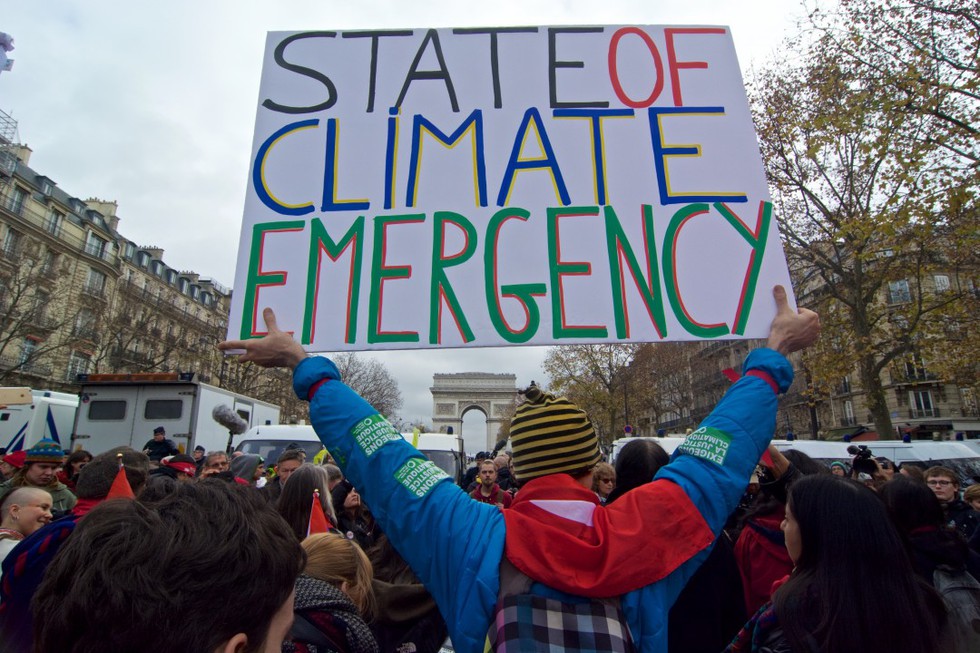
- Ireland has declared climate emergency in their country, to be the second country after Britain to do so.
- Irish Green Party leader Eamon Ryan, who moved the amendment, called the decision historic. An amendment to a parliamentary report declaring a climate emergency and calling on parliament to examine how the Irish government can improve its response was accepted without a vote.
- Britain's parliament became the first in the world to declare a climate emergency, passing the largely symbolic motion on May 1. The step followed 11 days of street protests in London by the Extinction Rebellion environmental campaign group.