




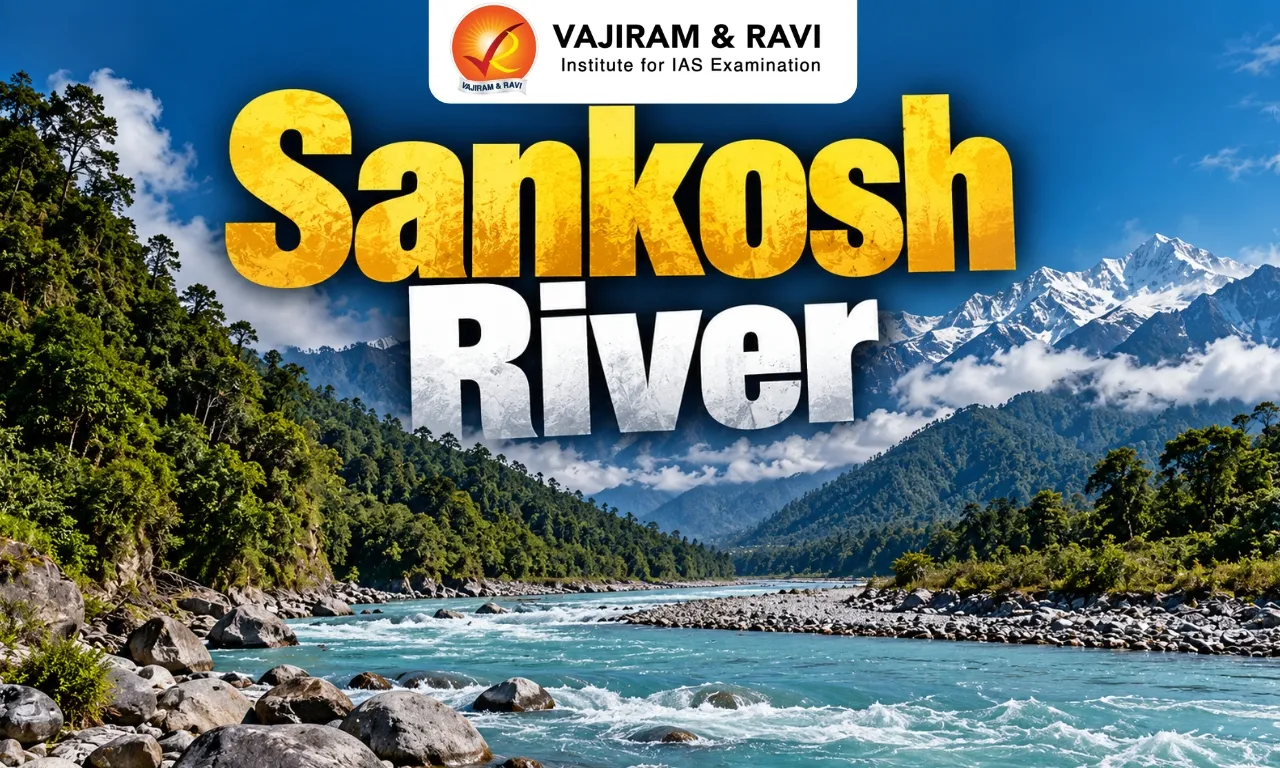
The Sankosh River is an important transboundary river of the Eastern Himalayas, flowing through Bhutan and India before joining the Brahmaputra. Known as Puna Tsang Chu in Bhutan, it originates in the Himalayan region and forms a natural boundary between Assam and West Bengal. Its river basin supports agriculture, freshwater ecosystems and wildlife habitats, making it geographically and ecologically significant for the northeastern region.
Sankosh River Latest News
Bhutan Flood 2026 that took place on October 30th 2026 is a Glacial Lake Outburst Flood (GLOF) occurred at Shintaphu Lake in Bhutan's Gasa district which released approximately 7.4 million cubic metres of water. The incident triggered flood alerts across northern West Bengal and Assam, with authorities preparing evacuations along the Sankosh River. The floodwater entered the Mo Chhu (Mofu) River, which connects with the Sankosh River System before draining into the Brahmaputra. The incident highlights the vulnerability of Himalayan river basins to climate induced disasters and the need for coordinated disaster management.
Sankosh River
The Sankosh River is a major Himalayan river system connecting Bhutan with northeastern India through its extensive drainage network.
- Sankosh River Origin: The river originates in the snow covered Greater Himalayan region of northern Bhutan, with its flow sustained by snowmelt, glacial water and several mountain tributaries.
- Other Name: The Sankosh River is known as Puna Tsang Chu, Punatsang Chhu or Puna Thsang Chu in Bhutan. Other regional and historical names include Wang Chu, Svarnakosha, Gadadhar and Sonkosh.
- Other Names: The Sankosh River is known as Puna Tsang Chu or Puna Thsang Chu in Bhutan. It is also referred to as Mo Chhu and Gangadhar River in different regions.
- Major Tributaries: Its two principal tributaries are Pho Chhu and Mo Chhu, which meet near Punakha. Other important tributaries include Tang Chuu, Hara Chhu and Daga Chhu.
- Course and Flow: The river travels approximately 214 km through Bhutan before entering India, covering another 107 km before reaching its confluence with the Brahmaputra.
- Sankosh River in India: After entering India, it flows along the Assam-West Bengal boundary, passing through the northeastern plains before reaching the Brahmaputra drainage system.
- Confluence and Drainage: The Sankosh River meets the Brahmaputra near Gauripur in Assam. Its catchment supports agriculture, fishing and water availability across the surrounding settlements.


Sankosh River Biodiversity
The Sankosh River basin supports diverse Himalayan and northeastern ecosystems, particularly around protected forests and wildlife corridors.
Flora
- Forest Types: The lower basin contains moist deciduous and semi evergreen forests, while Sal dominated moist deciduous vegetation characterises other forested areas.
- Important Tree Species: Major trees include Sal, Koroi, Khakan, Bolem, Hilikha, Bohera and Teeta campa, alongside different species of Castanopsis, Lagerstroemia and Magnolia.
- Shrubs and Climbers: The vegetation also includes orchids, ferns, bamboo, canes, lianas and herbs such as Psilanthus bengalensis and Piper mullesua.
Fauna
- Mammals: The basin provides habitat and movement corridors for Asian elephants and golden langurs. Nearby ecological zones also support Bengal tigers, wild buffaloes and one horned rhinoceroses.
- Aquatic Biodiversity: Fish species include Crossocheilus latius, Tor tor (Mahseer), Bagarius bagarius, Channa barca and Ompok pabo, including species belonging to threatened categories.
- Birdlife: The wider Brahmaputra-Sankosh landscape supports numerous birds, including the marsh babbler and Manipur bush quail, which have restricted distributions.
Protected Habitats
Buxa Tiger Reserve and Raimona National Park are important regional conservation areas where the river supports wildlife through water availability and habitat connectivity.
Sankosh River Challenges
The Sankosh River faces interconnected environmental and developmental pressures that affect downstream settlements, biodiversity and regional water security.
- Glacial Lake Outburst Floods: GLOFs originating in Bhutan can produce sudden water surges, threatening settlements, riverbank infrastructure and downstream communities across international boundaries.
- Climate Change: Rising temperatures and changing Himalayan conditions increase concerns about glacial instability, unpredictable river flows and extreme hydrological events.
- Flooding: Seasonal flooding in the lower basin can damage agricultural fields, settlements and infrastructure while affecting the livelihoods of river dependent communities.
- Biodiversity Loss: Habitat disturbance and fragmentation threaten wildlife movement corridors and freshwater species, highlighting the importance of conserving connected riverine and forest ecosystems.
- Transboundary Management: Effective coordination between Bhutan and India is essential for flood forecasting, timely warnings, information sharing and disaster response across the river basin.

 Last updated on Oct, 2026
→ UPSC 2027 Notification will be released on 13 January 2027 at upsconline.nic.in.
→ Check Nobel Prize 2026 Winners List here.
→ Check out the latest UPSC Syllabus here.
→ Download UPSC Calendar 2027 PDF Here.
Sankosh River FAQs
Q1. Which two states do the Sankosh River border?+
Q2. What is another name for the Sankosh River?+
Q3. Which river forms the border between Assam and West Bengal?+
Q4. Sankosh River is a tributary of which river?+
Q5. Where does the Sankosh River originate?+
Tags: river in india sankosh river