



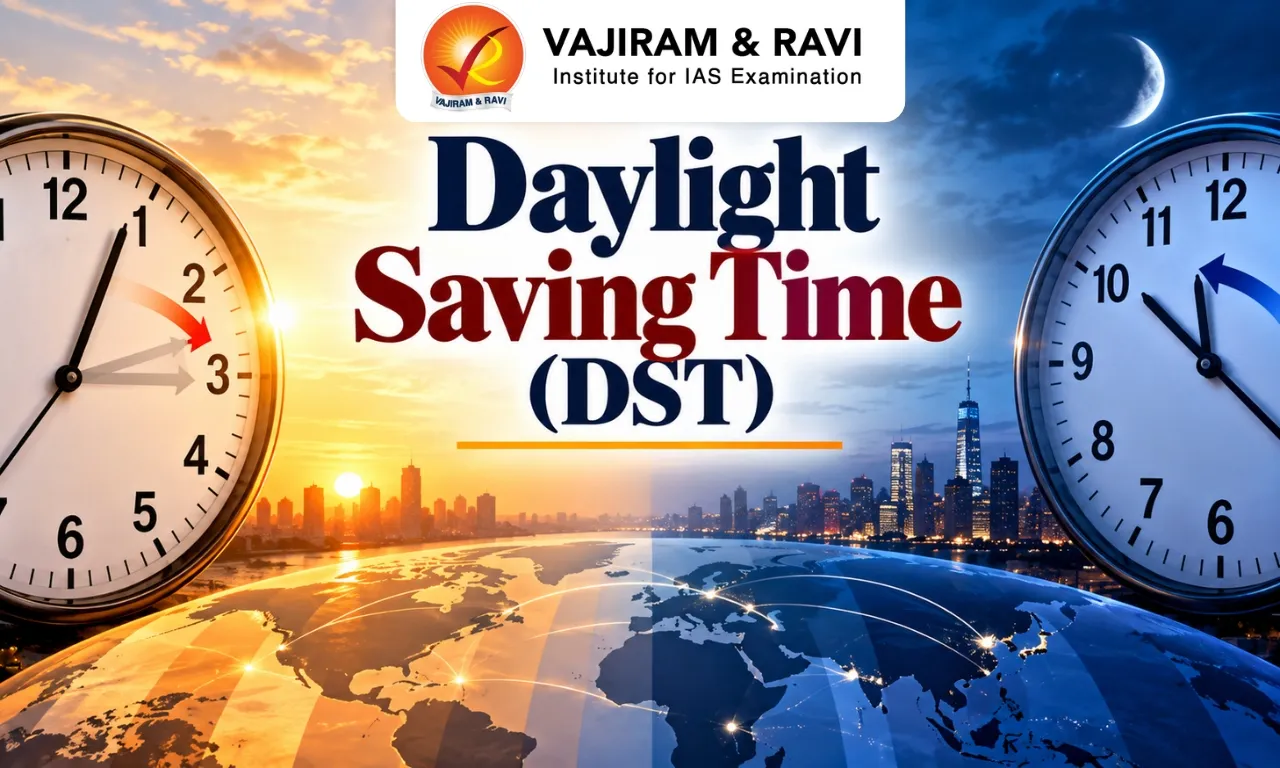
Daylight Saving Time (DST) is a seasonal time adjustment system in which clocks are moved forward by one hour during warmer months and returned to standard time in autumn. It aims to utilise natural daylight more effectively, reduce dependence on artificial lighting and provide longer daylight hours during evenings. The practice is followed in several countries, particularly in North America and Europe, but India does not observe it.
Daylight Saving Time Latest News 2026
Daylight Saving Time 2026 began on Sunday, March 8, in the United States and Canada. It will end on Sunday, November 1, 2026, when clocks will move back one hour at 2:00 AM local time, returning to 1:00 AM. This change marks the beginning of standard time. Most smartphones and computers adjust automatically, while traditional clocks require manual resetting.
What is Daylight Saving Time?
Daylight Saving Time is a system of adjusting clocks according to seasonal daylight availability. Under this arrangement, clocks move forward by one hour in spring and return to standard time in autumn.
- Daylight Saving Time Meaning with Example: If the standard time is 6:00 AM, advancing the clock by one hour makes it 7:00 AM. This allows people to experience more daylight during evening hours.
- Daylight Saving Time in the United States: Most US states follow DST, except Hawaii and most of Arizona. In contrast, India follows Indian Standard Time (IST) throughout the year at UTC +5:30.


Daylight Saving Time History
The concept of seasonal clock adjustment by Daylight Saving Time developed over several centuries before gaining wider acceptance during wartime energy conservation efforts.
- Benjamin Franklin's Suggestion: In 1784, Benjamin Franklin proposed the idea of making better use of daylight through a humorous essay, introducing an early discussion about adjusting daily schedules.
- William Willett's Campaign: In 1907, British campaigner William Willett advocated advancing clocks gradually during spring and reversing the adjustment in autumn to increase daylight utilisation.
- Adoption During World War I: Germany and Austria introduced DST in April 1916 to reduce artificial lighting requirements and conserve fuel. Several other countries subsequently adopted the practice.
- Changes in the United States: The US revised its DST schedule through legislation in 1986 and 2007. Since 2007, it has generally started on the second Sunday of March and ended on the first Sunday of November.
Need for Daylight Saving Time
The primary objective of Daylight Saving Time (DST) is to utilise available natural daylight efficiently while supporting economic activities and reducing artificial lighting requirements.
- Energy Conservation: Longer evening daylight can reduce the requirement for artificial lighting, potentially lowering electricity consumption and supporting more efficient energy utilisation.
- Economic Benefits: Extended daylight encourages people to participate in outdoor activities, potentially increasing customer visits and business opportunities for restaurants, retail stores and other local establishments.
- Public Safety: Better visibility during evening hours may help reduce accidents and certain criminal activities associated with poorly lit surroundings.
- Outdoor Activities: Additional evening daylight provides more opportunities for recreational activities, exercise and social interaction after regular working hours.
Daylight Saving Time Challenges
Despite its intended benefits, Seasonal Clock Adjustments create health, economic and administrative difficulties across different regions.
- Disruption of Circadian Rhythm: Sudden changes in clock timings can disturb the body's internal biological clock, affecting sleeping patterns, daily routines and overall health.
- Health Risks: Sleep deprivation associated with the transition may increase health concerns, including heart related stress. Research has also reported increased fatal road crash rates following the time change.
- Workplace Accidents: Studies have identified increased workplace injuries after the spring transition, potentially resulting in productivity losses and additional workdays lost.
- Limited Energy Savings: The reduction in electricity consumption is not always substantial. In some regions, increased heating or cooling requirements may offset the expected savings.
- Time Zone Confusion: Countries following different DST schedules can experience scheduling difficulties, affecting international business operations, travel arrangements and communication.
Is Daylight Savings Time Permanent?
Permanent Daylight Saving Time remains a debated policy issue, particularly in the United States, where legislative efforts have not yet changed existing federal rules.
- Sunshine Protection Act: The US Congress has considered legislation to make DST permanent, eliminating the need for seasonal clock adjustments. However, the proposal has stalled in the Senate.
- Existing System: Since the proposed legislation has not become law, the United States continues to follow seasonal clock changes under its existing federal framework.
- Possibility of Future Changes: Permanent DST may be reconsidered through future legislative decisions. However, no confirmed date has been established for permanently ending seasonal clock adjustments.

 Last updated on Oct, 2026
→ UPSC 2027 Notification will be released on 13 January 2027 at upsconline.nic.in.
→ Check Nobel Prize 2026 Winners List here.
→ Check out the latest UPSC Syllabus here.
→ Download UPSC Calendar 2027 PDF Here.
Daylight Saving Time (DST) FAQs
Q1. Why was Daylight Savings Time Started?+
Q2. Is Daylight Savings Time Permanent?+
Q3. When does Daylight Savings Time End Permanently?+
Q4. When does Daylight Saving Time Start and End in 2026?+
Q5. Does India Follow Daylight Saving Time?+
Tags: daylight saving time dst